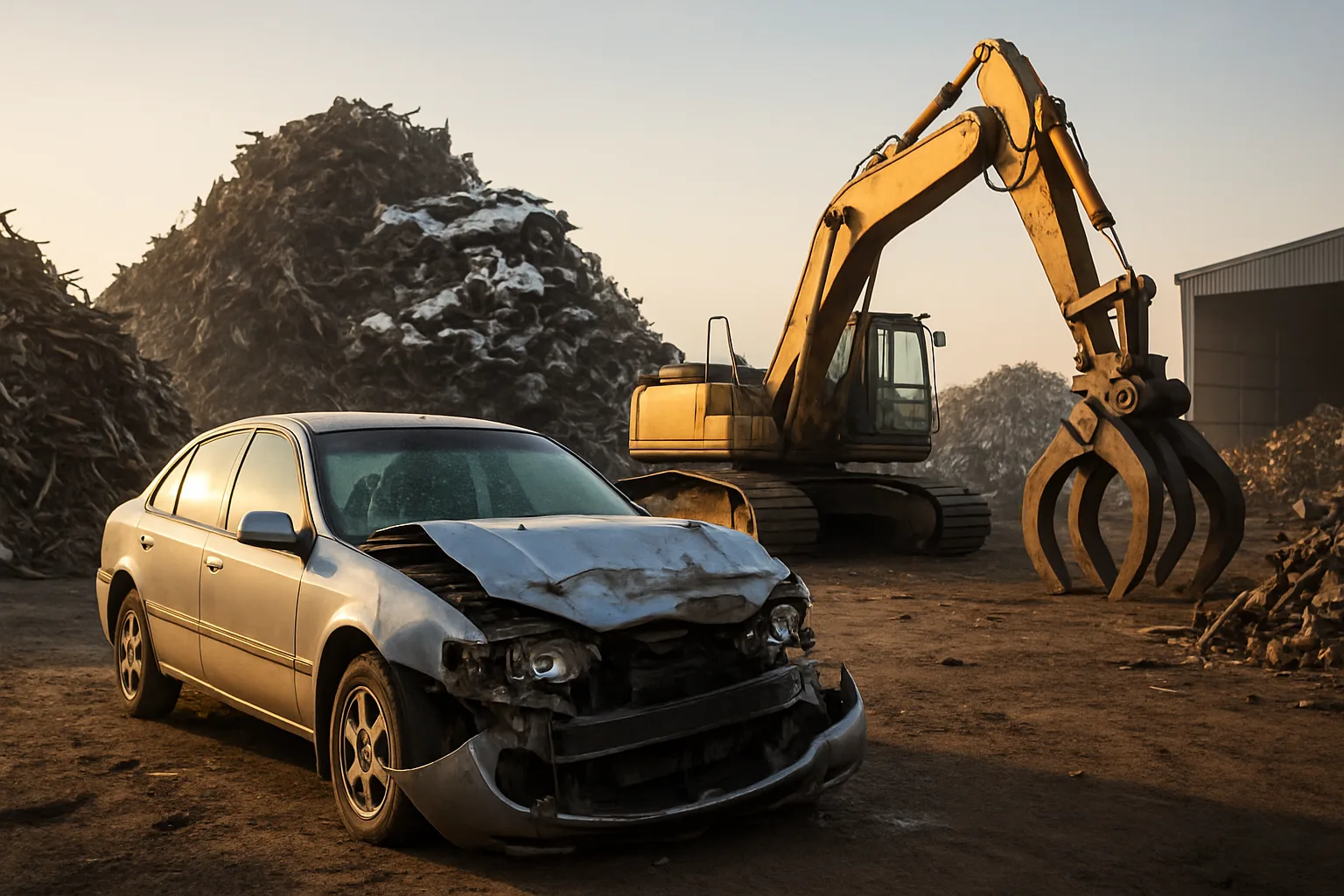
Your car got hit, written off, or totalled — and now it's sitting in your driveway taking up space. If you're trying to sell my car fast Sydney, a vehicle that's been in an accident doesn't have to be a dead end. It's still worth money. You just need to know how to move it the right way.
Accident-damaged vehicles are scrapped across Nova Scotia every week. Whether your car was rear-ended, rolled, or declared a total loss by your insurer, there's a clear process for turning that wreck into cash. This guide walks you through every step — from paperwork to pickup — so you're not left guessing.
What Happens to a Car After an Accident Write-Off?
When an insurer declares your vehicle a total loss, they're saying the repair cost exceeds the car's value. At that point, the vehicle is typically branded with a salvage title. That branding matters — it affects who will buy the car, what they'll pay, and what documentation you'll need to transfer ownership.
In Nova Scotia, once a vehicle is written off, you'll receive either a salvage certificate or a similar designation from your provincial registry. You cannot legally drive a vehicle with a salvage designation until it passes a structural inspection and is re-certified — a process that costs time and money most owners don't want to spend. Scrapping it is often the smarter call.
Here's what the write-off process typically looks like:
- Insurer assesses damage and declares total loss
- You receive a settlement payout based on pre-accident vehicle value
- Title is rebranded as salvage
- You either keep the vehicle (and deduct its salvage value from your payout) or sign it over to the insurer
- If you keep it, you can sell it to a scrapper or recycler
If your insurer took the car, that's the end of the road for you. But if you retained ownership, you're sitting on scrap value — and it's time to collect.
What's an Accident-Damaged Car Actually Worth in Scrap?
This is the question every owner asks first. The honest answer: it depends on several factors, and anyone who gives you a hard number without knowing your vehicle is guessing.
That said, here's what drives scrap value for accident-damaged vehicles:
- Vehicle weight: Steel is priced by weight. A heavier vehicle — a half-ton truck versus a compact sedan — will almost always yield more at scrap. Full-size pickups and SUVs commonly weigh between 4,000 and 6,000 lbs. Compact cars might come in under 3,000 lbs.
- Current scrap metal prices: Steel and non-ferrous metal prices fluctuate with global markets. What a yard pays today may be different next month. Always check current rates before accepting an offer.
- Salvageable parts: A car that was rear-ended but has a clean front end still has a functioning engine, transmission, and front suspension. Those parts have value beyond scrap weight. Some recyclers will pay a premium to part out the vehicle before crushing it.
- Catalytic converter: If your cat is still intact, it contains platinum, palladium, and rhodium — all valuable. This is one of the most significant value drivers on any scrap vehicle. Don't let a buyer lowball you without acknowledging the cat's worth.
- Condition of the body: Severely crushed vehicles yield less in part-out value but still have metal weight. Fire damage can complicate things further, as burned vehicles may have reduced metal quality and added disposal considerations.
A general ballpark for scrap vehicles in Canada ranges widely — from under $200 for a small, light vehicle in poor condition to $800 or more for a heavy truck with valuable components. Prices fluctuate. Always get a current quote before making any decisions.
Platforms like SMASH help yards and buyers price loads competitively by bringing real market competition to the table. More buyers bidding on your vehicle — even a wrecked one — means better price discovery and less guesswork for you.
Paperwork You'll Need to Scrap an Accident-Damaged Car in Nova Scotia
Documentation trips up a lot of first-time scrappers. Get this right upfront and the rest of the process moves fast.
For a standard scrap transaction in Nova Scotia, you'll typically need:
- Proof of ownership: The vehicle registration or title in your name. If the insurer retained the title after your write-off settlement, you may need a letter of authorization or a bill of sale showing you repurchased the salvage.
- Government-issued ID: Scrap metal regulations across Canada require buyers to record seller identity. Bring your driver's licence or equivalent.
- Salvage certificate (if applicable): If Nova Scotia issued a salvage designation on the vehicle, have that document ready. It confirms the vehicle's status and protects you legally.
- Insurance documentation: Not always required, but if there's any question about the write-off status, having your insurer's total loss letter can clear things up fast.
- Release of lien (if applicable): If there's still a loan on the vehicle, your lender has a claim. You'll need written confirmation that the lien has been discharged before you can transfer ownership to a scrap buyer.
Missing any of these can delay your transaction. Recyclers and auto removal services in Sydney won't take a vehicle without clear ownership documentation — it's a legal requirement, not a preference.
If you're unsure about your paperwork situation, read Canadian scrap car guides that walk through province-specific documentation requirements in plain language.
How to Sell My Car Fast in Sydney After an Accident
You don't need to haul a wrecked vehicle anywhere. The best scrap car services come to you — and the good ones bring a tow truck at no charge. Here's the step-by-step process for getting cash for a wrecked car in Sydney, Nova Scotia:
- Gather your documents first. Before you call anyone, have your registration, ID, and any salvage paperwork in hand. This avoids delays when the buyer shows up.
- Get multiple quotes. Don't accept the first number you hear. The difference between a lowball offer and a competitive one can be hundreds of dollars. Use an online platform or call at least two or three buyers. Services that connect you with multiple buyers — like those powered by SMASH's network — make this process faster.
- Confirm free towing is included. Any reputable cash for junk cars Sydney service will pick up your vehicle at no cost. If someone tries to charge a towing fee, walk away.
- Schedule pickup at your convenience. Most services in the Sydney area offer same-day or next-day pickup. If your vehicle is immobile (which most accident-damaged cars are), confirm the buyer has flatbed capacity.
- Complete the transfer on pickup day. Hand over your keys and documentation, sign any transfer paperwork, and receive payment. Cash or e-transfer are both common. Get a receipt.
- Cancel your insurance and plates. Once the car is gone, notify your insurer and return your plates to Service Nova Scotia. You may be entitled to a partial insurance refund.
The whole process — from first quote to pickup — often takes 24 to 48 hours when your paperwork is ready. You can sell your scrap car in Canada without ever leaving your property. That's the point.
Scrap Metal Recycling in Canada: Where Does Your Wrecked Car Actually Go?
A lot of vehicle owners are curious about what happens after the tow truck leaves. Scrap metal recycling Canada-wide follows a consistent process, and it's more efficient than most people expect.
After pickup, your vehicle goes to an auto recycler or salvage yard. If there are usable parts — engines, transmissions, doors, glass — those get pulled and resold into the used parts market. This is good for you if the buyer factors that value into your quote. It's good for the environment too, since reused parts require zero new manufacturing energy.
What's left after parts are stripped goes to a metal shredder. The steel is separated, processed, and sold to mills that melt it down into new steel products. Non-ferrous metals — aluminum, copper, and the precious metals in your catalytic converter — get sorted separately and recycled through their own commodity channels.
Canada has strict regulations around fluid removal before crushing. Engine oil, transmission fluid, coolant, brake fluid, and refrigerant must all be drained and disposed of properly before a vehicle is shredded. Reputable recyclers follow these rules. If you're working with a licensed auto recycler in Nova Scotia, this is handled for you — it's part of what you're paying for when you use a professional service.
Want to understand the full value chain behind your vehicle? Read Canadian scrap car guides for a deeper look at how auto recycling works from curb to crusher.
Common Mistakes to Avoid When Scrapping an Accident-Damaged Vehicle
First-timers make the same errors repeatedly. Avoid these and you'll get a better outcome with less hassle.
- Accepting the first offer without comparing: The first number is rarely the best number. Get at least two quotes. Competition — even informal competition between buyers — almost always works in your favour.
- Forgetting personal belongings: Search the car thoroughly before pickup. Check the glove box, under seats, in the trunk. Once it's gone, it's gone.
- Not removing the plates: In Nova Scotia, licence plates belong to the owner, not the vehicle. Remove them before pickup and return them to Service Nova Scotia to avoid continued insurance billing.
- Selling without proof of payment: Always get written confirmation of payment — whether it's a receipt, an e-transfer confirmation, or a signed bill of sale. Verbal agreements are not enough.
- Assuming a damaged car has no value: Even a severely wrecked vehicle has steel weight. Don't give it away. If someone offers you nothing for a pick up "as a favour," that's a red flag. Your car is worth something.
- Working with unlicensed buyers: Nova Scotia, like other provinces, requires scrap metal buyers to maintain records and operate under provincial regulations. Use licensed recyclers. It protects you legally.
If you're ready to move your vehicle without the runaround, schedule a free scrap car pickup and let a professional handle the logistics.
For those who want to explore buyer options beyond a single phone call, Canadian scrap car removal from GetMyScrapCar connects vehicle owners with competitive buyers across the country — a straightforward way to see what the market will actually pay.
Frequently Asked Questions
Q: Can I sell my car fast in Sydney if it's been declared a total loss by my insurer?
Yes — as long as you retained ownership of the vehicle after your insurance settlement. Once you have the salvage title or certificate in your name, you can sell it to a licensed scrap buyer or auto recycler. Make sure your paperwork reflects your ownership clearly before booking a pickup.
Q: Do I need a title to scrap an accident-damaged car in Nova Scotia?
You need proof of ownership — typically a vehicle registration or salvage certificate in your name. Without documentation, licensed buyers in Nova Scotia cannot legally accept the vehicle. If you've lost your paperwork, contact Service Nova Scotia to request a replacement before pursuing a sale.
Q: How much can I get for cash for junk cars in Sydney?
Scrap car values in Sydney depend on vehicle weight, current metal prices, and the condition of salvageable parts like the engine and catalytic converter. Prices fluctuate with commodity markets, so get a current quote rather than relying on general estimates. Always compare at least two offers before agreeing to a sale.
Q: Will someone tow my wrecked car for free in Sydney?
Reputable scrap car removal services in Sydney include free towing as part of the transaction. You should never pay out of pocket to have a junk vehicle removed. If a buyer quotes you a towing fee, that's a signal to look elsewhere.
Q: Can I sell my junk car online without calling anyone?
Yes. Several platforms let you sell my junk car online by submitting your vehicle details and receiving quotes digitally. This is often faster than cold-calling individual yards and gives you a broader view of what buyers are offering. Once you accept a quote, pickup is typically arranged within 24–48 hours.
If you've got an accident-damaged vehicle sitting in Sydney or anywhere across Nova Scotia, you don't have to wait. The process is straightforward when you know the steps — and the right service makes it even simpler. Get your documents together, compare your options, and let a professional team handle the rest. When you're ready, get a free quote at sell-myscrapcar.ca and turn that wrecked car into cash today.
Stay ahead of scrap metal market trends and industry insights — follow SMASH on LinkedIn for updates that help you make smarter decisions when it's time to sell.