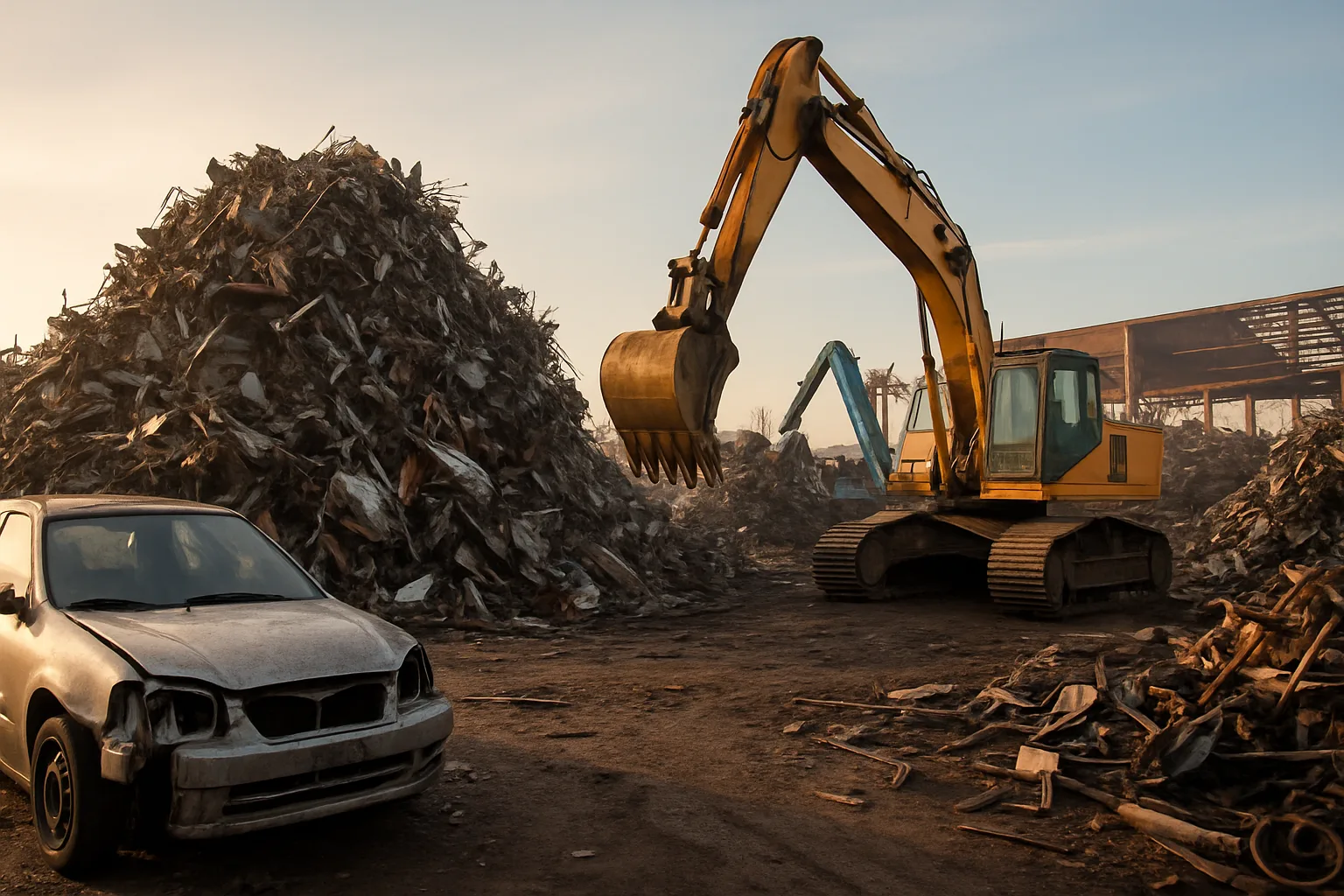
What Actually Happens When You Call for Junk Car Removal — Step by Step
Most people have no idea what happens after they make that first call. You've got a dead car sitting in your driveway, you want it gone, and the whole process feels like a mystery. Here's the truth: free scrap car pickup Longueuil is simpler than you think — and knowing the steps makes it faster and puts more money in your pocket.
This guide breaks down exactly how junk car removal works, from your first quote to the moment the tow truck pulls away. No guesswork. No surprises.
Step 1 — Get a Quote Before Anyone Shows Up
The process starts with a quote. A real one, not a ballpark guess that changes at the door. You'll typically provide basic details about your vehicle: year, make, model, condition, and whether it runs or not. A reputable buyer will also ask for the VIN, which tells them a lot about the car's specs and helps confirm the catalytic converter type, core components, and overall scrap value.
In Longueuil and across Quebec, the quote process usually takes 10 to 15 minutes by phone or online form. You're not committing to anything at this stage — you're just finding out what your car is worth before you agree to hand it over. The better services give you a firm number upfront, not a range that conveniently shrinks when they arrive.
What affects your quote?
- Weight of the vehicle — heavier vehicles yield more ferrous scrap
- Catalytic converter condition — cats carry real value in the non-ferrous market
- Completeness — missing engines, wheels, or doors lower the offer
- Current scrap metal prices — these move weekly based on commodity markets
- Location — distance from the yard factors into the tow cost calculation
Platforms like SMASH bring competition into this equation. Instead of relying on one local buyer's single offer, SMASH connects sellers to a network of vetted buyers who bid on loads — which means price discovery actually works the way it's supposed to.
Step 2 — Paperwork and Title: What You Actually Need
This is where a lot of people get stuck. You're thinking: do I need a clean title to sell my junk car? In most of Canada, including Quebec, you'll need proof of ownership to complete the sale legally. That typically means your vehicle registration or your title document (called a certificat d'immatriculation in Quebec).
That said, many scrap buyers and removal services have processes in place for vehicles with missing or damaged paperwork. If you're searching "sell my junk car no title," you're not alone — it's a common situation with inherited vehicles, long-abandoned cars, or vehicles that have changed hands informally. In those cases, contact the buyer directly and explain your situation before assuming you're out of options.
Key documents to have ready:
- Vehicle registration (most common and usually sufficient)
- Proof of identity (driver's licence)
- Any lien release documentation if the car was financed
- Bill of sale from a prior purchase if the registration isn't in your name
Sort this out before pickup day. Nothing slows down the process more than scrambling for paperwork while the tow truck is in your driveway.
Step 3 — Scheduling Free Towing and What to Expect on Pickup Day
Once you've accepted an offer and confirmed your paperwork, you schedule pickup. This is where free scrap car pickup Longueuil earns its value — a legitimate service sends a licensed tow operator directly to your location, no charge to you. You don't need to drive the car anywhere. It doesn't even need to run.
Most reputable services in the Longueuil and greater Montreal area offer same-day or next-day pickup, depending on demand. When the driver arrives, expect them to:
- Verify your ID and documentation
- Confirm the vehicle matches what was quoted (make, model, VIN)
- Check that the car matches its described condition — this is why honest descriptions save headaches
- Process your payment (e-transfer, cheque, or cash depending on the service)
- Load the vehicle and provide a receipt or release of liability
Before the tow truck arrives, remove your personal belongings, pull your licence plates (required in Quebec before deregistering), and cancel your insurance. These are easy to forget in the moment. Losing your plates or leaving insurance active on a scrapped vehicle costs you money.
Want to make sure the process runs smooth? Read Canadian scrap car guides before your pickup day — knowing what to expect saves time on both ends.
Step 4 — How Scrap Metal Recycling Canada Actually Processes Your Car
Once your vehicle leaves your property, it enters the recycling stream. Scrap metal recycling Canada is a regulated, multi-step industrial process — not just a crusher and a dumpster. Understanding this step helps you see why some cars are worth more than others, and why condition and completeness matter when you're getting quoted.
Here's what typically happens at the yard:
- Depollution — fluids (oil, coolant, brake fluid, refrigerant) are drained and disposed of safely before any crushing begins. This is a legal requirement across Canada.
- Parts assessment — usable components (catalytic converters, engines, transmissions, rims) are pulled and either resold or processed separately
- Shredding or crushing — the shell is shredded into ferrous and non-ferrous fractions
- Sorting and grading — material is sorted by metal type and grade, then bundled or baled for sale to smelters and mills
This is exactly the kind of material that moves through platforms like SMASH. SMASH is a scrap metal auction platform that connects recycling yards with vetted industrial buyers — and when your car becomes a load of shredded steel or sorted non-ferrous, competitive bidding through a platform like SMASH helps yards get fair market value for that material. That upstream competition ultimately benefits the entire supply chain, including what yard operators can afford to pay for end-of-life vehicles.
If you want to sell your scrap car in Canada, understanding this downstream market context helps you ask better questions and push back on lowball offers.
Step 5 — Getting Paid and Closing the Loop
Payment typically happens at pickup or within a short window after the vehicle is confirmed received. The format depends on the service: e-transfer is common and fast, cheques work for larger transactions, and some operators still pay cash. Know what's offered before you agree to anything.
After payment, make sure you get a receipt and a transfer of ownership document. In Quebec, you're responsible for notifying the SAAQ that the vehicle has been sold or transferred. Failing to do this means you're technically still the registered owner — and that creates liability headaches if the car is mishandled before it reaches the crusher.
Also confirm with your insurance provider that the vehicle has been removed from your policy. This step is easy to overlook, especially if you have multiple vehicles on the same plan.
Looking for a streamlined experience that handles the logistics without the runaround? Canadian scrap car removal from GetMyScrapCar offers another route worth checking out.
Junk Car Removal Longueuil: Why Local Matters
Junk car removal Longueuil isn't the same experience everywhere. A buyer based close to Longueuil has lower tow costs, which means more of your car's scrap value ends up in your offer rather than being eaten by fuel and labour. A buyer three hours away might quote you less — or add hidden deductions at pickup — because the economics don't work at distance.
Quebec also has specific provincial regulations around vehicle depollution, fluid disposal, and deregistration. Local operators who work in the province regularly know these requirements cold. That protects you legally and ensures the car is recycled properly — not just abandoned or illegally stripped.
Whether you're in Longueuil proper or in the surrounding municipalities, getting a quote from a buyer with real presence in the region makes a measurable difference in both speed and payout. To schedule a free scrap car pickup, connect with a service that covers your area directly.
Your car is worth something, even if it doesn't run. The scrap metal inside it has real market value, and with the right buyer and a competitive process behind it, that value finds its way to you. If you're ready to move forward, sell your scrap car in Canada and get a free, no-obligation quote at sell-myscrapcar.ca.
Disclaimer: Scrap car prices fluctuate based on commodity markets and vary by vehicle condition, location, and current demand. Always confirm current rates directly with your buyer before committing.
Frequently Asked Questions
Q: How does free scrap car pickup in Longueuil actually work?
You request a quote, accept an offer, and a licensed tow operator comes directly to your location — no charge to you. Most services in Longueuil offer same-day or next-day scheduling. You hand over your paperwork, confirm the vehicle, and receive payment on the spot or via e-transfer.
Q: Do I need a title to sell my junk car in Quebec?
In Quebec, you typically need your vehicle registration (certificat d'immatriculation) and proof of identity. If your paperwork is missing or the registration isn't in your name, contact the buyer directly — many services have processes for these situations, especially for inherited or abandoned vehicles.
Q: What do I need to do after my car is picked up in Longueuil?
Remove your licence plates before pickup, notify the SAAQ of the vehicle transfer, and cancel your insurance. These steps protect you from ongoing liability. Ask the buyer for a receipt and transfer of ownership document to close the loop properly.
Q: Why do scrap car prices change so often?
Scrap car values are tied directly to commodity metal prices — primarily steel, aluminum, and copper. These markets shift weekly based on global supply, demand, and trade conditions. Your cat's value also fluctuates based on platinum group metal prices. Always ask for a current quote rather than relying on numbers you saw weeks ago.
Q: What is SMASH and how does it affect what I get paid for my scrap car?
SMASH is a scrap metal auction platform that connects recycling yards with vetted industrial buyers through a competitive bidding process. When yards get stronger prices for their processed material downstream, they're in a better position to offer competitive quotes on end-of-life vehicles upstream. More competition in the market generally means better price discovery for everyone in the chain.
Follow SMASH on LinkedIn for industry updates, scrap metal market insights, and auction news: linkedin.com/company/scrap-metal-auction-sales-hub.