Most cars spend their entire lives being taken for granted. You buy it, drive it, fix it when it breaks, and eventually stop fixing it when the repairs cost more than the car is worth. But what actually happens between the factory floor and the scrap yard? And what does that journey mean for you — the owner holding the keys to a car that's done?
If you're in Lethbridge sitting on a vehicle that no longer runs, this isn't just an interesting story. It's a roadmap. Understanding where your car has been — and where it's going — helps you make smarter decisions about scrap car removal Lethbridge and what your vehicle is actually worth at end of life.
Stage One: Built to Be Driven (and Eventually Scrapped)
Every vehicle that ends up in a scrap yard started as raw material. Steel, aluminum, copper, rubber, glass, and dozens of specialty metals all get assembled into something that rolls off a production line somewhere. A typical passenger vehicle contains over a metric tonne of steel and anywhere from 20 to 30 kilograms of aluminum, plus copper wiring, lead in the battery, and precious metals in the catalytic converter.
From day one, cars are designed with a finite lifespan. Manufacturers engineer vehicles for roughly 200,000 to 250,000 kilometres of use. Some exceed that — plenty of older trucks in Alberta are still working well past that mark. But the math usually catches up. Parts wear out, corrosion sets in, and the cost curve eventually crosses the value curve.
What's worth noting here: that material doesn't disappear at the end. It gets reclaimed, melted down, and reused. The steel in your old Civic might end up in a new building beam. The copper in your F-150's wiring might become new electrical infrastructure. Scrapping isn't waste — it's the original circular economy.
Stage Two: Years of Use, Wear, and Declining Value
The average Canadian vehicle depreciates fastest in the first three years. After that, it levels off — until the repair bills start stacking. At some point, a car transitions from an asset into a liability. That's usually when owners start searching for junk car buyers near me Lethbridge or wondering what their vehicle is actually worth as scrap.
Wear and tear affects every system differently. The drivetrain takes the most punishment. The body deals with road salt, hail, UV exposure, and temperature swings — Alberta's climate is no gentle environment for sheet metal. Interior components dry out and crack. Rubber seals fail. Eventually, a car reaches the point where continued investment makes no financial sense.
This stage can last years, or it can happen suddenly — a blown engine, a major accident, a flood. The trigger doesn't matter much. What matters is recognizing that the vehicle still has value even when it no longer runs. That value lives in its metal content, its salvageable parts, and — critically — in its catalytic converter.
Stage Three: The End-of-Life Decision and What It Actually Costs You to Wait
Here's the thing most vehicle owners don't realize: waiting costs money. A car sitting on your driveway, in a field, or taking up bay space in your shop depreciates in scrap value as the body corrodes and fluids degrade. The catalytic converter — often one of the most valuable components — can be stolen if the vehicle sits long enough in an unsecured location.
Common end-of-life triggers include:
- Failed emissions or safety inspection with repair costs that exceed the vehicle's value
- Transmission or engine failure on a high-mileage vehicle
- Collision damage that insurance won't fully cover
- Vehicles inherited or donated that no longer run
- Fleet vehicles that have aged out of service
If you're in this position in Lethbridge, the decision process should be straightforward. Get a quote. Book a pickup. Move on. Services like sell your scrap car in Canada exist specifically to make that process simple — no towing fees, no haggling, no runaround.
Don't have the title? That comes up more than you'd think — especially with older vehicles, inherited cars, or fleet disposals. The good news: you can often sell car for scrap no title with the right service provider, as long as you can demonstrate ownership through other documentation. Check with your specific buyer on what they require.
Stage Four: Scrap Car Removal and What Happens at the Yard
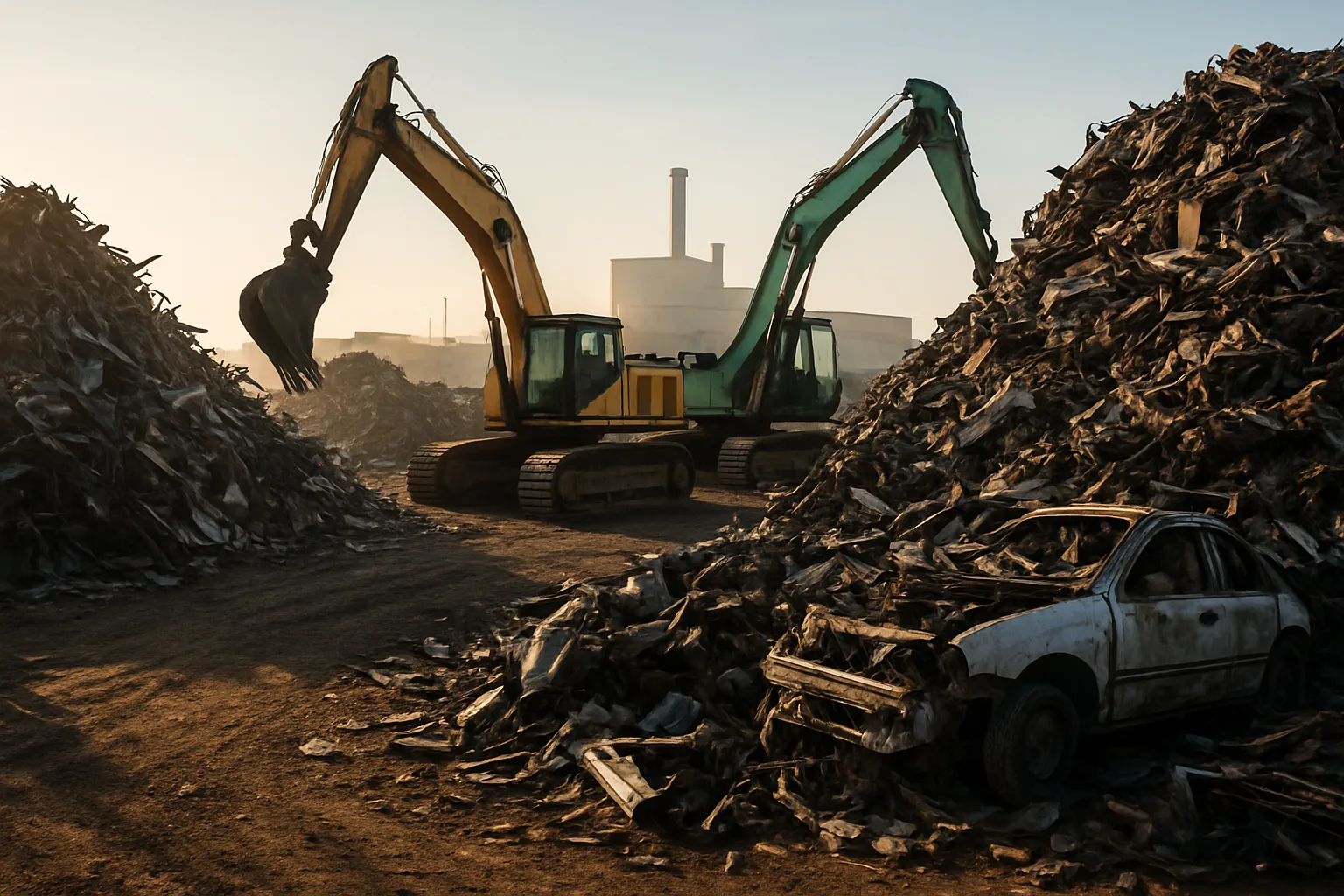
Once a vehicle gets picked up for scrap, it enters a surprisingly organized process. This isn't just a pile of rusting metal — modern auto recyclers in Alberta operate with inventory systems, environmental compliance requirements, and clear processing steps.
Here's the general flow after pickup:
- Fluid extraction: Engine oil, coolant, brake fluid, transmission fluid, and refrigerants are drained and processed. This is an environmental requirement, not optional.
- Parts harvesting: Salvageable components — doors, hoods, engines, transmissions, wheels — get catalogued and pulled for resale. This is where a lot of a vehicle's monetary value lives.
- Catalytic converter removal: Cats contain platinum, palladium, and rhodium — precious metals that get recovered by specialist processors. A single catalytic converter can be worth more than the rest of the car's scrap metal combined, depending on the vehicle make and current commodity prices.
- Battery removal: Lead-acid batteries get separated and recycled. Increasingly, EV batteries are going through dedicated reclamation processes.
- Shredding and sorting: The hulk goes through an industrial shredder. Ferrous and non-ferrous metals get separated magnetically and through other sorting methods.
- Sale to smelters and processors: Sorted metals get sold to downstream buyers — steel mills, copper smelters, precious metal refiners.
That downstream sale is where platforms like SMASH change the equation for recycling yards. Instead of calling one buyer and accepting whatever price they offer, yards using a B2B scrap metal marketplace like SMASH put loads in front of multiple vetted buyers at once. Competition between buyers means better price discovery. That's not a guarantee of higher prices — it's just how markets work when more buyers are competing for the same load.
What Determines Junk Car Prices Near Me in Lethbridge
If you've ever searched junk car prices near me and gotten wildly different answers, that's because scrap car pricing isn't fixed. It moves with commodity markets, and several factors determine what your specific vehicle is worth on any given day.
Key pricing factors include:
- Vehicle weight: Heavier vehicles — full-size trucks, SUVs, vans — generally yield more scrap metal and therefore more money
- Catalytic converter type: Make and model matter significantly here. Some vehicles carry high-value cats; others don't
- Current steel and aluminum prices: These fluctuate with global supply and demand — prices fluctuate, always check current rates before making decisions
- Condition and completeness: A stripped vehicle with missing parts is worth less than an intact one
- Location and accessibility: Remote locations or vehicles in hard-to-access spots can affect what a buyer will offer
In Lethbridge, the local scrap ecosystem connects to regional processors and the broader Alberta metals market. That market ties into national and global commodity pricing, which is why Lethbridge scrap metal services quoted prices can shift week to week — sometimes significantly.
Getting multiple quotes is the most straightforward way to make sure you're not leaving money on the table. Services that connect you with multiple buyers — rather than locking you into one offer — give you a clearer picture of what the market is actually paying. Schedule a free scrap car pickup and find out what your vehicle is worth today.
How SMASH Fits Into the Broader Recycling Chain
Most vehicle owners think the scrap chain ends at the recycling yard. It doesn't. The yard is a middle point — they acquire vehicles from you, process them, and then sell the resulting materials to larger industrial buyers. That second transaction is where SMASH operates.
SMASH is a B2B scrap metal marketplace built specifically for recycling yards and industrial buyers across North America. Yards list their loads — processed steel, non-ferrous metals, catalytic converter cores — and vetted buyers compete in an auction format. The result is price transparency at the industrial level, where it's historically been murky and relationship-dependent.
Why does that matter to you as a vehicle owner? Because a yard that gets better prices downstream has more margin flexibility at the acquisition stage. When the scrap chain functions efficiently from end to end, value flows through it more fairly. For more context on how the metals market works and what drives pricing, read Canadian scrap car guides on the sell-myscrapcar.ca blog.
And if you're a yard operator in the Lethbridge area looking at how to compete in the current market, getmyscrapcar.ca is worth a look as a complementary service in the scrap vehicle acquisition space.
Frequently Asked Questions
Q: How does scrap car removal in Lethbridge actually work?
You request a quote, get an offer based on your vehicle's details, and book a pickup time. A tow truck comes to your location — at no cost to you — removes the vehicle, and you get paid. The whole process typically takes one to two business days from quote to pickup, depending on scheduling availability in the Lethbridge area.
Q: Can I sell my car for scrap if I don't have the title?
In many cases, yes — you can sell car for scrap no title if you can demonstrate ownership through other documentation, such as registration, a bill of sale, or proof of purchase. Requirements vary by buyer and province, so confirm with the specific service you're using before assuming it's straightforward.
Q: What's my junk car actually worth in Lethbridge right now?
There's no universal answer — junk car prices near me depend on your vehicle's weight, the presence and type of catalytic converter, overall condition, and current commodity prices. The only reliable way to find out is to get a quote. Prices fluctuate regularly, so what a vehicle was worth three months ago may not reflect today's market.
Q: Do I need to drain the fluids before the car gets picked up?
No. Fluid management is handled at the recycling facility as part of the processing workflow and is subject to environmental regulations. You don't need to do anything to the vehicle before pickup beyond making sure it's accessible to a tow truck.
Q: How do I know I'm getting a fair price for my scrap car in Alberta?
The best protection against a lowball offer is getting more than one quote. Prices vary between buyers, and a single offer gives you no baseline for comparison. Services connected to competitive buyer networks — rather than a single buyer — tend to reflect the market more accurately. Always check current scrap rates in Alberta before accepting any offer, as commodity prices can shift week to week.
Your car's lifecycle ends in the scrap yard — but that doesn't mean you have to accept whatever you're offered on the way there. The market is competitive, the process is simpler than most people expect, and the vehicle sitting in your driveway has real value right now. If you're ready to move forward, sell your scrap car in Canada and get a free quote at sell-myscrapcar.ca — it takes a few minutes and costs you nothing to find out what you're working with.
Stay current on scrap metal market trends and industry news by following SMASH on LinkedIn — useful whether you're a yard operator, a fleet manager, or just trying to understand what drives the price you're quoted.