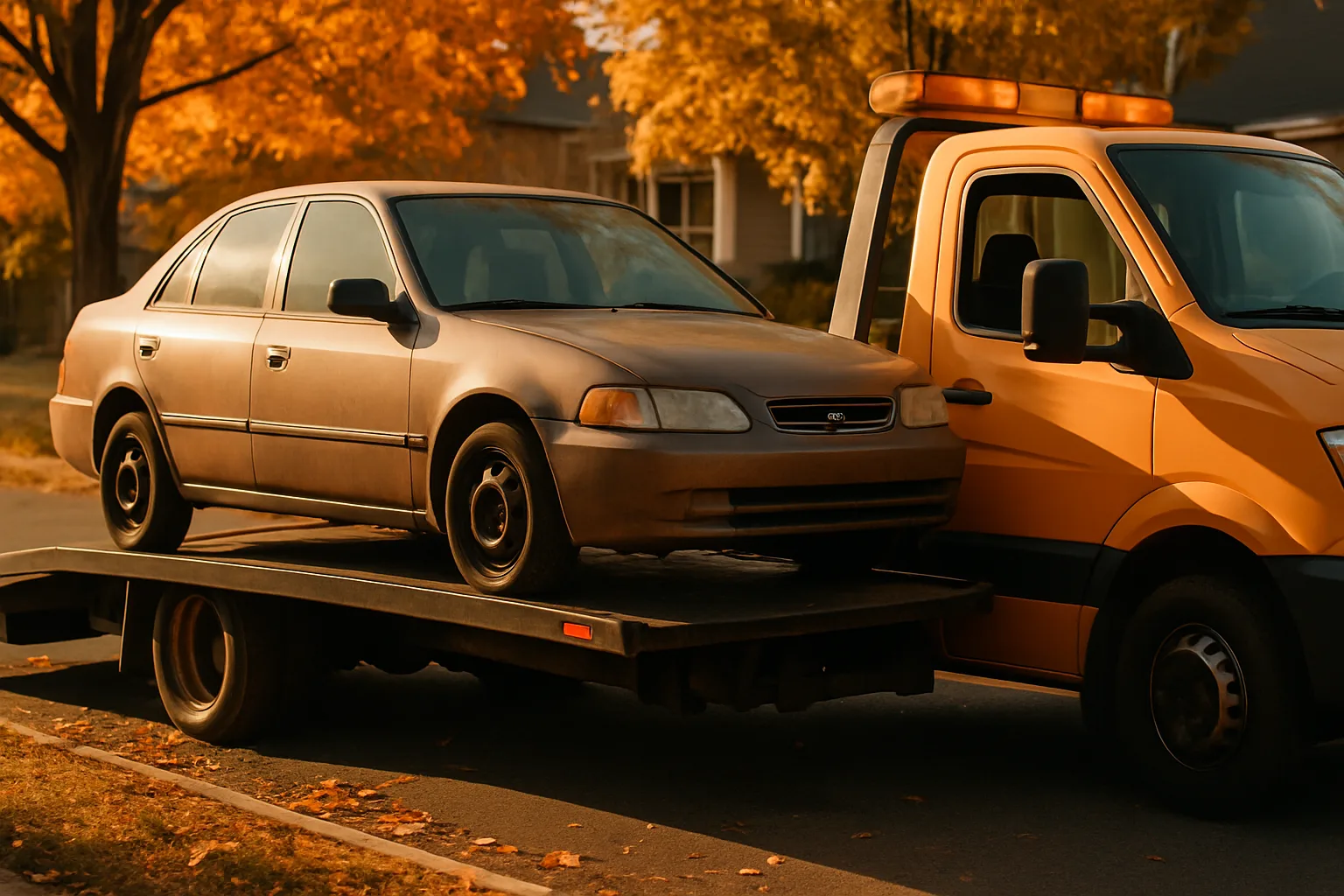
Most people assume a junk car is worth the same no matter what it is. A car is a car, right? Wrong. The difference between what two neighbours get for their scrap vehicles can be hundreds of dollars — and it comes down to make, model, condition, and a few other factors most sellers never think about. If you're chasing cash for cars Kitchener, understanding what actually drives your quote puts more money in your pocket.
This guide breaks down exactly why scrap car prices vary, what buyers look at when they quote your vehicle, and how to make sure you're not leaving money on the table when you're ready to sell.
Weight Is the Starting Point — But It's Not the Whole Story
Every scrap car quote starts with weight. Steel is the dominant material in most vehicles, and scrap yards price it by the tonne. A heavier vehicle generally returns more at the scale. A full-size pickup truck or an older body-on-frame SUV carries significantly more steel than a compact hatchback — which is one reason truck owners often get stronger base quotes.
But weight alone doesn't determine your final number. The mix of materials in your specific vehicle matters just as much. Consider what's actually in a modern car:
- Ferrous metal (steel, iron) — the bulk of the vehicle's weight
- Aluminum — found in engine blocks, wheels, radiators, and increasingly in body panels
- Copper — wiring harnesses, motors, starters, alternators
- Catalytic converters — contain platinum, palladium, and rhodium
- Lead — battery, wheel weights, some older sound-deadening material
Non-ferrous metals like aluminum and copper fetch considerably more per kilogram than steel. A vehicle with a larger aluminum engine block or factory aluminum wheels is worth more at the yard than a similar-sized car made mostly of steel. Buyers pricing your car are thinking about this breakdown before they give you a number.
Why Make and Model Move the Needle on Scrap Car Pricing
Not all makes and models are created equal when it comes to scrap value — and this surprises a lot of first-time sellers. Two reasons drive this: material composition and parts demand.
On the material side, manufacturers have moved aggressively toward aluminum-intensive builds over the past decade to meet fuel efficiency targets. Certain trucks and crossovers now carry far more aluminum in their structure than older steel-body equivalents. When those vehicles reach end-of-life, the non-ferrous content pushes the scrap value higher. Meanwhile, an older economy sedan made almost entirely of basic steel yields less per kilogram, even if the two vehicles weigh roughly the same.
Parts demand is the other big driver. When a junk car buyer says they "buy all makes and models," what they're often doing is sorting vehicles into two buckets: strip-and-resell versus straight-to-crush. Vehicles with strong aftermarket demand for used parts — think popular domestic trucks, certain Japanese sedans with long production runs, and vehicles with expensive but commonly-replaced components — can return a premium. The buyer profits from pulling and reselling parts before the shell goes to the shredder. That profit margin gets partially reflected in your quote.
Platforms like SMASH bring competitive bidding to this process. Instead of one buyer giving you one number based on their own inventory needs, multiple vetted buyers can see your vehicle details and compete for it. More buyers means better price discovery — you find out what your car is actually worth in the current market.
Condition Changes Everything — Even on a Junk Car
Here's a misconception worth clearing up: "junk car" doesn't mean "worthless car." Condition still matters, even at end-of-life. Buyers are evaluating your vehicle on a spectrum, and where yours lands affects the quote meaningfully.
Key condition factors that affect your scrap car price in Kitchener and across Ontario:
- Does it run? A running vehicle is worth more than a non-runner. It's easier to move, easier to inspect, and often has a functioning drivetrain that holds resale value.
- Is the catalytic converter still on it? Catalytic converters — "cats" in yard language — contain precious metals and represent a meaningful portion of your car's scrap value. A vehicle that's been stripped of its cat is quoted lower, sometimes significantly.
- Are major components intact? Engine, transmission, doors, hood — intact vehicles are more valuable than stripped shells.
- How much rust? Surface rust is normal. But vehicles that have been sitting for years in wet conditions can have severe structural rust that reduces the usable scrap material and makes handling riskier for the yard.
- Is the interior complete? For parts-pull candidates, a complete interior with working electronics adds value. A gutted cabin doesn't.
- Tire and wheel condition — Decent tires and aluminum wheels can be sold separately or add to the vehicle's value when quoted.
Don't strip your car before selling it. It seems counterintuitive, but pulling parts off your vehicle before getting a quote often reduces your total return. Buyers price the complete package. When pieces go missing, they discount accordingly — often more than the parts were actually worth.
The Market Conditions That Affect Junk Car Buyers Near You
Even if your car doesn't change, the quote you receive can shift week to week. Scrap metal prices fluctuate based on global commodity markets — steel, aluminum, and copper all trade on international exchanges, and what's happening in manufacturing hubs overseas affects what a yard in Kitchener pays for your vehicle today.
A few things that influence current market pricing:
- Steel mill demand — When mills are running hot and buying heavily, ferrous scrap prices rise. When they slow down, prices soften.
- Aluminum and copper spot prices — Non-ferrous metals are highly sensitive to global industrial demand.
- Precious metal prices — Catalytic converter values are directly tied to platinum group metal (PGM) spot prices, which can swing significantly.
- Local competition — More buyers competing for vehicles in your area pushes quotes up. Thin local markets can mean lower offers.
- Fuel costs and logistics — Towing and transport costs factor into what buyers net from your vehicle. When fuel prices spike, some buyers tighten their margins elsewhere.
This is exactly where sell your scrap car in Canada through a competitive platform gives you an edge. SMASH connects sellers with vetted buyers across North America, so you're not dependent on whatever one local yard decides to offer that morning. Competition can help reveal the market.
Disclaimer: Scrap metal prices fluctuate based on commodity markets. Always check current rates before committing to a sale.
What Kitchener Sellers Should Know Before Getting a Quote
Kitchener's industrial history means there's no shortage of scrap metal infrastructure in the region. The city sits in the middle of one of Ontario's most active manufacturing corridors, which generally means solid buyer competition for scrap vehicles. That's a good thing for sellers — it means you're in a market where getting multiple quotes is realistic, not just theoretical.
That said, not every buyer advertising we buy junk cars Kitchener is offering the same transparency or the same terms. Before you accept a quote, ask:
- Is towing genuinely free, or is there a hidden deduction?
- Is the quoted price locked in, or can it change when the truck shows up?
- Does the buyer handle paperwork and title transfer?
- Do you need a title? (More on this in the FAQ below.)
If you want to schedule a free scrap car pickup without the guesswork, working through a platform that documents the process end-to-end makes a real difference. You know what you're getting before anyone shows up at your driveway.
For more guidance on navigating the process, read Canadian scrap car guides that cover everything from title requirements to maximizing your vehicle's value. And if you're ready to move now, you can also schedule free scrap car pickup in Canada directly.
If you're curious about the broader recycling ecosystem in the region, Kitchener scrap metal services covers local options and what to expect from yards and buyers in the area.
How to Maximize Your Scrap Car Value Before You Call
You can't change your car's make, model, or weight. But you can control a few things that influence your final number.
Before you get a quote, do this:
- Know your VIN. It tells buyers exactly what they're pricing — engine size, trim level, factory options. A buyer who can verify specs will quote with more confidence, which often means a higher number.
- Document the condition honestly. Take photos. Note what's working and what isn't. Buyers who can see the vehicle before they commit their offer are less likely to discount at pickup.
- Don't remove the catalytic converter. Seriously. Leave it on.
- Check for any loose aluminum. Wheels, radiators, and other bolt-on aluminum components can be mentioned in your listing as separate line items on some platforms.
- Get more than one quote. The first number you hear is not necessarily the market. Multiple buyers competing for your vehicle is how you find out what it's actually worth.
- Ask about scrap metal recycling Canada options that include full documentation — especially if you want a clean record of the transaction for insurance or licensing purposes.
When you're ready, the process is straightforward. Sell your scrap car in Canada starts with a quote, not a commitment. You get a number, you decide if it works, and if it does, free towing takes care of the rest. No subscription fees on the seller side, no mystery deductions at pickup.
Frequently Asked Questions
Q: How do I get cash for cars in Kitchener fast?
The fastest route is to have your vehicle details ready — year, make, model, VIN, and an honest condition description — and request quotes from multiple buyers at once. Platforms like SMASH streamline this by connecting you with vetted buyers who compete for your vehicle. Same-day or next-day pickup is common for vehicles in the Kitchener and Ontario region when demand is strong.
Q: Do junk car buyers near me require a title to buy my car?
Requirements vary by buyer and province. In Ontario, having the vehicle registration in your name makes the transaction cleaner and often results in a better offer. Some buyers will work with you if you don't have a title but can provide other proof of ownership. Always ask upfront — reputable buyers are transparent about their documentation requirements before you commit.
Q: Why did I get a lower quote than my neighbour for a similar car?
Several factors could explain the gap: model year, trim level, whether the catalytic converter is intact, the presence of aluminum components, current scrap commodity prices, and which buyer you contacted. Getting quotes from multiple buyers is the most reliable way to understand your vehicle's actual market value — a single quote tells you one buyer's number, not the market.
Q: Does free towing actually mean free, or is it deducted from my quote?
With reputable services, free towing means the cost is absorbed by the buyer — it's not subtracted from your quoted price at pickup. However, not every operator is transparent about this. Ask explicitly: "Is the towing fee included in the quoted price, or is it deducted?" Get the answer in writing if you can, and use platforms that document the agreed terms before anyone drives to your driveway.
Q: What's the best time of year to scrap a car in Canada?
Scrap metal markets fluctuate year-round based on global commodity prices, not season alone. That said, spring and early summer tend to see higher buyer activity as construction season ramps up and steel demand increases. The more reliable strategy is to get quotes from multiple buyers regardless of timing — competitive bidding on your specific vehicle matters more than trying to time the market perfectly.
If your car is taking up driveway space in Kitchener or anywhere across Ontario, the best move is a straightforward one: get a real quote based on what your vehicle is actually worth, confirm the towing is free, and let someone else handle the rest. When you're ready to take that step, sell your scrap car in Canada and get a free quote at sell-myscrapcar.ca.
Stay current on scrap metal market trends and industry news — follow SMASH on LinkedIn for regular updates on pricing, platform features, and the North American scrap market.