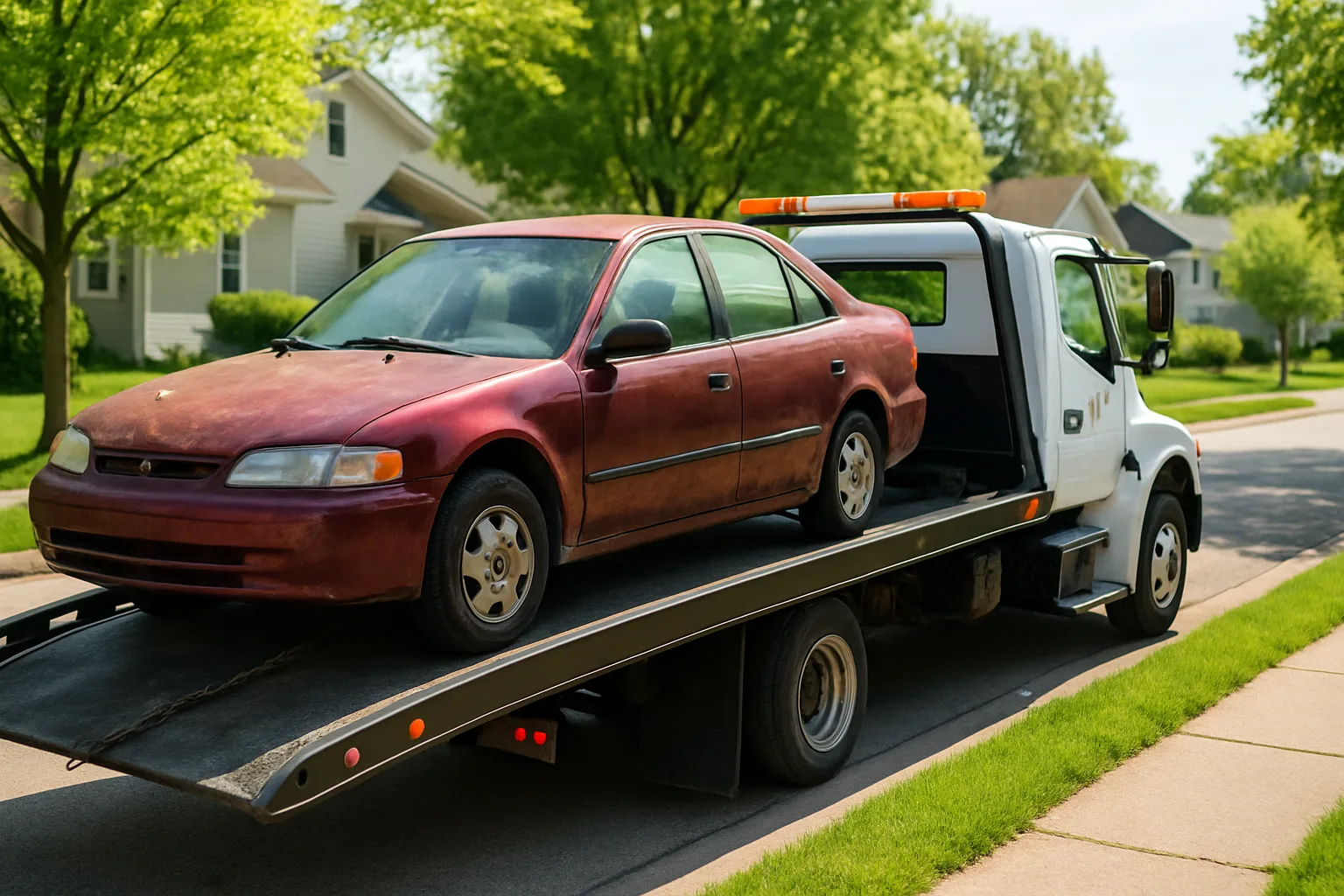
What's Your Scrap Car Actually Worth? Here's the Honest Answer
Most people guess low. They assume their rusted-out sedan or non-running pickup is worth next to nothing — maybe a hundred bucks if they're lucky. The reality is more complicated, and often more in your favour than you'd expect. If you're trying to sell my junk car Hamilton and want a straight answer on value, this guide gives you exactly that — no fluff, no bait-and-switch.
Scrap car pricing isn't random. It follows real market forces: metal commodity prices, vehicle weight, what's still working under the hood, and how easy your car is to move. Understanding these factors takes the guesswork out of the process and puts you in a stronger position when you call for a quote.
The Core Factor: Weight and Metal Composition
At its most basic, a scrap car is a bundle of metals. Steel makes up the majority — roughly 65% of a typical passenger vehicle by weight. The rest is aluminum, copper wiring, and smaller amounts of other non-ferrous materials. When a recycler quotes your car, they're largely pricing it by the ton.
A mid-size sedan typically weighs between 1,400 and 1,800 kg. A full-size truck or SUV can push 2,200 kg or more. That difference in weight matters directly to your payout. Scrap steel prices fluctuate — and they've been moving in both directions throughout the mid-2020s — so the quote you get today may differ from the one you'd get in two months. That's not a trick. That's just how commodity markets work.
- Compact cars: lighter weight, lower base scrap value
- Mid-size sedans and crossovers: the most common category — decent value when metal prices are healthy
- Trucks, vans, SUVs: higher weight typically means higher scrap returns
- Aluminum-heavy vehicles: non-ferrous content can push value up significantly
If you're not sure what your car weighs, look up the curb weight in your owner's manual or search the make, model, and year online. That number is the starting point for any honest scrap valuation.
What Else Drives Scrap Car Value — Beyond the Scale
Weight is the baseline, but it's not the whole story. Several other variables affect what you'll actually walk away with when you sell scrap car in Ontario.
The catalytic converter is one of the most talked-about components in the scrap world right now — and for good reason. Cats contain platinum, palladium, and rhodium. Depending on the make and model, a catalytic converter can add meaningful value to your overall payout. Vehicles from certain manufacturers are known for richer catalyst loads. If yours is intact and you haven't already sold it separately, that's worth noting when you get your quote.
Other parts and components that can affect value:
- Engine condition: A running engine may qualify the car for parts resale rather than straight scrap — potentially a higher return
- Transmission: Functional transmissions have a secondary market
- Battery (including EV and hybrid packs): Lithium-ion and NiMH batteries carry separate recycling value
- Rims and tires: Steel rims go to scrap; alloy rims fetch more; good tires can be resold
- Alternators, starters, and other cores: Rebuilt-part buyers actively seek these
- A/C compressor and copper wiring: Non-ferrous materials command premium pricing
This is why two identical-looking cars can get different quotes. The condition and completeness of what's under the hood and inside the body panels matters. A car that's been stripped for parts before it comes in for scrap is worth less than one that arrives intact.
How Location Affects Your Scrap Car Quote in Hamilton
Location matters more than most people realize. If you're trying to sell my car fast Hamilton, you're operating in a region with solid recycling infrastructure. Hamilton and the broader Ontario market have active auto recyclers, processors, and buyers. That competition is generally good for sellers.
Compare that to a rural area where there might be one buyer within a 200 km radius. That buyer sets the price. You have no leverage. In Hamilton, you're closer to a hub — which means more buyers can realistically bid on or pick up your vehicle. More buyers, better price discovery. That's not a marketing line. It's how competitive markets function.
Towing distance also factors into the net value you receive. Most reputable services offering free towing build that cost into their model — they're absorbing it rather than charging you upfront. If a service charges you a tow fee on top of offering a scrap quote, that fee comes directly off your net payout. Always ask upfront whether towing is included. When you sell your scrap car in Canada through a service that bundles free towing, you're keeping more of the value — not giving it back in logistics fees.
For those in areas like Scarborough or surrounding regions, the same principle holds. Scrap car removal in those markets has become increasingly competitive, meaning sellers benefit from getting multiple quotes rather than accepting the first offer.
The Old Way vs. a Smarter Approach
The traditional approach to scrapping a car: call one buyer, accept their number, and hope it's fair. You have no reference point. You don't know if the price is market rate or if you just left money on the table. That's been the reality for most car owners for decades.
A better approach puts competitive pressure on the transaction. When more than one buyer sees your vehicle — its weight, condition, what's intact, the documentation — they bid against each other. That's how SMASH approaches the scrap market on the commercial side: connecting sellers with vetted buyers through an auction format that creates real price discovery rather than a single phone call with no comparison.
For individual vehicle owners, that same logic applies. Schedule a free scrap car pickup through a service that has buyer relationships and knows what your car is worth in the current market. Don't accept the first verbal quote from a buyer who has no incentive to offer you top dollar. Document what your car has — photos, a list of intact components, the VIN — and let that information work for you.
Platforms like SMASH are reshaping how scrap gets bought and sold at the commercial level, and that shift is gradually creating a more transparent environment for individual sellers too. You can read Canadian scrap car guides to better understand how the market works before you get your first quote.
What Lowers Your Scrap Car's Value — And What You Can Do About It
Some value losses are unavoidable. Others you can prevent. Knowing the difference helps you maximize what you walk away with.
Value reducers you can't control:
- Low scrap steel prices at the time of sale
- Vehicle age and rust — extensive corrosion reduces usable metal quality
- Missing title or registration (can complicate the transaction in Ontario)
- High-mileage, worn-out mechanical components with no secondary market
Value reducers you can prevent:
- Selling parts off the car before scrapping — this often nets less overall than selling complete
- Letting the car sit and deteriorate further before calling
- Accepting the first low-ball offer without getting a second opinion
- Paying a tow fee that wasn't disclosed upfront
One thing many sellers overlook: if your car still runs — even poorly — mention that. A drivable or recently-running vehicle may be assessed differently than a car that hasn't moved in three years. Don't assume the worst. Let the buyer evaluate it honestly and ask them to explain how they arrived at the number.
For Hamilton residents, the Hamilton scrap metal services available through local networks mean you're not stuck with a single option. Use that to your advantage.
Getting a Fair Quote: What to Have Ready
Whether you're getting a quote online or over the phone, having the right information ready speeds up the process and helps you get an accurate number.
- Year, make, and model — the basics that determine weight class and parts availability
- VIN — helps the buyer verify specs and check for recalls or notable features
- Current condition — running or not, major damage, missing components
- Location — your city or postal code in Ontario affects towing logistics
- Title status — do you have the ownership document? It simplifies the process significantly
- Photos — if submitting online, photos of the exterior, engine bay, and any damage give buyers a clearer picture
The more complete your information, the more accurate your quote — and the less likely you are to have the number adjusted when the truck shows up. A good buyer doesn't need to reassess at pickup if you've been upfront about the condition. That's the kind of transparency that protects you as a seller. If you're ready to move forward, Canadian scrap car removal from GetMyScrapCar is another resource to explore as you compare your options.
Scrap car pricing isn't a mystery — it's math, market conditions, and transparency. When you understand what drives the number, you stop guessing and start negotiating from a position of knowledge. If you're ready to find out what your car is actually worth, sell your scrap car in Canada through a service that gives you a real quote, free towing, and no surprises at the curb.
Disclaimer: Scrap metal prices fluctuate based on commodity markets. Always check current rates and get an up-to-date quote before making decisions.
Frequently Asked Questions
Q: How much can I get for my junk car in Hamilton?
The amount varies based on vehicle weight, condition, intact components, and current scrap metal prices in Ontario. A non-running compact car might fetch a few hundred dollars, while a heavier truck or SUV with a good catalytic converter could return significantly more. Get a current quote to know where your specific vehicle lands.
Q: Is towing really free when I sell my junk car?
Reputable scrap car services include towing at no charge to you — it's built into their model. Always confirm this before agreeing to anything. If a buyer quotes you a price and then adds a towing fee, that fee reduces your net payout. Ask upfront and get confirmation before scheduling pickup.
Q: Do I need the title to sell my scrap car in Ontario?
Having your vehicle ownership document makes the transaction smoother and faster. Some buyers will work with you if you don't have it, but requirements vary. In Ontario, having the ownership in hand is the cleanest path to a completed sale. Contact the buyer early if you think there might be a title issue.
Q: How quickly can I sell my car fast in Hamilton?
Most Hamilton-area services can schedule pickup within one to three business days once a quote is accepted. Same-day or next-day pickup is possible depending on your location and the service's schedule. Have your information ready — year, make, model, VIN, and condition — so the quoting process moves fast.
Q: Does it matter if my car has been sitting for years?
A long-sitting vehicle can still have scrap value — weight doesn't disappear with age. However, severe rust, missing parts, or a collapsed structure can affect the offer. Be upfront about the car's condition. An honest description upfront means no surprises at pickup and a quote you can actually rely on.
---Follow SMASH on LinkedIn for scrap metal market insights, industry updates, and practical guidance for recyclers and sellers across North America.