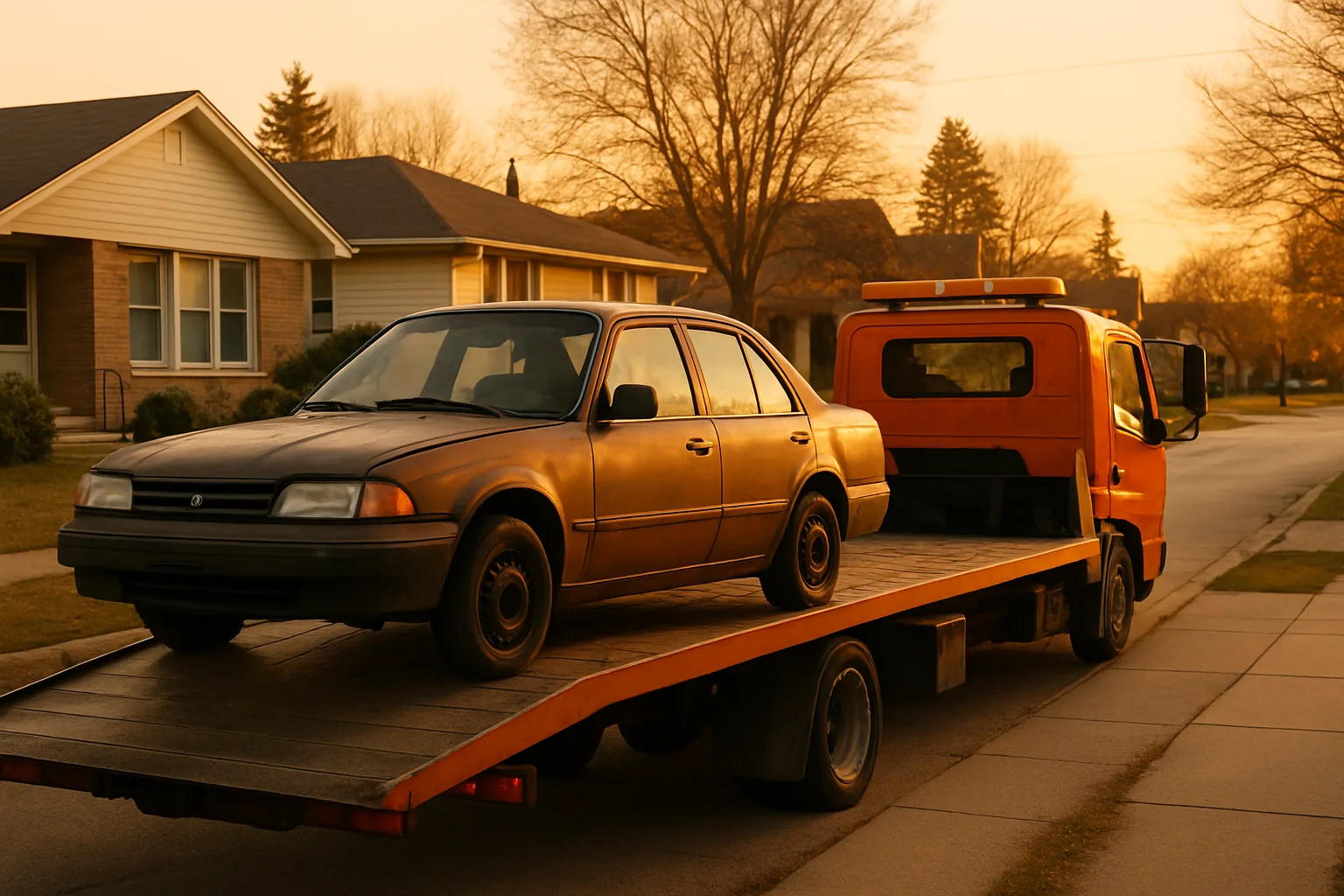
Why the Calendar Affects What Your Junker Is Worth
Most people assume scrap car prices are fixed — call a yard, get a number, done. But if you've ever wondered why your neighbour got more for a rusted-out pickup last spring than you did for a similar car in January, the answer isn't luck. Season and weather play a real role in what you'll pocket when you sell your scrap car in Canada. Understanding the pattern can put more money in your hands.
This isn't abstract market theory. It's boots-on-the-ground reality for anyone looking at free scrap car pickup Sudbury — a city where winters are long, roads are rough, and vehicle wear is serious. Timing matters. Here's how it works.
The Seasonal Demand Curve in the Scrap Car Market
The scrap metal industry runs on cycles, and those cycles are heavily tied to construction and manufacturing activity. When job sites are active and mills are running, demand for ferrous scrap — the steel and iron that make up most of a vehicle's weight — goes up. That activity peaks in spring and summer across Ontario and the rest of Canada.
What does that mean for your old car or truck? More demand for raw steel means scrap yards are moving inventory faster. They're willing to pay a bit more per tonne because they can turn it around. The reverse is also true: when construction slows down heading into late fall and winter, demand softens and prices tend to follow.
- Spring (March–May): Demand picks up, yards get competitive, prices often improve.
- Summer (June–August): Strong activity, manufacturing and construction at peak, solid pricing window.
- Fall (September–November): Transition period — still decent, but mills start pulling back as building season winds down.
- Winter (December–February): Lower activity, softer demand, prices typically at their seasonal floor.
None of this is a guarantee — scrap metal prices fluctuate constantly based on global commodity markets, not just the calendar. But the seasonal pattern is real and documented. Knowing it helps you make a smarter call about when to pull the trigger.
How Sudbury's Climate Specifically Shapes Junk Car Removal Timing
Sudbury, Ontario doesn't get to play by the same rules as a yard in, say, Toronto or Hamilton. Winters here are serious. Heavy snowfall, deep freeze, and freeze-thaw cycles from late October through April affect everything from road conditions to how quickly a yard can process incoming vehicles.
When a vehicle is buried under a foot of snow in a driveway, a tow truck needs more time, more equipment, and sometimes a second visit. That adds friction. Some buyers reduce offers in deep winter simply because the logistics cost more. If your car is sitting in a tight driveway with ice packed around the tires, expect that to be factored in — even with free scrap car pickup included in the deal.
Timing your call for junk car removal Sudbury in late spring or early summer isn't just about better prices. It's about a smoother process. Roads are clear. Tow operators have more flexibility. Yards are actively looking to fill capacity. You get faster pickup, fewer headaches, and a better chance at a competitive offer.
That said — if your car needs to go now, don't wait. A winter pickup is still worth doing. Free towing is free towing, and getting cash today is better than letting something deteriorate further through another freeze cycle.
What Drives Scrap Metal Prices Beyond the Weather
Season is one lever. But it's not the only one pulling on scrap metal prices today. Understanding the full picture helps you set realistic expectations when you're figuring out how much is my car scrap value.
A standard end-of-life passenger vehicle in Canada weighs roughly 1,200 to 1,800 kilograms. The vast majority of that weight is steel. Steel prices on the commodity market are tied to global supply chains — what mills in the U.S., Europe, and Asia are paying matters directly to what your local yard can offer. When steel prices spike internationally, Canadian yards pay more. When there's oversupply globally, those prices compress.
Other factors that move the number:
- Catalytic converters: If your vehicle still has its cat intact, that's a separate non-ferrous value — platinum, palladium, and rhodium are priced independently from steel.
- Aluminium and copper components: Engines, wiring harnesses, and radiators add non-ferrous value to the total.
- Vehicle condition: A complete car with all four tires, no major fluid leaks, and intact components is easier to process and prices better than a stripped shell.
- Distance from the yard: In a region as spread out as Northern Ontario, proximity to a processing facility affects what buyers will offer for pickup.
- Competition among buyers: This is the big one — and it's where platforms like SMASH can make a real difference (more on that below).
Disclaimer: All scrap metal prices fluctuate based on commodity markets, global demand, and local conditions. Always check current rates before making decisions — the figures above are general context only.
Why Buyer Competition Matters More Than Most Sellers Realize
Here's the part of the equation that most vehicle owners overlook entirely: the number of buyers competing for your vehicle is often more important than the season or even the current steel price.
If you call one yard and take their number, you have no idea whether that's a fair offer or a lowball. You're guessing. The yard knows the market; you don't. That information gap has cost Canadian vehicle owners real money for decades — and it's exactly what SMASH was built to fix.
Canadian scrap car removal from GetMyScrapCar works alongside platforms like SMASH to connect sellers with vetted buyers in a competitive format. Instead of one call to one yard, your vehicle gets in front of multiple buyers who bid against each other. That competition is what reveals the actual market value — not a single number from a single buyer who has every incentive to offer less.
The SMASH scrap metal auction model means buyers know they have to compete. More competition typically means better price discovery for the seller. You're not leaving money on the table because you didn't know who else to call. The platform does that work for you — no subscription fees, no guesswork. SMASH only wins when you do.
If you want to dig into how this process works and what to expect at different stages, read Canadian scrap car guides that walk through the full lifecycle of a scrap car sale.
Practical Tips to Get the Most for Your Scrap Car in Sudbury
You don't need a commodity trading background to sell smart. A few practical moves can meaningfully improve your outcome — whether you're selling in July or January.
- Don't strip it yourself unless you know what you're doing. Removing parts incorrectly can damage other components that have value. Let the yard assess it complete first.
- Keep the catalytic converter in place. Stolen or missing cats reduce your payout significantly. Buyers will notice and adjust their offer downward.
- Have the ownership (vehicle title) ready. A clean transfer moves faster and gives buyers more confidence. Some buyers won't proceed without it.
- Take photos of the car before pickup. This protects you and helps buyers assess value more accurately — which can improve their confidence in making a stronger offer.
- Get more than one quote. This is the single highest-impact thing you can do. One quote is a number. Two or three quotes are a market. Competitive platforms remove the hassle of making multiple calls yourself.
- Check whether free towing is included. Towing fees can eat $150–$300 out of your payout if they're not part of the deal. Make sure pickup is included before you agree to a number.
For free junk car removal for cash in Northern Ontario, timing your sale for the spring or early summer window gives you the best shot at strong demand and clean logistics. But more importantly, making sure buyers are competing for your vehicle matters every single day of the year.
If you're ready to move forward, schedule a free scrap car pickup and see what your vehicle is actually worth on the open market. And if you're in Northern Ontario specifically, check out Sudbury scrap metal services for local pickup details.
Frequently Asked Questions
Q: Does free scrap car pickup in Sudbury actually mean no cost to me?
Yes — with legitimate services offering free towing, there's no charge for the pickup itself. The tow cost is absorbed by the buyer. Always confirm this before agreeing to a quote, because some services advertise "free" but deduct a towing fee from your payout at the end.
Q: What time of year is best for junk car removal in Sudbury?
Late spring through early summer tends to offer the best combination of active buyer demand, accessible logistics, and stronger commodity pricing. That said, scrap car prices shift with global steel markets — not just the calendar. Getting competitive quotes matters more than perfect timing.
Q: How do I find out what my scrap car is worth today?
The most reliable way is to get multiple offers from vetted buyers. Scrap metal prices fluctuate daily based on commodity markets, so a single call to a single yard rarely tells the full story. Platforms like SMASH connect sellers with competitive buyers so the market sets the price — not one buyer with no competition.
Q: Does my car need to be running to qualify for free pickup?
No. Most scrap car removal services pick up non-running, damaged, and complete write-offs. A flatbed or dolly tow handles immobile vehicles. The condition will factor into the offer, but a non-runner absolutely qualifies for free towing.
Q: Do I need the ownership documents to sell my scrap car in Ontario?
In most cases, yes. Ontario requires a signed transfer of ownership to legally sell a vehicle — even a scrap one. Have your vehicle permit (ownership) ready. If you've lost it, a replacement can be obtained through ServiceOntario before the sale.
When you're ready to stop watching that old car rust in the driveway, sell your scrap car in Canada through a process that's built around fair pricing, free towing, and real buyer competition. Get your free quote at sell-myscrapcar.ca.
Stay current on scrap metal market trends and industry news — follow SMASH on LinkedIn for regular updates on pricing, market conditions, and what's moving in the recycling industry across North America.