Why the Calendar Affects What You Get Paid for Your Scrap Car
Most vehicle owners assume scrap car prices are fixed — like a sticker on a shelf. They're not. If you're trying to sell my car for cash Regina, the month you call matters more than most people realize. Seasonal demand, weather conditions, and commodity market cycles all push scrap metal values up or down throughout the year. Understanding those patterns can put more money in your pocket.
This isn't abstract theory. Scrap yards across Saskatchewan see real swings in what they'll pay for an end-of-life vehicle depending on the time of year. Knowing when to act — and why — gives you a clear advantage over someone who just calls the first number they find and takes whatever is offered.
How Weather Conditions in Saskatchewan Directly Impact Scrap Car Value
Saskatchewan winters are brutal. That's not news to anyone who's scraped ice off their windshield in February. But those same winters create operational headaches for scrap yards and towing companies that ripple directly into the prices they offer. When roads are icy and temperatures drop below -20°C, pickup logistics get slower, more expensive, and more complicated. Some smaller operations scale back entirely.
When supply of scrap vehicles tightens — because fewer people are calling and fewer pickups are happening — yards can afford to be selective. Prices don't necessarily spike, but the volume of transactions drops significantly. Conversely, the spring thaw brings a flood of activity. People clean out driveways, finally deal with that dead car that's been sitting since October, and call en masse. That surge in supply can push individual offers down slightly, even as the overall market stays active.
Here's what that means practically:
- Winter (December–February): Fewer sellers calling in, but logistics costs are higher. Offers may be conservative to offset towing challenges.
- Spring (March–May): High volume of calls as people clear their properties. Competition among sellers increases.
- Summer (June–August): Steady activity, often favorable for sellers as scrap metal demand picks up with construction and manufacturing cycles.
- Fall (September–November): A secondary window of activity before winter hits. Yards often want to move inventory before freeze-up.
Timing your sale to match lower seller volume — late fall or midsummer — can improve the offers you receive. It won't transform a $200 car into a $1,000 car, but it can make a meaningful difference on a vehicle with more recoverable material.
Scrap Metal Commodity Prices: The Bigger Force Behind Your Offer
Weather affects timing. But the price of steel, aluminum, and copper on global commodity markets drives the actual dollar figure you're quoted. Scrap yards aren't guessing what your car is worth — they're doing math based on what mills and smelters are paying per tonne that week.
Ferrous metal (the steel and iron that make up most of a vehicle's weight) fluctuates with industrial demand. When North American steel mills ramp up production, scrap prices rise. When construction slows or manufacturing dips, those prices fall. A car that weighs roughly 1,300 kilograms can generate meaningfully different returns depending on where ferrous prices sit on any given day.
Non-ferrous metals like aluminum (found in engine blocks, wheels, and radiators) and copper (wiring harnesses) trade on separate cycles. Catalytic converters carry platinum group metals that have their own volatile pricing history. Platforms like SMASH are built to help recyclers and buyers track this kind of commodity data and price inventory accordingly — bringing market transparency to what used to be a handshake guessing game.
The takeaway for you as a seller: when you hear that scrap prices are "up," it usually reflects real movement in commodity markets — not seasonal promotion. Checking current rates before you call any buyer gives you a baseline for what's reasonable to expect. For the most current pricing guidance, read Canadian scrap car guides that track what's affecting offers right now.
Why Regina and Saskatchewan Have Unique Seasonal Pricing Dynamics
Not every market experiences seasons the same way. Regina sits in one of the coldest and most temperature-extreme regions in North America. That creates conditions that are distinct from, say, a scrap yard operating in coastal British Columbia or southern Ontario.
Here's what makes Regina scrap metal services different from other markets:
- Extended freeze periods: Regina winters can last from November through March. That's nearly five months where outdoor vehicle storage, towing operations, and yard processing are all weather-affected.
- Agricultural cycles: Saskatchewan's economy is tied to agriculture. When harvest is strong and farm incomes are up, local industrial activity picks up — and scrap demand can follow.
- Distance from processing hubs: Scrap generated in Regina has to travel further to reach processing facilities than material from Toronto or Vancouver. Towing and transport costs are baked into the offers you receive. That's why free towing matters here — it closes a real cost gap for sellers.
- Inventory build-up over winter: Yards that stockpile vehicles over winter move aggressively in spring to clear space. That can work in your favor if you're selling at the right time in the cycle.
Understanding your local market isn't about gaming the system. It's about knowing why one yard might quote you differently than another — and what forces are behind that number.
Scrap Metal Inventory Management and How It Affects Your Offer
Here's a side of the business most sellers never see. Scrap yards manage inventory the same way any warehouse does — and when a yard is full, they become less motivated to acquire more vehicles. When they're running lean heading into a strong pricing window, they compete harder for supply.
This is where scrap metal inventory management becomes directly relevant to your payout. A yard with an overloaded lot in April has less urgency to offer top dollar. A yard clearing space in September, heading into a strong Q4 pricing window, may quote more aggressively to lock in good-quality vehicles.
Platforms like SMASH address this asymmetry directly. By creating a competitive auction environment where multiple vetted buyers bid on scrap inventory, SMASH removes the single-buyer dynamic that typically leaves sellers guessing. Competition reveals the market. A seller getting one quote from one yard has no way to know if that offer reflects true market value — or just what that one buyer felt like offering that day.
For vehicle owners trying to sell your scrap car in Canada, the principle is the same. More buyers seeing your vehicle means better price discovery. No subscription fees. No guessing.
What You Can Actually Control When Selling a Junk Car in Regina
You can't control commodity prices. You can't change the weather. But there are real decisions within your control that affect what you walk away with when you sell my junk car Regina.
Document what you have. A car with a recent safety inspection record, a VIN that traces cleanly, and photos showing intact components — catalytic converter, alternator, wheels — gives buyers more confidence. More confidence means better offers. Platforms that support photo documentation and serial tracking (SMASH includes this) exist specifically because documentation increases what buyers will pay.
Know your non-ferrous components. Aluminum wheels, intact copper wiring, and an undamaged catalytic converter add real recoverable value beyond base ferrous weight. Mentioning these components specifically when you call a buyer signals you know what you're selling — and typically improves the conversation.
Get multiple quotes. This one sounds obvious but most people don't do it. Calling two or three junk car buyers near me for cash takes twenty minutes and gives you actual market data instead of one buyer's opening offer.
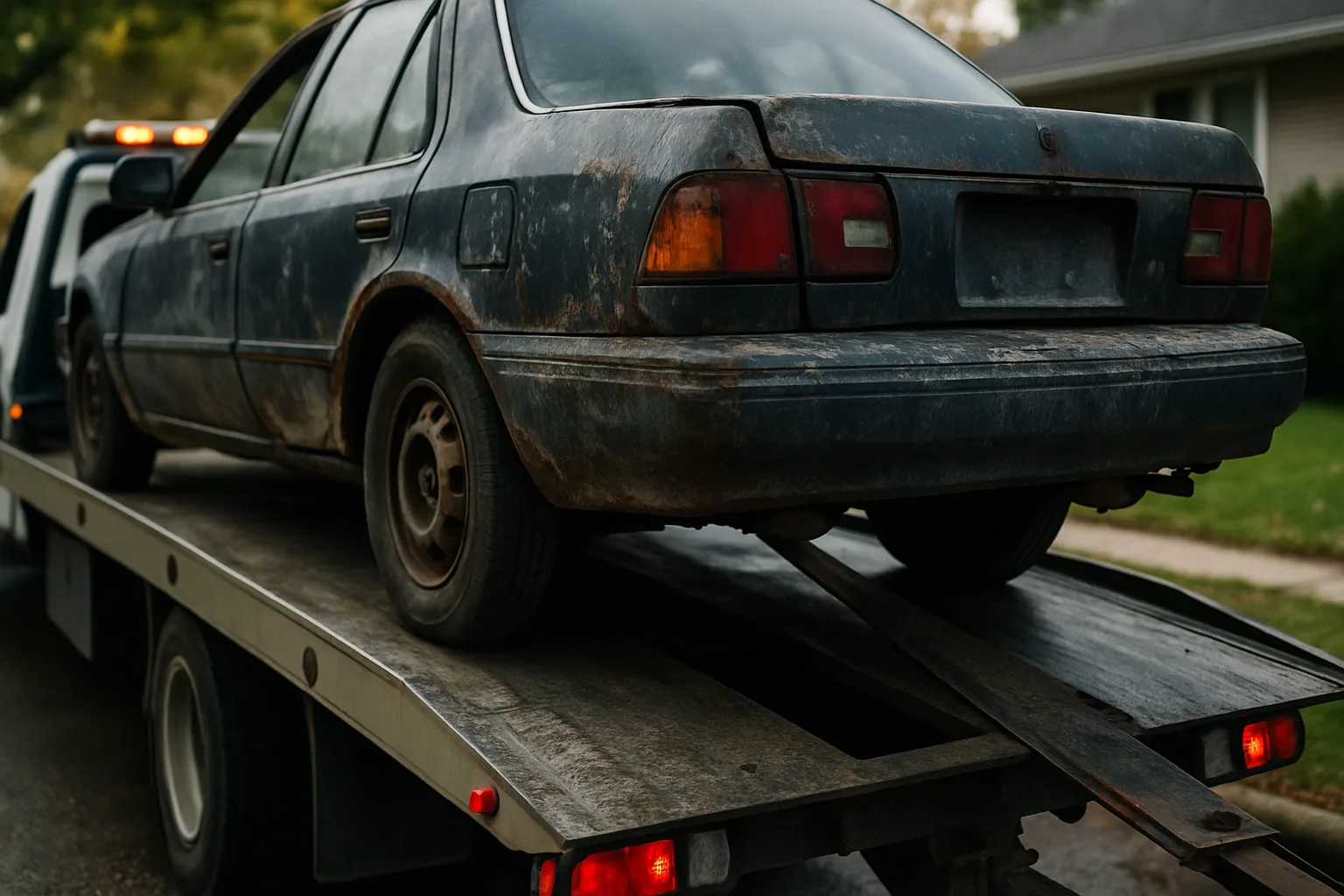
Use free towing. Any time a buyer offers free pickup, that's real money you're not spending. In a province like Saskatchewan where distances can be significant, towing fees can easily eat into an otherwise fair offer. Always confirm free towing before you commit. You can schedule free scrap car pickup in Canada without upfront cost — no surprises on pickup day.
Timing matters, but don't wait forever. A vehicle sitting on your property depreciates. Tires go flat. Fluids leak. Batteries die. Mice find their way in. Every month you wait, the offer goes down — not up. If prices are reasonable now, act now. You can also schedule a free scrap car pickup to lock in today's market value before conditions shift.
Disclaimer: Scrap metal and vehicle prices fluctuate based on commodity markets, regional demand, and yard-specific conditions. Always check current rates before committing to a sale.
Frequently Asked Questions
Q: Does it really matter what time of year I sell my car for cash in Regina?
Yes, but it's one factor among several. Seasonal timing can affect how many sellers are competing with you and how eager local yards are to acquire inventory. Summer and early fall tend to be favorable windows in Saskatchewan, but commodity prices and your vehicle's specific recoverable materials matter just as much.
Q: How do I know if I'm getting a fair offer from junk car buyers near me?
Get at least two or three quotes before committing. A fair offer reflects current commodity prices, your vehicle's weight and non-ferrous content, and local towing costs. If a buyer can't explain the basis of their offer, that's a red flag. Platforms that create competitive bidding — like SMASH — help surface actual market value instead of a single buyer's discretionary number.
Q: Do I need a title to sell my scrap car in Regina?
Saskatchewan has specific requirements around vehicle documentation for scrap sales. Most licensed auto recyclers and scrap buyers will require proof of ownership, though requirements can vary. Contact your buyer directly before the pickup to confirm what documents they need. Having your VIN available helps buyers verify the vehicle's history regardless of title status.
Q: What's the average weight of a scrap car and how does that affect my payout?
A typical passenger car weighs between 1,100 and 1,600 kilograms. Larger trucks and SUVs can exceed 2,000 kilograms. Most of that weight is ferrous steel, which is priced per tonne. Non-ferrous components — aluminum, copper, catalytic converters — add value beyond the base weight calculation. The exact dollar figure depends on current commodity rates, which change week to week.
Q: Is free towing actually free, or are there hidden fees?
Reputable scrap car buyers offering free towing mean exactly that — no deduction from your quote at pickup. Always confirm in writing or verbally before the driver arrives. If a buyer surprises you with fees on the day of pickup that weren't mentioned in your quote, you have every right to walk away. Services like sell-myscrapcar.ca are upfront about free towing as a core part of the offer.
Ready to stop letting that vehicle sit? sell your scrap car in Canada and get a fair, transparent quote today at sell-myscrapcar.ca. No pressure, no surprises — just a straightforward process with free pickup included.
Stay current on scrap metal market conditions and industry news by following SMASH on LinkedIn — practical updates for recyclers, yards, and anyone tracking what scrap is worth right now.