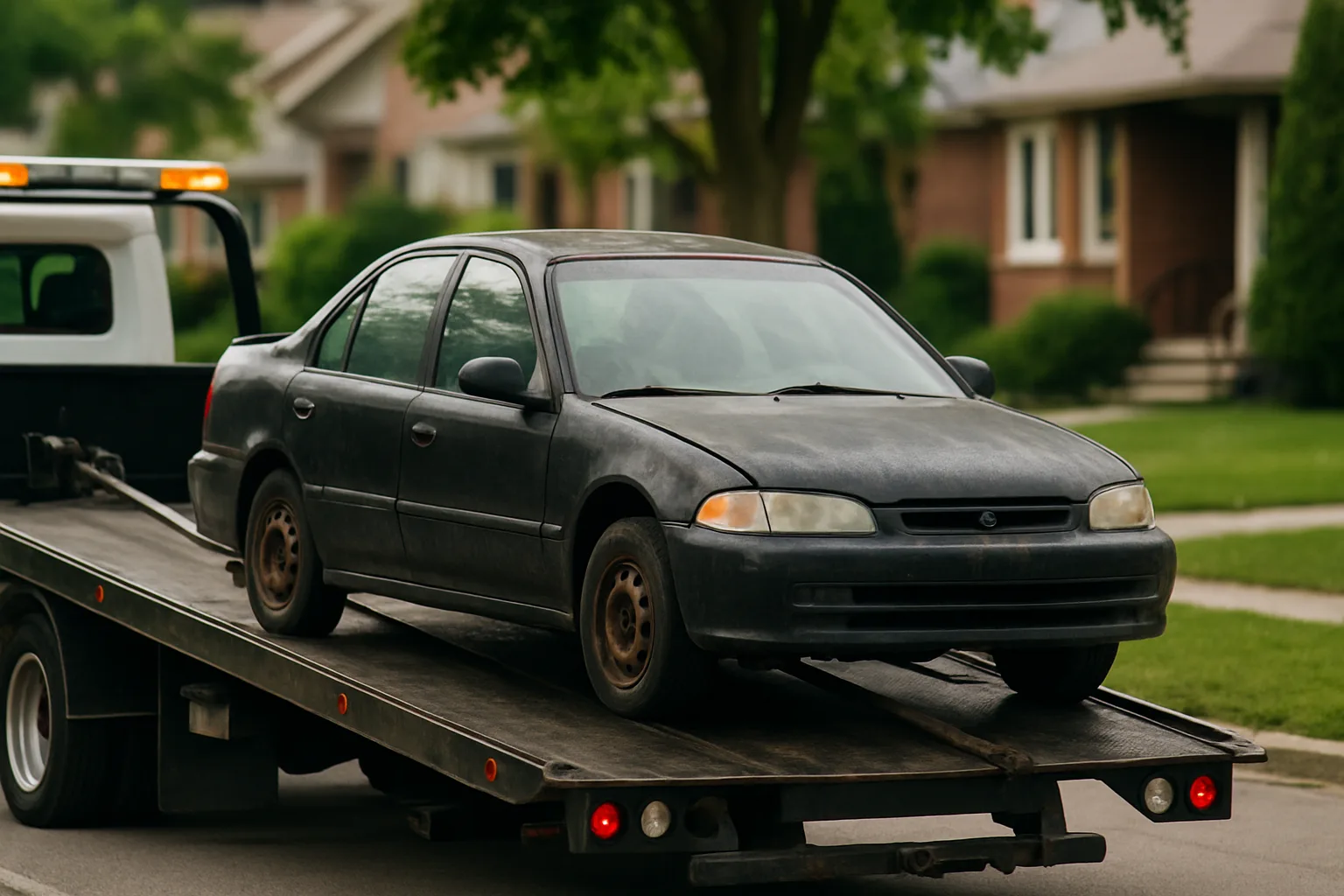
What Actually Happens to Your Junk Car After It Gets Towed Away?
Most people hand over their keys, watch the tow truck pull away, and never think twice about where their old car ends up. But if you're trying to sell my junk car Etobicoke and you care about doing it responsibly, the full picture matters. End-of-life vehicles don't just disappear — they go through a detailed recycling process that recovers metals, fluids, and components that would otherwise sit in a landfill for decades.
The good news? Canada's auto recycling industry is one of the most efficient in North America. And for vehicle owners in Etobicoke and across Ontario, understanding that process helps you make smarter decisions — including who you sell to and why it matters.
Why Eco-Friendly Car Disposal Matters More in 2026
A typical end-of-life vehicle contains fluids, heavy metals, and plastics that can leach into soil and groundwater if a car is simply crushed without proper processing. We're talking about engine oil, coolant, transmission fluid, brake fluid, power steering fluid, and in older vehicles, refrigerants that are regulated under environmental law. None of that should end up in a landfill untreated.
Ontario has strict environmental regulations governing how auto recyclers handle these materials. Legitimate recyclers depollute vehicles before they ever touch a shredder. That means draining and properly disposing of every hazardous fluid, removing the battery for recycling, and pulling out the catalytic converter — which contains platinum, palladium, and rhodium — for separate high-value processing.
Choosing a compliant recycler isn't just good for the environment. It protects you legally. If your vehicle is disposed of improperly and it's still registered in your name, that's a problem you don't want.
The Step-by-Step Recycling Process for Scrap Cars in Canada
Here's exactly what happens to a junk car at a reputable Canadian auto recycler after pickup:
- Fluid Extraction: All hazardous fluids are drained first — oil, coolant, brake fluid, power steering fluid, transmission fluid, and A/C refrigerant. These are collected separately and processed or disposed of according to provincial regulations.
- Battery Removal: The 12-volt lead-acid battery is pulled and sent to a battery recycler. Lead is one of the most successfully recycled materials on the planet — over 95% of lead-acid battery material gets reclaimed.
- Catalytic Converter Removal: This is a critical step. The catalytic converter contains precious metals. Serious recyclers don't just throw it into the general scrap pile — they process it separately. Platforms like SMASH even offer a dedicated catalytic converter auction process, so recyclers and buyers can get true market value through competitive bidding rather than guessing at a price from one buyer.
- Parts Harvesting: Usable parts — alternators, starters, doors, mirrors, engines with remaining life — are pulled for resale. This extends the usable life of components and reduces demand for new manufactured parts.
- Tire and Rubber Removal: Tires are removed and sent to rubber recyclers. They often end up as playground surfaces, athletic tracks, or road filler material.
- Hulk Shredding: What's left — the steel body — gets crushed and shredded. Ferrous metal is sorted magnetically. Non-ferrous metals like aluminum and copper are separated using eddy current systems.
- Metal Refining: The recovered steel goes to mills. Aluminum goes to smelters. Copper gets processed separately. Almost 80% of a vehicle's weight is recoverable metal.
This isn't a quick job. A properly depolluted and processed vehicle takes time and trained labour. That's why working with a legitimate service — not someone offering fast cash from a random text message — protects both you and the environment.
What Your Junk Car Is Actually Worth: Breaking Down the Value
One of the most common questions from vehicle owners in Etobicoke is simple: what's my old car worth? The honest answer is that it depends on several variables — and anyone who gives you a hard number without asking questions is probably low-balling you.
Here's what drives junk car prices today:
- Scrap steel weight: A typical passenger car weighs between 1,200 and 1,800 kg. The steel price per tonne fluctuates with global markets — checking current rates matters before you accept any offer.
- Catalytic converter value: Depending on the vehicle make and model, the catalytic converter alone can carry significant value because of the platinum group metals inside. This is where many private buyers undercut sellers — they buy the whole car cheap and flip the cat for real money.
- Aluminum content: Newer vehicles use more aluminum — in body panels, engine blocks, and wheels — which adds non-ferrous value on top of the steel price.
- Condition and completeness: A car missing its catalytic converter, engine, or transmission is worth less. Recyclers price based on what's actually there.
- Location and towing distance: In markets like Etobicoke and the broader Ontario corridor, towing is often included. Elsewhere, distance can affect the net offer.
Disclaimer: scrap metal and vehicle prices fluctuate based on commodity markets. Always check current rates before accepting an offer. The figures above are general context, not guarantees.
If you want to sell your scrap car in Canada and actually understand what you're being offered, transparency matters. Platforms and services that explain their pricing process give you a far better outcome than a quick lowball from an unverified buyer.
Free Towing and What to Expect on Pickup Day in Etobicoke
Free towing is standard in this industry — if someone is charging you for pickup on a scrap car, walk away. Reputable services covering Etobicoke and the wider Ontario market include towing in their offer. You shouldn't pay a cent out of pocket to get rid of a vehicle.
Here's what to have ready when the tow truck shows up:
- Your vehicle ownership (title/registration): This is essential. In Ontario, you need to sign over the ownership document to legally transfer the vehicle.
- Your ID: Standard identity verification is normal and protects both parties.
- Your plates: Remove them before pickup. In Ontario, you return plates to ServiceOntario or transfer them to your next vehicle — they don't go with the car.
- Personal belongings: Do one final sweep. Chargers, sunglasses, insurance documents — these don't come back once the car's gone.
- The keys: Both sets if you have them.
The actual pickup is usually fast — under 30 minutes in most cases. The driver loads the vehicle, you hand over the paperwork, and the transaction is done. If you want to schedule a free scrap car pickup, the process from quote to tow is typically completed within 24 to 48 hours for most Ontario locations.
For vehicle owners further east, services covering scrap car removal in Oshawa and surrounding Durham Region communities follow the same basic process — free tow, fast turnaround, paperwork handled on pickup day.
How SMASH Creates Transparency in the Scrap Car Market
Here's the uncomfortable truth about selling a junk car the old way: you make one call, get one number, and have no idea if it's fair. You're guessing. The buyer knows the real value of your catalytic converter, your aluminum wheels, and your steel weight. You don't. That's not a transaction — it's a negotiation where only one side has the data.
SMASH — the Scrap Metal Auction Sales Hub — changes that dynamic. Instead of a single buyer making a take-it-or-leave-it offer, SMASH puts inventory in front of vetted buyers and lets competition drive the price. That's how real price discovery works. More buyers bidding on your load — whether that's a full vehicle hulk, a catalytic converter, or a load of non-ferrous material — means the market sets the price, not a single buyer's margin target.
For recyclers and auto salvage yards in Etobicoke and across Ontario, using a platform like SMASH to process and auction catalytic converters and recovered metals means they capture actual market value. And when recyclers get better prices, vehicle owners benefit too — through more competitive cash offers on their end-of-life cars.
If you want to understand how the scrap car market actually works before you sell, read Canadian scrap car guides that break down pricing, recycling, and what to expect at every step.
Making the Right Choice for Your Car and the Environment
Selling a junk car isn't just a financial transaction — it's a disposal decision. An end-of-life vehicle handled properly keeps hazardous materials out of landfills, puts recycled steel back into the supply chain, and ensures precious metals from catalytic converters get recovered responsibly. That matters, especially as commodity markets and environmental regulations tighten across Canada.
The best outcome for you as a seller is a fair price, free towing, and no paperwork headaches. The best outcome for everyone else is a vehicle that gets processed correctly. Those two goals aren't in conflict — they align perfectly when you work with the right service.
If your vehicle is sitting in a driveway in Etobicoke or anywhere else across Ontario, don't let it depreciate further. The steel doesn't get more valuable. The fluids don't get safer. And the title paperwork doesn't get simpler with time.
When you're ready, free junk car removal across Canada is available — no hidden fees, no pressure, and a process built around making this as simple as possible for you. sell your scrap car in Canada and get a free, transparent quote at sell-myscrapcar.ca. It takes a few minutes to get started, and the tow truck handles the rest.
Frequently Asked Questions
Q: How do I sell my junk car in Etobicoke without getting ripped off?
Start by getting multiple quotes so you have a baseline. Know that your catalytic converter has real precious metal value — don't let a buyer downplay it. Work with services that explain their pricing process clearly and include free towing in the offer. Transparency is the difference between a fair deal and leaving money on the table.
Q: Do I need a title to sell my scrap car in Ontario?
Yes. In Ontario, you need to sign over the vehicle ownership (sometimes called the title) to legally transfer the car to a buyer or recycler. Make sure your name matches what's on the document. If there's a lien on the vehicle, that needs to be resolved first. Reputable services will walk you through the paperwork on pickup day.
Q: What happens to the catalytic converter when I sell my junk car?
The catalytic converter is removed during the depollution stage and processed separately from the steel body. It contains platinum, palladium, and rhodium — all high-value precious metals. Serious recyclers and platforms like SMASH use competitive auction processes to get true market value for these components rather than selling them at a fixed price to a single buyer.
Q: How quickly can I get my junk car picked up in Etobicoke or Oshawa?
For most Ontario locations including Etobicoke and the Oshawa area, pickup can typically be arranged within 24 to 48 hours of accepting a quote. The actual pickup takes under 30 minutes in most cases. Have your ownership document, ID, and plates ready before the driver arrives.
Q: Will I get paid the same regardless of what my car is missing?
No — vehicle condition directly affects your offer. A car missing its catalytic converter, engine, or transmission will receive a lower offer than a complete vehicle. Be upfront about the condition when you get your quote so the final price matches expectations. Honest information upfront avoids surprises on pickup day.
Stay current on scrap metal market trends and industry insights by following SMASH on LinkedIn — practical updates for recyclers and scrap sellers across North America.