The Paperwork You Actually Need to Scrap a Car in Saskatoon
Most people assume getting rid of a junk car is complicated. It isn't — but skipping the paperwork step can turn a simple junk car removal Saskatoon pickup into a real headache. The good news? Saskatchewan keeps the process straightforward. If you know what documents to gather before you call, the whole thing moves fast.
This guide covers exactly what you need, what happens if you're missing something, and how platforms like SMASH help connect you with vetted buyers who handle this process every day. No guessing. No surprises.
Why Paperwork Matters When You Scrap a Car
Handing over a vehicle without the right documentation isn't just a bureaucratic inconvenience — it can leave you legally tied to a car you no longer own. If that vehicle gets abandoned, towed, or involved in something after it leaves your driveway, you want a clean paper trail proving you transferred it properly.
For scrap car buyers and auto recyclers in Canada, documentation also confirms the vehicle isn't stolen. A reputable buyer won't load your car without verifying ownership. That's not them being difficult — it's the industry standard, and it protects everyone involved.
- Protects you from liability after the car leaves your property
- Confirms legal transfer of ownership to the recycler or buyer
- Required for SGI (Saskatchewan Government Insurance) deregistration
- Prevents issues if the vehicle has an outstanding lien
The Core Documents You Need for Junk Car Removal in Saskatchewan
Let's get specific. Here's what the standard junk car removal process in Saskatchewan typically requires. Not every situation is identical, but this covers the vast majority of scrap car transactions.
1. Vehicle Registration
Your current SGI vehicle registration is the primary proof that you own the vehicle. It ties your name to the plate and the VIN. Dig it out of the glove box — it's usually there, slightly crumpled, wedged behind old oil change receipts. If you've lost it, SGI can issue a replacement.
2. Government-Issued Photo ID
You'll need valid photo ID that matches the name on the registration. A Saskatchewan driver's license works fine. If the car is registered to a business, be prepared to show documentation proving you're authorized to act on the business's behalf.
3. Title or Proof of Ownership
In Saskatchewan, the vehicle registration often serves as proof of ownership — but some buyers or recyclers may ask for additional documentation if the title history is unclear. If you bought the car privately and the paperwork was ever informal, get ahead of that conversation early.
4. Lien Release (If Applicable)
If you're still making payments on the car — or if there's an old loan that was paid off but never formally discharged — you'll need a lien release before you can legally transfer the vehicle. Check your vehicle's lien status through SGI or a PPSA (Personal Property Securities Act) search. This catches people off guard more than anything else in the scrap car process.
5. Bill of Sale
Many scrap car buyers will generate a bill of sale for you at pickup. It's a simple document recording the transaction. Keep a copy. It's your proof that the vehicle changed hands on a specific date, which matters if anything comes up later.
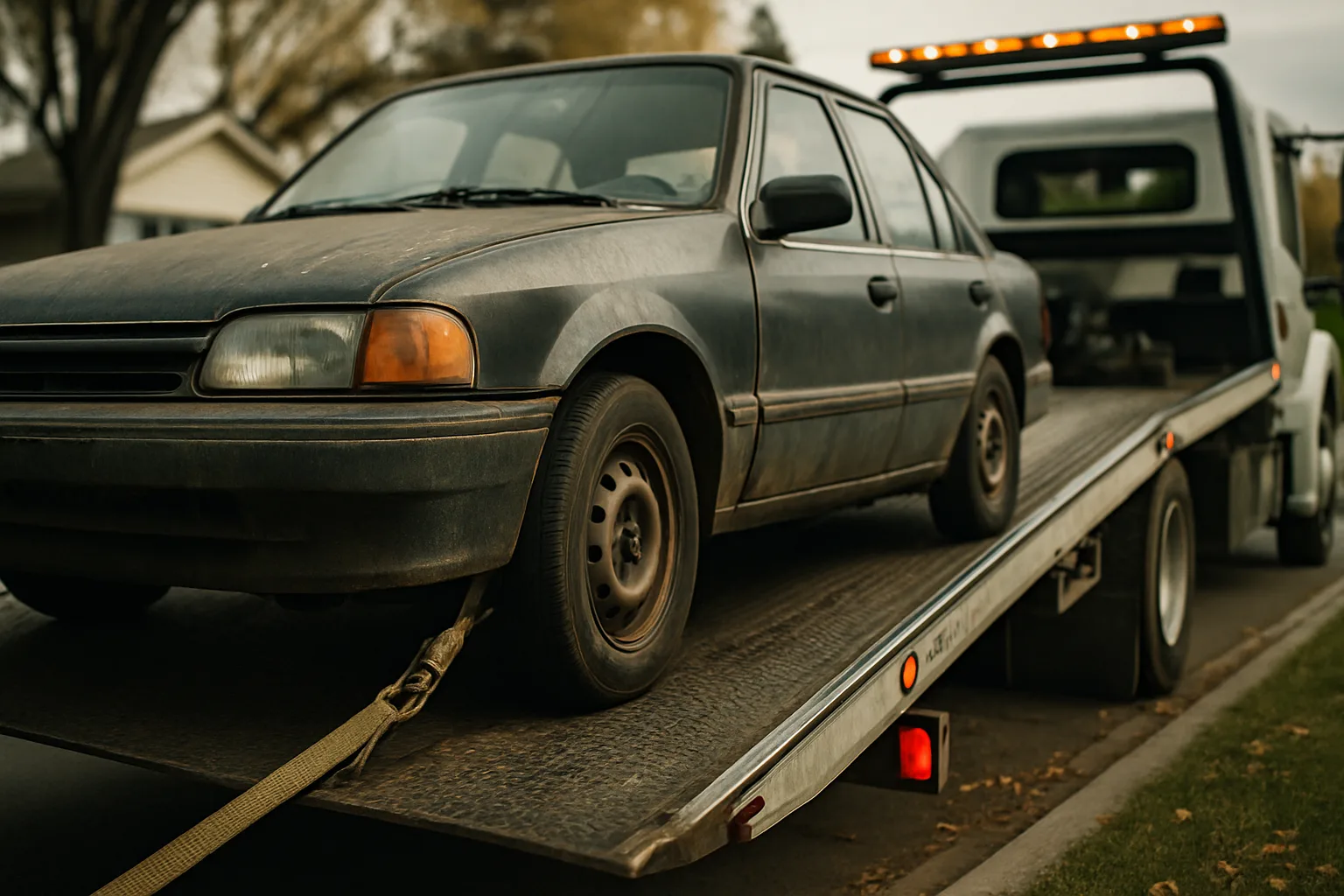
Once you've collected these documents, schedule a free scrap car pickup and have everything ready before the tow truck arrives. It makes the handoff clean and fast.
What Happens If You Don't Have the Title or Registration?
This comes up constantly. Vehicles get inherited. Registration lapses. People buy cars privately and the paperwork was never transferred properly. It's more common than you'd think, and it doesn't automatically kill the deal — but it does require extra steps.
If you've inherited a vehicle, you'll need to go through the estate process with SGI to get the vehicle transferred into your name before you can legally scrap it. This takes time, so the sooner you start, the better. If registration has simply lapsed, that's usually easier to resolve — SGI can help you sort out the documentation status.
What you should not do is hand over a vehicle without any documentation and assume everything will work out. A legitimate auto recycler won't accept that, and anyone who does is a red flag. Platforms like SMASH connect you with vetted buyers who follow proper transfer protocols — which is exactly what you want when you're trying to get this done cleanly.
If you're unsure about your specific situation, read Canadian scrap car guides for more detailed breakdowns on ownership transfers and title issues.
Cancelling Your Insurance and Plates Before Pickup
This step isn't a document you need to provide — but it's something you need to do as part of the process. Once you've confirmed a pickup date for your scrap car in Saskatoon, contact your insurance provider to cancel your policy on that vehicle. You'll likely get a partial refund on unused premium.
Return your plates to SGI. In Saskatchewan, plates belong to the vehicle owner, not the vehicle itself — but you still need to formally return or cancel them to stop accumulating registration fees. Don't leave the plates on the car when the tow truck arrives. Take them off, return them, and document that you did.
- Cancel auto insurance on the pickup date or the day before
- Return plates to an SGI issuer (not through the buyer or tow company)
- Keep your insurance cancellation confirmation for your records
- Request a refund of unused registration fees if applicable
How SMASH Makes the Scrap Car Process More Transparent
The old way of scrapping a car in Saskatchewan looked like this: you called one yard, they gave you a number, you had no idea if it was fair, and you either took it or didn't. No competitive pressure. No visibility into what your vehicle was actually worth. Just one opinion from one buyer.
That's where SMASH changes things. SMASH is a scrap metal auction platform that connects vehicle sellers with vetted buyers across North America. When your vehicle goes to auction, buyers compete — and competition is what drives better price discovery. You're not guessing at scrap car value today. You're seeing what the market actually offers.
Features like photo documentation, VIN lookup, and inventory tracking mean buyers have real information to bid on. That documentation confidence translates directly into better offers. If you want to sell scrap metal online through a process that's transparent from start to finish, SMASH is built for exactly that. You can explore more through Canadian scrap car removal from GetMyScrapCar to see how these platforms work together.
And if you're just trying to understand what your car is worth before you commit to anything, a scrap car value calculator Canada tool can give you a realistic baseline. Prices fluctuate based on metal markets, vehicle condition, and demand — so treat any estimate as a starting point, not a guarantee.
Getting a Fair Price for Your Scrap Car in Saskatoon
Once your paperwork is in order, the next question is always: what's this car actually worth? The honest answer is that it depends on several factors — and it changes week to week as metal markets shift.
For most end-of-life vehicles in Saskatchewan, value comes from a combination of:
- Scrap metal weight — heavier vehicles with more steel generally yield more
- Salvageable parts — engines, transmissions, catalytic converters, and body panels can add value beyond base metal
- Current commodity prices — steel, aluminum, and copper prices all affect what a recycler can offer
- Vehicle condition — a car that runs (or nearly runs) often fetches more than one that's been sitting for years
- Local demand — what buyers in Saskatoon and surrounding Saskatchewan markets are actively looking for
For cash for cars Saskatchewan transactions specifically, free towing is standard when you're selling to a licensed auto recycler. You shouldn't pay to have your car removed. If someone is quoting you a towing fee on top of a low cash offer, get another quote.
When you're ready to move forward, sell your scrap car in Canada through a service that gives you transparent pricing and handles the logistics. You've already done the hard part by getting your documents together — the rest should be easy.
Disclaimer: Scrap car prices fluctuate with commodity markets. Always check current rates before finalizing any transaction.
If you're in Saskatoon and want to know more about local options, Saskatoon scrap metal services can connect you with buyers and recyclers who know the local market.
Frequently Asked Questions
Q: Do I need the original title to scrap my car in Saskatchewan?
In Saskatchewan, your SGI vehicle registration typically serves as proof of ownership. The original title from another province (if the car was previously registered elsewhere) may also be requested. If you're missing documentation, contact SGI to confirm what alternatives are accepted before booking a pickup.
Q: What if my car is registered to someone who has passed away?
You'll need to go through the estate transfer process with SGI before the vehicle can be legally sold or scrapped. This typically involves providing estate documentation and having the vehicle transferred into your name or the estate's name. It takes time, so start the process early.
Q: Can I scrap a car in Saskatoon without a lien release?
No — not legally. If there's an active lien on the vehicle, the lender has a financial interest in it. You'll need to either pay off the lien or obtain a formal lien release before you can transfer ownership to a recycler. A PPSA search will confirm whether a lien exists.
Q: Is free towing standard for junk car removal in Saskatoon?
Yes. Reputable scrap car buyers and auto recyclers in Saskatchewan include free towing as part of the transaction. You should not have to pay for removal on top of accepting a lower cash offer. If a buyer quotes towing fees, compare offers before agreeing.
Q: How long does the junk car removal process take once I have my paperwork ready?
Once your documents are in order, most pickups in Saskatoon can be scheduled within 24 to 72 hours depending on yard availability. Having your registration, ID, and lien status confirmed ahead of time eliminates the most common delays. The actual pickup itself usually takes under an hour.
Getting rid of a scrap car doesn't have to be complicated — it just has to be done right. Pull your registration, confirm there's no lien, cancel your insurance, and get competing offers before you commit. If you're ready to move, sell your scrap car in Canada and get a free quote at sell-myscrapcar.ca. It's a straightforward process when you work with people who know what they're doing.
Follow SMASH on LinkedIn for industry updates, scrap metal market insights, and news from across the North American recycling space.