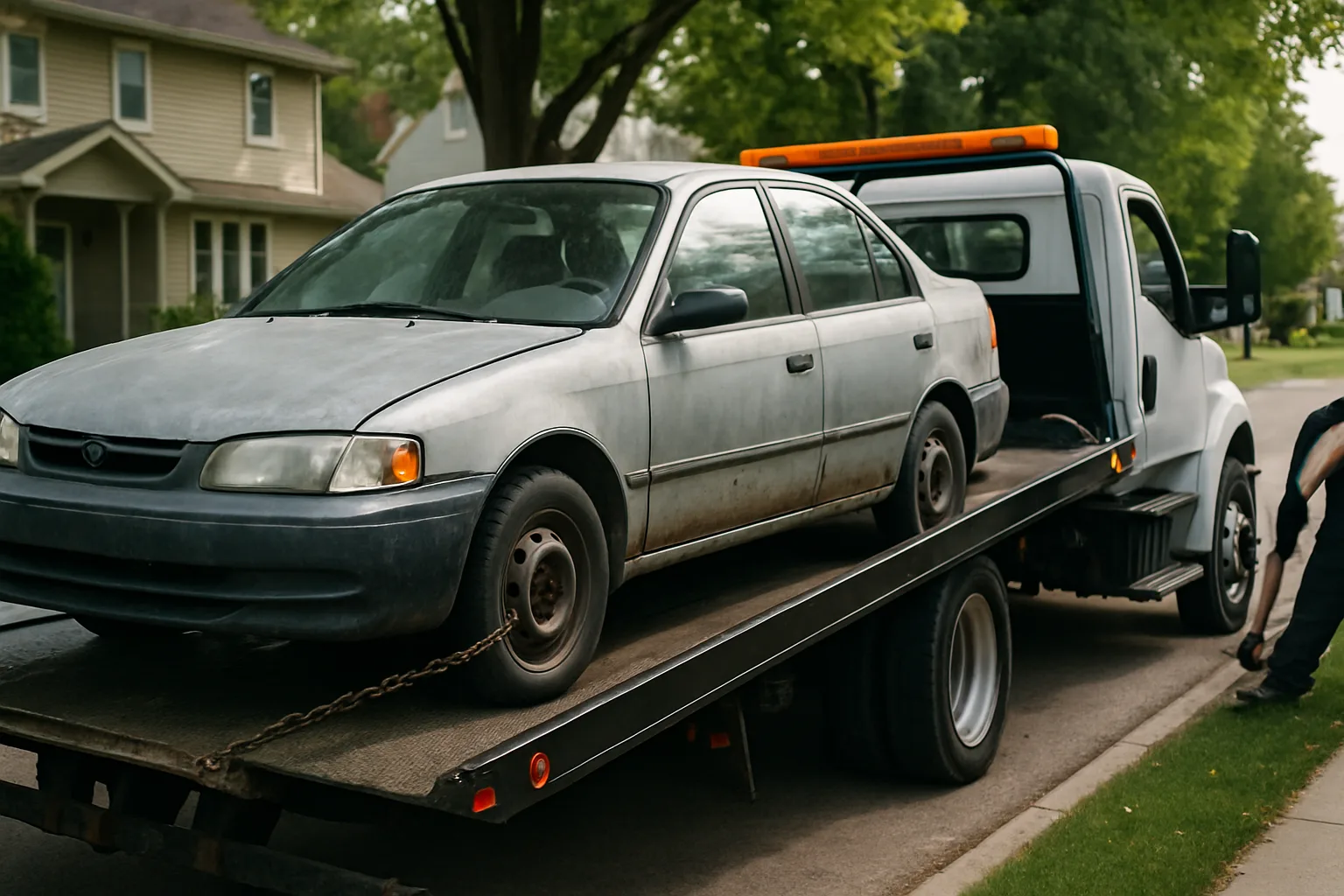
Most people assume a scrap car is a scrap car — a dead vehicle is worth whatever the yard feels like paying that day. That assumption costs Canadian vehicle owners real money every time.
The truth is, scrap car prices aren't random. They follow a logic. Make, model, condition, and even the specific mix of metals under the hood all drive what a buyer will pay. If you're trying to sell my car for cash Saskatoon, understanding that logic puts you in a stronger position before you pick up the phone.
This article breaks down exactly why two cars sitting side by side in a Saskatchewan driveway can fetch completely different prices — and how to make sure you're not leaving money on the table.
Vehicle Weight Is the Starting Point — But Not the Whole Story
Scrap pricing starts with steel. Most vehicles are primarily ferrous metal, and ferrous scrap prices are quoted by the ton. A heavier vehicle means more raw material, which means a higher baseline payout. A full-size pickup truck or a large SUV will almost always return more per vehicle than a compact sedan, purely on tonnage.
But weight alone doesn't tell the full story. The composition of that weight matters enormously. An older domestic truck built in the 1990s carries a lot of heavy-gauge steel. A newer import compact may weigh less overall but contain more aluminum components — and aluminum trades at a significantly higher price per pound than steel.
Here's what generally affects weight-based value:
- Full-size trucks and vans — highest raw steel tonnage
- Large SUVs — substantial ferrous value, often with aluminum hoods and panels
- Mid-size sedans — moderate weight, mixed metal composition
- Compact cars — lower tonnage, sometimes offset by non-ferrous components
- Older North American vehicles — tend to be heavier gauge steel throughout
If you're in Saskatoon weighing your options on an old half-ton versus a 2010 hatchback, expect a noticeable difference in quoted price — even if both are completely non-running.
Why Make and Model Change the Equation on Scrap Car Pricing
Not every vehicle scraps equally. The make and model determine two critical things: the non-ferrous metal content and the catalytic converter value. Both can swing your payout by hundreds of dollars.
Catalytic converters — "cats" in the trade — contain platinum group metals (PGMs): platinum, palladium, and rhodium. These are genuinely precious metals, and their value fluctuates with commodity markets. Some makes and models are fitted with cats that carry significantly more PGM loading than others. Certain Honda, Toyota, and truck-platform vehicles are known for higher-value cats. A late-model V6 or V8 truck may carry multiple cats. That alone changes the scrap value conversation.
Beyond cats, the make and model affect:
- Aluminum content — many European and Japanese makes use more aluminum in engine blocks, suspension, and body panels
- Copper wiring density — larger, more complex vehicles carry more wiring harness weight
- Core parts value — some models have cores (starters, alternators, A/C compressors) that trade at premium prices
- Recyclable plastics and rubber — less liquid than metal, but part of the total vehicle picture
This is why platforms like SMASH matter. When you sell your scrap car in Canada through a competitive marketplace rather than a single buyer making one offer, buyers who specifically value certain makes or metal compositions will bid accordingly. Competition can help reveal the real market for your specific vehicle — not just a flat-rate guess.
Condition Affects Price More Than Most Sellers Expect
Condition is where sellers most often underestimate or overestimate their vehicle's value. The scrap trade isn't sentimental — it doesn't care about your maintenance history or the new tires you put on last spring. But condition does matter, in specific, practical ways.
What hurts scrap value:
- Missing catalytic converter (a significant loss — these are the most valuable single component on most scrapped vehicles)
- Stripped interior or missing major components
- Fire or flood damage — can contaminate metals and complicate processing
- Extensive body rust that has eaten into structural steel
- Missing wheels or tires (reduces drivability for tow logistics, not metal value directly)
What doesn't hurt scrap value as much as sellers think:
- Non-running engine — the metal is still there
- Body damage and collision dents
- High mileage — scrap buyers don't care about the odometer
- Expired registration
- Failed emissions tests
The honest answer is that a complete vehicle — even a badly damaged, non-running one — will return more than a stripped one. If you're thinking about pulling parts before you scrap it, factor in whether you'll realistically sell those parts versus what the removed components would have added to your quote.
How to Sell My Junk Car in Saskatoon Without Losing Money on the Deal
If you're trying to sell my junk car Saskatoon, the process matters as much as the price. A lot of sellers in Saskatchewan get a single quote from one local buyer, accept it, and never know if they left $50 or $500 on the table. That's the old way — one buyer, one call, no competition.
Here's a better process:
- Document your vehicle properly before you quote. Know the year, make, model, trim, and whether your cats are intact. Take photos. Accurate information gets accurate quotes.
- Don't strip it before quoting. Let the buyer assess the full vehicle. Stripped vehicles often get penalized more than the parts are worth when sold individually.
- Ask specifically about free towing. Free towing is standard in this industry for scrap vehicles — if a buyer is deducting a tow fee from your quote, that's a red flag worth pushing back on.
- Use a marketplace to get competing offers. A B2B scrap metal marketplace like SMASH puts your vehicle in front of vetted buyers who compete for it. More buyers means better price discovery — that's just math.
- Know your title situation upfront. Some buyers will sell car for scrap no title — it's more common than you think. If your title is lost, ask directly. Don't assume it disqualifies you.
Saskatoon has active scrap buyers and auto recyclers operating across the city and into rural Saskatchewan. The market is real. Whether you get a fair piece of it depends on how you approach the sale.
You can also schedule a free scrap car pickup directly to get the process moving — no complicated paperwork, no wasted trips.
Does It Matter If You Have No Title? Selling Scrap Cars Without Documentation in Canada
One of the most common questions from Saskatchewan vehicle owners is whether missing paperwork kills the deal. The short answer: not always. Many legitimate buyers will sell car for scrap no title — provided you can demonstrate ownership through alternative documentation.
What typically substitutes for a title in Canada:
- A valid government-issued ID matching the registered owner name
- Vehicle registration documents (even expired in some cases)
- A bill of sale showing your purchase of the vehicle
- In some provinces, a statutory declaration
Buyers use VIN lookups to verify vehicle history and flag any liens or stolen status before completing a purchase. Platforms that incorporate serial tracking and VIN documentation give buyers more confidence — which translates to stronger offers on your end. Read Canadian scrap car guides for more detail on navigating title and documentation issues before you sell.
If you're dealing with Saskatoon scrap metal services, confirm documentation requirements early. It takes five minutes to ask and can save a same-day pickup from falling through.
Why Using a Transparent Marketplace Gets You a Better Price Than One Phone Call
Here's the hard truth about the single-buyer model: it only works in the buyer's favour. When one yard makes you one offer on your vehicle, they're pricing in their margin, their risk, and the assumption that you won't push back. There's no competitive pressure keeping them honest.
That's the problem SMASH was built to fix. As a B2B scrap metal marketplace, SMASH connects sellers with vetted buyers across North America who compete for loads and vehicles in a transparent auction format. No subscription fees. No guessing. Documented inventory — photos, VIN, condition notes — gives buyers more confidence to bid aggressively.
When buyers compete, price discovery happens. You don't have to take the first number you hear. You can schedule free scrap car pickup in Canada through the platform and let the market do the work.
The old way — one buyer, cold call, hope for the best — was never designed with the seller in mind. The scrap car market in Saskatchewan and across Canada has moved. The tools available to vehicle owners have improved. Use them.
If you've got an end-of-life vehicle sitting in your driveway in Saskatoon or anywhere across Saskatchewan, the best move you can make is getting an honest quote based on real competition. Sell your scrap car in Canada — get a free quote at sell-myscrapcar.ca.
Disclaimer: Scrap metal and vehicle prices fluctuate based on commodity markets, regional demand, and vehicle-specific factors. Always check current rates before committing to a sale.
Frequently Asked Questions
Q: How much can I get when I sell my car for cash in Saskatoon?
Payouts vary significantly based on vehicle weight, make, model, condition, and current metal prices. A full-size truck will return more than a compact car in most cases. The best way to get an accurate number is to document your vehicle properly and get competing quotes rather than accepting the first offer you receive.
Q: Does free towing actually come with scrap car removal near me?
Yes — free towing is standard practice for scrap vehicle pickup across Canada, including Saskatoon. If a buyer quotes you a price and then deducts a towing fee, that's worth questioning. Legitimate scrap car removal near me services include towing in their offer, not as a hidden deduction.
Q: Can I sell my junk car in Saskatoon if I don't have the title?
Many buyers will purchase a vehicle without a title, provided you can show alternative proof of ownership such as valid ID, registration documents, or a bill of sale. VIN verification is typically part of the process. Always ask your buyer directly about their documentation requirements before scheduling pickup.
Q: Does the condition of my car really affect its scrap value?
Yes, but perhaps not in the way you'd expect. A missing catalytic converter is the single biggest condition factor that reduces scrap value. Fire or flood damage can also complicate processing. However, a non-running engine, high mileage, or body damage doesn't significantly impact what you'll receive — the metal content is what matters most.
Q: Why do scrap car prices change so frequently?
Scrap car prices are tied directly to commodity metal markets — steel, aluminum, copper, and platinum group metals all trade daily. Regional demand, export activity, and processing capacity at local yards also affect what buyers will pay at any given time. Checking current rates before you sell ensures you're working with accurate expectations.
Follow SMASH on LinkedIn for scrap metal market updates, industry insights, and tips on getting the most from your next sale.