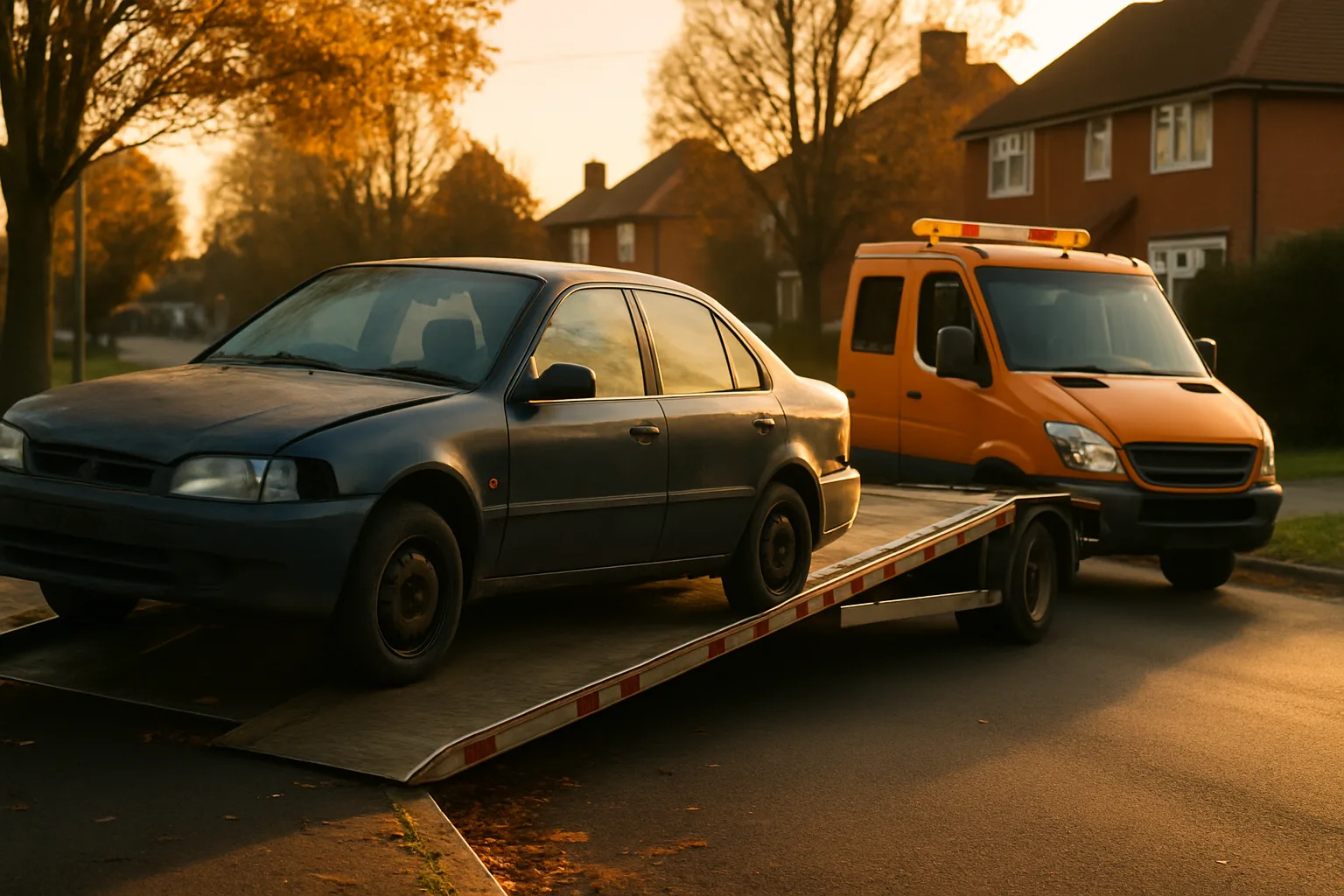
Why Your Junk Car Is Worth More in Some Months Than Others
Most people think scrap car prices are fixed — like a sticker on a shelf. They're not. The price you get for a dead Honda Civic sitting in your driveway in January can be meaningfully different from what you'd get for the same car in April. If you're sitting on an end-of-life vehicle in London, Ontario, understanding how weather and seasons shift scrap car values can put more money in your pocket — or at least help you time your decision better.
We're going to break it down clearly: what drives seasonal price swings, which months tend to work in your favor, and how services that sell your scrap car in Canada handle these fluctuations. No fluff. Just what you need to know before you make the call.
How Scrap Metal Markets React to Weather and Season
Scrap car prices are tied directly to the global steel and non-ferrous metals markets. Those markets don't operate in a vacuum — they respond to industrial demand, which rises and falls with the seasons. When construction activity picks up in spring and summer, demand for recycled steel spikes. Mills buy more. Prices go up. When construction slows in winter, demand softens and prices follow.
This isn't speculation. It's a well-documented cycle in the scrap metal industry. Auto recyclers and processors across Ontario watch commodity indices closely — because whether they're buying your junker for $200 or $400 depends partly on what the mills are offering per ton that week.
A few seasonal factors that directly affect what you're offered for your scrap vehicle:
- Steel demand from construction: Spring and summer construction booms drive up demand for recycled steel, which pushes scrap prices higher.
- Automotive parts demand: Cold-weather breakdowns in fall and early winter increase demand for used parts — which can make certain vehicles worth more to dismantlers than to shredders.
- Shipping and logistics: Harsh winters affect the movement of scrap loads. Frozen roads, reduced trucking capacity, and port slowdowns can compress margins and lower offers.
- Inventory overhang: Yards that get flooded with vehicles in spring (when people clean up their properties) sometimes lower per-unit offers to manage processing volume.
- Catalytic converter values: Platinum group metal prices fluctuate independently of steel — but demand for recovered catalytic converters can shift with emissions regulations and automotive production cycles.
If you're thinking about how to sell catalytic converters online as part of your overall scrap car strategy, timing matters here too. PGM spot prices are notoriously volatile, and processors track them in near real-time.
Season-by-Season Breakdown: When Is the Best Time to Scrap Your Car in Ontario?
Let's get specific. Here's how each season tends to play out for scrap car sellers in London, Ontario and the broader Ontario market.
Spring (March – May): Often the Strongest Window
Spring is generally the most active period for scrap car transactions — and often the most favorable for sellers. Construction demand kicks in, steel mills ramp up purchasing, and commodity prices frequently climb. Add to that the psychological effect of "spring cleaning" — people want that dead car off their property — and you get high buyer activity alongside stronger metal prices.
The catch: high seller volume can create competition among yards for capacity, which sometimes offsets pricing gains. Still, spring is reliably one of the better times to move a vehicle.
Summer (June – August): Solid, With Some Volatility
Summer keeps construction demand strong, which supports scrap prices. However, summer also brings heat-related slowdowns at some shredding facilities and periodic market volatility tied to global trade patterns. For most sellers, summer remains a good window — especially for vehicles with intact, sellable components, since dismantlers move more parts during high-driving months when breakdowns are common.
Fall (September – November): A Mixed Picture
Early fall can still deliver solid prices, particularly in September when mills restock ahead of winter. By October and into November, prices often soften as construction winds down and yard operators anticipate slower movement. That said, fall is when demand for used auto parts — pulled from scrap vehicles — tends to spike, particularly for winter-prep items like heaters, batteries, and drivetrains. A vehicle with intact, valuable components may fetch a better offer in fall than raw scrap weight would suggest.
Winter (December – February): Typically the Weakest Period
Winter is the hardest season for scrap car sellers in Ontario. Steel demand drops. Yard logistics get complicated by snow and frozen ground. Some processors reduce their intake volume or lower per-vehicle offers to control overhead. Towing itself becomes more expensive and operationally challenging — which can compress what yards are willing to pay net of logistics.
That said, winter isn't always a dead zone. If global steel prices are running hot — as they have in certain years due to supply disruptions — winter offers can surprise you. Don't assume low. Always get a quote.
What Your Car Is Actually Worth: Junk Car Prices Per Ton Explained
Understanding junk car prices per ton helps you set realistic expectations before you call anyone. A typical end-of-life passenger vehicle weighs between 1.2 and 1.8 metric tons, depending on the make, model, and how much has already been stripped. Heavier vehicles — full-size trucks, vans, SUVs — weigh more and generate more scrap steel revenue per unit.
Here's the reality of how processors calculate your offer:
- Current steel scrap price per ton — this fluctuates daily based on commodity markets.
- Vehicle weight estimate — typically done by make/model data, not an actual scale reading at pickup.
- Non-ferrous component value — aluminum wheels, copper wiring, and catalytic converters add meaningful value on top of the steel base.
- Parts salvage potential — if your vehicle has low mileage or rare components, a dismantler may offer more to recover and resell parts before crushing.
- Towing and logistics costs — subtracted from the raw value to determine your net payout.
This is why two identical cars can get different quotes — one with working catalytic converters and aluminum rims will outperform one that's already been stripped. Bring as much of the vehicle intact as you can.
Disclaimer: Scrap metal prices fluctuate constantly based on market conditions. Always check current rates before finalizing a transaction.
How SMASH and Competitive Bidding Help Protect Sellers From Seasonal Lows
Here's the problem with calling one buyer: you get one price. That price reflects their margin, their current yard capacity, and their read on the market — not necessarily what the market will actually bear. If it's January and they want to move slowly, they low-ball. You don't know any better, so you take it or leave it.
This is where competitive auction platforms like SMASH change the dynamic entirely. SMASH connects sellers with a vetted network of buyers across North America who compete against each other for your load. Competition can help reveal the true market price — even in slower seasons when a single-buyer quote might significantly undervalue your vehicle.
When you schedule a free scrap car pickup through a service connected to competitive buyer networks, you're not locked into one yard's margin. Multiple buyers see your vehicle documentation — photos, VIN, component inventory — and bid accordingly. In a down market, that competition still works for you. In an up market, it works even harder.
SMASH's platform uses photo documentation, VIN lookup, and serial tracking so buyers can assess your vehicle accurately before bidding. That transparency typically leads to better price discovery than a phone call ever could.
You can also read Canadian scrap car guides to get a better sense of how to prepare your vehicle for the best possible outcome — regardless of what season you're selling in.
What London Sellers Should Do Before Getting a Quote
Whether you're selling in peak spring or the dead of February, a few steps will maximize what you walk away with. Local London scrap metal services are competitive, but you still need to come in prepared.
- Keep the catalytic converter intact. It's one of the highest-value components on most vehicles. Don't let it walk off your car before you sell.
- Check the gas tank. Empty it if you can — many processors won't accept vehicles with significant fuel in the tank for safety reasons.
- Have your ownership/title ready. You'll need proof of ownership to complete the transfer. In Ontario, this is non-negotiable.
- Document what's there. Take photos of the vehicle, note working components, and have the VIN handy. Better documentation = more confident buyers = better offers.
- Get multiple quotes. Never accept the first offer without checking at least one other source. The difference can be significant, especially during seasonal price swings.
- Ask about free towing. Reputable services offering scrap car removal London include towing at no cost. Don't pay for pickup out of your own pocket.
For a broader view of the Canadian market and how auto recyclers operate across provinces, getmyscrapcar.ca is another useful resource for sellers navigating their options.
Frequently Asked Questions
Q: We buy junk cars London — does that mean London-area yards pay the same as Toronto?
Not necessarily. Yard pricing reflects local logistics costs, regional buyer competition, and proximity to processing facilities. London, Ontario has active buyers, but rates can differ from major metro markets like Toronto. Getting quotes from multiple buyers — including those operating through competitive platforms — helps ensure you're seeing the real market rate for your area.
Q: How much does weather actually affect what I get for my car?
It can affect your offer by a meaningful amount — anywhere from a modest variance to a significant swing depending on market conditions at the time. Winter typically brings softer prices due to reduced steel demand and higher logistics costs. Spring and early summer often produce stronger offers. That said, global commodity markets can override seasonal patterns, so always get a current quote rather than assuming.
Q: Is scrap car removal in London free?
Yes — reputable scrap car removal services in London, Ontario include free towing as part of the transaction. You shouldn't be paying for pickup. If a buyer is charging you a towing fee, get another quote. Free pickup is standard in this industry.
Q: Can I sell catalytic converters online separately from the rest of the car?
You can, but it's worth understanding the tradeoff. Selling a catalytic converter separately may generate more for that specific component, but it also reduces your vehicle's overall scrap value — since buyers factor converter presence into their offers. If you plan to sell the whole car, keep the converter on it and disclose it as intact. A competitive bidding platform gives buyers the confidence to price that component properly.
Q: How do I know if cash for cars Ontario services are legitimate?
Look for buyers who ask for proof of ownership, provide a written quote, and offer free towing with no hidden fees. Legitimate services will not ask you to sign anything vague or pay upfront costs. If a buyer is moving too fast or pressuring you without documentation, walk away. Established platforms vet their buyers — which is part of why competitive auction environments tend to attract more trustworthy operators.
If your vehicle is done and sitting there costing you space and insurance money, the season you're in matters — but not as much as actually getting moving. The longer it sits, the more value it loses as components corrode and parts become unrecoverable. Timing can help, but action beats hesitation every time. When you're ready, sell your scrap car in Canada through a service that gives you competitive offers, free towing, and a straightforward process — get a free quote at sell-myscrapcar.ca.
Stay current on scrap metal market trends and pricing shifts by following SMASH on LinkedIn — useful insight for anyone navigating the Canadian scrap market year-round.