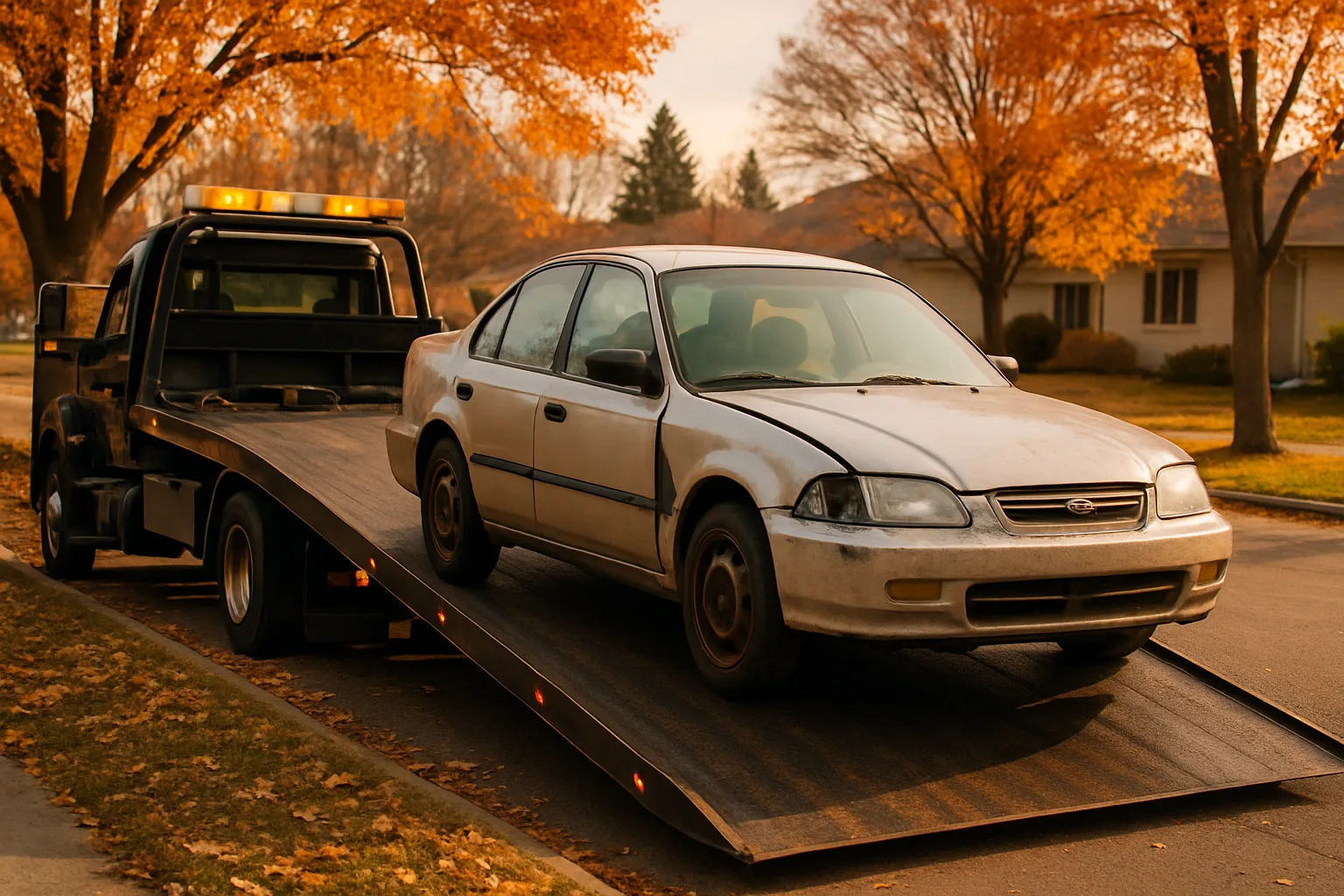
Canadian auto recyclers diverted over 1.5 million end-of-life vehicles from landfills last year — and the process behind that recovery is more rigorous than most car owners realize. If you're sitting on a dead vehicle and wondering about scrap car value today, understanding how eco-friendly disposal works can actually help you get a better outcome. Knowledge is leverage. The more you understand the recycling chain, the better decisions you make.
This isn't a feel-good story about being green. It's a practical breakdown of what happens to your car after you hand over the keys — and why it matters for your wallet, not just the environment.
What Eco-Friendly Car Disposal Actually Looks Like in 2026
The term "eco-friendly car disposal" gets thrown around loosely. In practice, it means following a structured depollution and dismantling process that prevents hazardous fluids from hitting the ground and recovers usable materials before anything gets crushed. Regulated auto recyclers across Canada — including those serving Lethbridge and surrounding areas in southern Alberta — are required to drain and capture fluids like engine oil, coolant, transmission fluid, brake fluid, and refrigerant before any vehicle goes to the shredder.
That depollution step matters. A single end-of-life vehicle can carry anywhere from 5 to 10 litres of fluids that are toxic if released into soil or groundwater. Multiply that by the hundreds of thousands of vehicles processed annually in Canada, and you start to understand why regulated disposal isn't optional — it's essential.
After depollution, the dismantling phase begins:
- Catalytic converters (cats) are removed and recovered for their platinum-group metals
- Batteries — including EV battery packs — are pulled for specialist recycling
- Tires and wheels are separated and redirected to their own recycling streams
- Non-ferrous metals like aluminum, copper wiring, and brass fittings are stripped
- Usable parts — engines, transmissions, body panels — are inventoried for resale
What's left after dismantling is the hulk: the steel shell that gets baled or shredded and sold into the ferrous scrap market. That steel is the backbone of scrap car value today. A typical passenger vehicle yields roughly 900 to 1,100 kilograms of recyclable steel once everything else is stripped.
How Scrap Car Value Today Is Calculated — And Why It Fluctuates
Here's what most people don't understand: your car's scrap value isn't a fixed number. It moves with the steel market, the regional demand for catalytic converters, the weight and condition of the vehicle, and what a buyer can realistically recover after processing costs. If you've ever tried searching how much is my car scrap value and got wildly different answers, this is why.
The major factors that determine what your vehicle is worth at the yard:
- Vehicle weight — Heavier vehicles (trucks, SUVs, full-size vans) yield more steel. A full-size pickup can outweigh a compact sedan by 500+ kilograms.
- Current steel prices — Ferrous scrap prices fluctuate with global demand, particularly from steel mills in the U.S. and Asia. Prices in 2026 have been affected by ongoing shifts in North American manufacturing demand.
- Catalytic converter presence — If your cat is intact and hasn't been stolen, it adds meaningful value. Precious metals inside cats (platinum, palladium, rhodium) drive this.
- Condition of non-ferrous components — Intact copper wiring harnesses, aluminum wheels, and brass fittings all add to recovery value.
- Location and towing distance — A yard in Lethbridge factors in transport logistics. Free towing offers eliminate this as a cost to you, but it's still priced into the offer.
There's no universal scrap car value calculator that spits out a guaranteed number — anyone promising that without seeing the vehicle is guessing. What you can do is get competitive quotes and let the market tell you what your vehicle is worth. That's exactly where platforms like SMASH change the game for the B2B side of this industry.
Disclaimer: Scrap metal prices fluctuate regularly. Always check current rates before making a decision. The values discussed here are general indicators, not guarantees.
The Role of B2B Platforms in Transparent Scrap Car Pricing
The old model of selling scrap — one phone call, one buyer, one take-it-or-leave-it number — is still how a lot of people experience this process. But behind the scenes, the recycling industry has been shifting. Auto recyclers and scrap yards increasingly rely on vetted B2B networks to move bulk material at competitive prices. That competition is what drives better price discovery across the chain.
SMASH — a B2B scrap metal marketplace built for recyclers and buyers across North America — brings auction-style competition to loads of scrap metal. When a yard in Alberta lists a load of shredded steel or a batch of catalytic converters on the SMASH scrap metal auction platform, multiple vetted buyers compete for that material. More competition typically means better price discovery. That's not a slogan — it's basic economics.
For vehicle owners, this matters indirectly but meaningfully. When the yards and recyclers you sell to are getting better prices for recovered materials, they have more margin to offer you a fair price for your end-of-life vehicle. Transparency in the B2B layer filters down. Platforms like SMASH help close the information gap that used to let buyers low-ball sellers at every step of the chain.
If you want to sell your scrap car in Canada and feel confident you're not leaving money on the table, understanding how the downstream market works gives you a real edge.
Sell Scrap Car Lethbridge: What Local Sellers Need to Know
Southern Alberta has a solid network of auto recyclers and scrap processors, and Lethbridge sits in a geographic position that makes vehicle pickup practical for licensed operators in the region. If you're in the city or surrounding rural areas, free towing is a realistic expectation — not a sales pitch. Reputable scrap car services will pick up your vehicle at no cost to you, with the tow factored into their overall recovery calculation.
What you should expect from a legitimate sell scrap car Lethbridge transaction:
- A quote based on vehicle make, model, year, and condition — not a random number
- Free towing with a confirmed pickup window
- Proper paperwork — a bill of sale and transfer of ownership to protect you legally
- Payment before or at the time of pickup, not after
- A licensed operator who follows Alberta's depollution and disposal regulations
Don't accept a verbal-only transaction. If a buyer won't give you a bill of sale, that's a red flag. You remain legally connected to that vehicle until ownership transfers properly. The paperwork protects you from future liability — parking tickets, accidents, anything that happens with that VIN after it leaves your driveway.
You can also explore Lethbridge scrap metal services to find local options tailored to your area and get a clearer picture of what the process looks like on the ground.
Why Eco-Friendly Disposal Regulations Are Getting Stricter — And What That Means for You
Canada's environmental standards around end-of-life vehicle (ELV) processing have been tightening steadily, and 2026 is no exception. Provincial regulators across the country — including in Alberta — have increased scrutiny on how yards handle fluids, refrigerants, and battery materials. The rise of electric and hybrid vehicles has added a new layer of complexity: EV battery packs require specialist handling that most conventional scrap yards aren't equipped for.
What this means for you as a vehicle owner is straightforward: work with licensed, regulated operators. An unlicensed buyer who offers you cash on the spot and hauls your car away without paperwork isn't necessarily giving you a better deal — they're transferring regulatory risk onto you while cutting corners on disposal. That's not a trade worth making.
Stricter regulations also mean the depollution and compliance costs for recyclers are rising. That has a downstream effect on scrap car value today — yards are factoring in more processing overhead. Getting competitive quotes from multiple buyers, or using a service that connects you to vetted buyers, helps ensure you're not absorbing that margin compression unfairly.
Before you commit to any buyer, read Canadian scrap car guides to make sure you understand your rights and what a fair process looks like from start to finish.
How to Get the Best Scrap Car Value Today Without the Runaround
Getting a fair price for your end-of-life vehicle doesn't require industry expertise — it requires a few straightforward steps done in the right order.
- Gather your vehicle information — year, make, model, approximate weight class, and whether the catalytic converter is intact
- Get multiple quotes — don't accept the first offer; price discovery requires comparison
- Confirm free towing is included — any reputable operator should offer this in the Lethbridge area
- Verify licensing — ask if the operator is licensed under Alberta environmental regulations for end-of-life vehicle processing
- Confirm paperwork — bill of sale, ownership transfer, and any receipts for payment
- Schedule pickup — most services can arrange removal within 24 to 48 hours
If the process feels opaque or rushed, slow down. A legitimate buyer doesn't pressure you. They give you a clear offer, confirm the pickup details, and complete the paperwork properly. You can schedule a free scrap car pickup through a trusted Canadian service and move through this process without stress.
Also worth exploring: explore scrap car removal in Canada at GetMyScrapCar for additional options and regional coverage across the country.
The scrap car market in Canada isn't going anywhere, and neither is the infrastructure behind it. Eco-friendly disposal, competitive pricing, and hassle-free removal are all achievable — you just need to work with the right people and ask the right questions. If you're ready to move on from that vehicle sitting in your driveway, sell your scrap car in Canada and get a free quote at sell-myscrapcar.ca. It's a straightforward process when you go in informed.
Frequently Asked Questions
Q: What is the scrap car value today for a typical vehicle in Lethbridge?
Scrap car value depends on vehicle weight, current steel prices, catalytic converter condition, and non-ferrous metal recovery. There's no single fixed number — values shift with the market. Getting a quote from a licensed local buyer is the most accurate way to find out what your specific vehicle is worth right now. Always check current rates, as prices fluctuate regularly.
Q: Is free towing actually included, or is it deducted from my payout?
Reputable scrap car services in Canada include free towing as part of their offer — meaning the tow cost is absorbed by the buyer, not subtracted from your payment after the fact. Confirm this upfront before agreeing to anything. If a buyer quotes you a price and then deducts towing at pickup, that's a bait-and-switch.
Q: How does eco-friendly car disposal affect how much I get paid?
Licensed depollution and compliant disposal do add processing costs for recyclers, which can influence the offer you receive. However, working with regulated operators protects you from liability and ensures your vehicle is processed legally. The difference in payout between a licensed and unlicensed buyer is rarely worth the legal and environmental risk of going unregulated.
Q: Can I use a scrap car value calculator to know my car's worth before calling?
Online calculators can give you a rough ballpark based on vehicle type and weight class, but they can't account for current local steel prices, catalytic converter status, or regional demand. Use them as a starting reference — not a final number. A real quote from a buyer who knows the Lethbridge market will always be more accurate.
Q: What paperwork do I need to sell my scrap car in Alberta?
You'll need your vehicle ownership document (registration) and valid ID. The buyer should provide a bill of sale and handle the ownership transfer with Alberta's registry system. Keep a copy of everything. Without proper transfer documentation, you could remain legally tied to the vehicle even after it leaves your property.
---Follow SMASH on LinkedIn for industry updates, scrap metal market insights, and news from the North American recycling sector.