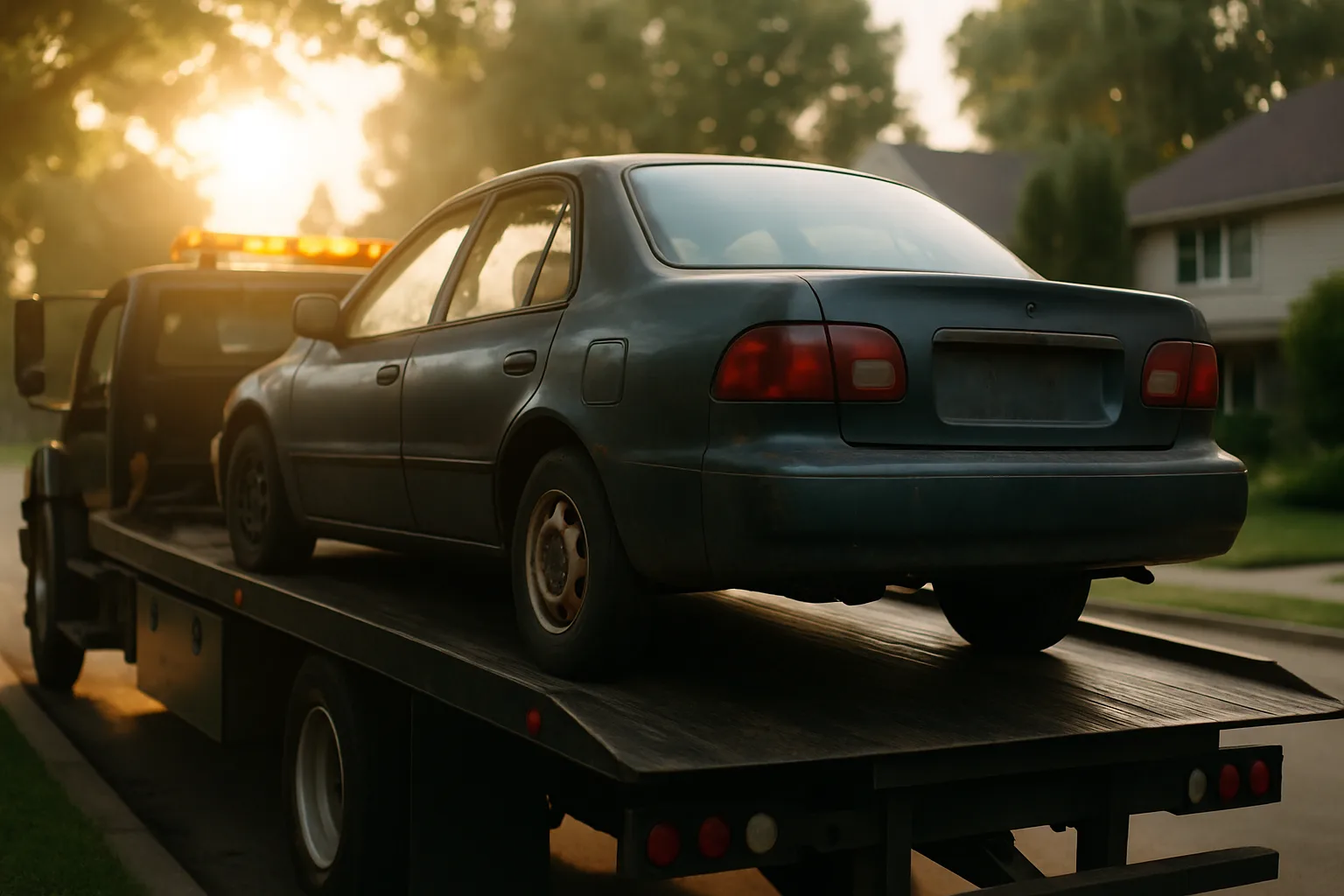
Most people hand over their keys, watch the tow truck pull away, and never think twice about what happens next. But if you're trying to understand your junk car buyers near me Edmonton options — and why some offers are higher than others — the story of what happens after pickup matters a lot.
Your old car doesn't just disappear. It moves through a detailed recycling process that determines exactly how much value gets recovered from it. Understanding that process helps you ask better questions, get better offers, and stop leaving money on the table.
Step One: The Vehicle Arrives at the Auto Recycler
When the tow truck delivers your car to a licensed auto recycler in Edmonton or anywhere else in Alberta, the yard team does an intake assessment. They log the VIN, check the condition, and start cataloguing what's salvageable. This isn't a quick glance — they're building a picture of the vehicle's total recoverable value.
Modern yards use inventory tools to track every component. Serial numbers get recorded. Photos get taken. The more documented a vehicle is, the easier it is to sell its parts to buyers who need them. If the yard you're dealing with is still doing this on paper or by memory, that's a sign they're operating the old way — and old-way operations typically result in lower offers to you.
- VIN is logged and cross-referenced with make, model, trim
- Condition of body panels, glass, and interior is noted
- Mechanical components are assessed for resale or scrap value
- Fluids (oil, coolant, brake fluid, refrigerant) are drained before any dismantling begins
Depollution: The Environmental Step Most People Don't Know About
Before any part comes off your car, it has to be depolluted. That means all hazardous fluids are removed and disposed of properly. This is a regulated step across Canada — auto recyclers operating legally are required to follow strict environmental protocols before a vehicle gets dismantled or crushed.
In Alberta, this process is overseen by provincial environmental regulations that align with national standards. Batteries, tires, airbags, and mercury switches all have specific handling requirements. If a yard skips this step or does it sloppily, they're cutting corners that put the environment at risk — and they're probably also cutting corners on how they value your vehicle.
The depollution step is also why legitimate sell your scrap car in Canada services take slightly more time to process a vehicle. Doing it right takes effort. That effort is what keeps rivers clean and keeps recyclers operating with their licenses intact.
Parts Harvesting: Where Most of Your Car's Value Hides
After depollution, dismantlers go to work. This is where the real value extraction happens. Engines, transmissions, doors, hoods, seats, wheels, alternators, starters — anything with resale potential gets pulled, cleaned, and inventoried for resale.
The parts market is active. Mechanics across Edmonton and the rest of Alberta are constantly sourcing used OEM parts for repairs. A 2016 pickup door panel or a working transmission from a common model might sell quickly at a fraction of new part cost. Recyclers that run tight operations — with good photo documentation and accurate part descriptions — attract more buyers and move parts faster.
This is where platforms like SMASH change the game for recyclers. Instead of relying on a single buyer network or posting parts in fragmented marketplaces, yards can list loads and components through a competitive auction process. More buyer eyeballs on a part means better price discovery — and that matters for how much the yard can afford to offer you on intake.
- High-demand parts: engines, transmissions, doors, hoods, alloy wheels
- Electronics and sensors are increasingly valuable on newer vehicles
- Working HVAC components, especially compressors, are sought after
- Airbag modules (undeployed) have strong resale value when properly catalogued
The Catalytic Converter: The Most Valuable Single Component
If your car has a catalytic converter — and almost every gas-powered vehicle does — that single component can represent a significant portion of your car's total scrap value. Cats contain platinum group metals (PGMs): platinum, palladium, and rhodium. These metals are refined and sold into industrial and automotive markets globally.
Prices fluctuate based on commodity markets. A cat from a common sedan might fetch a modest amount. A cat from a truck, hybrid, or high-output vehicle could be worth considerably more. The exact value depends on the grade of the cat, the metal content, and current PGM spot prices — which shift constantly.
This is exactly why the catalytic converter auction model exists. Instead of a yard selling its cats to a single refiner at a fixed offer — often a low one — platforms like SMASH allow yards to list their cat inventory competitively. Vetted buyers bid. The market sets the price. That's transparency the old phone-call-and-guess method simply can't match. And when a yard gets more for its cats, it can offer more for the vehicles it buys from you.
If you're shopping cash for cars Edmonton services and wondering why offers vary so much, this is a big part of the answer. Yards that have better downstream markets — for cats, for parts, for scrap metal — can afford to pay more on the front end.
The Hull Goes to the Crusher: Understanding Scrap Metal Value
Once all the usable parts are harvested, what's left is the body shell — the hull. That hull gets crushed, baled, or shredded into ferrous scrap. Steel is the primary material, and it gets sold to mills that melt it down and roll it into new steel products.
Ferrous scrap prices move with global steel demand. When construction is strong and mills are running hot, scrap steel prices rise. When demand softens, prices drop. The value of your car's hull on any given day is a function of forces that have nothing to do with your car specifically — it's commodity pricing at its most basic.
Non-ferrous metals in the vehicle — aluminum from engine blocks, copper from wiring harnesses, brass from fittings — get separated and sold separately. Non-ferrous metals typically command higher prices per pound than steel, so recyclers pay attention to yield. A heavier vehicle with more aluminum content is worth more at scrap than a lighter one, all else equal.
If you want a rough sense of your vehicle's scrap value, a scrap car value calculator can give you a starting point based on vehicle weight and current metal prices. Just remember that real offers factor in parts value, location, tow distance, and current market conditions — so a calculator estimate is a floor, not a ceiling.
Want to understand how this all breaks down before you call anyone? Read Canadian scrap car guides that walk through pricing factors, what documentation you need, and how to get the best return on a vehicle you no longer want.
What This Means for Your Offer: Sell Smarter in Alberta
Now that you know what recyclers actually do with your car, you can approach the sale more strategically. The offer you receive reflects the yard's estimate of everything downstream — parts value, cat value, hull weight, and their operating costs. A low offer often means a yard has limited buyer access, outdated processes, or is simply trying to pad their margin at your expense.
When you schedule a free scrap car pickup, you want to work with a service that has legitimate connections to downstream markets. That's what drives competitive offers. Whether you're in Edmonton dealing with a rusted-out truck, or anywhere else in Alberta with a vehicle that hasn't run in years, the process is the same — but the offer varies dramatically based on who's buying and how they sell what they recover.
One thing that shouldn't hold you back: the title. Many people assume they can't sell a vehicle they don't have full paperwork for. That's not always true. Many cash for cars no title needed services operate in Alberta and can work with alternate documentation. Ask directly when you contact a buyer — don't assume a missing title means no deal.
For a broader look at options beyond Edmonton, explore scrap car removal in Canada at GetMyScrapCar — a resource that covers regional services and helps you compare what's available near you.
And if you're a yard operator in Edmonton looking at this from the other side — tired of selling cats and loads to the same single buyer at whatever price they feel like quoting — the Edmonton scrap metal services landscape is shifting. Competitive auctions, documented inventory, and vetted buyer networks are changing what yards can actually earn. That's what SMASH was built for.
Ready to stop guessing and start getting fair value? Sell your scrap car in Canada — get a free quote at sell-myscrapcar.ca. It takes a few minutes and puts the market to work for you instead of against you.
Frequently Asked Questions
Q: How do junk car buyers near me in Edmonton determine what my car is worth?
They assess several factors: the vehicle's weight and metal content, which parts are salvageable and resalable, the condition and grade of the catalytic converter, and current commodity prices for scrap steel and non-ferrous metals. Location also matters — proximity to the yard affects tow cost, which comes out of the offer.
Q: Can I sell my scrap car in Alberta without a title?
In many cases, yes. Some cash for cars Edmonton services accept alternate documentation like a registration or proof of ownership. Always ask upfront what documentation is required — don't assume a missing title disqualifies you from selling.
Q: How long does the full recycling process take after my car is picked up?
The timeline varies by yard. Depollution and initial inventory can happen within a day or two of arrival. Parts may sit in inventory for weeks or months before selling. The hull typically gets processed for scrap within a few weeks once stripping is complete.
Q: Why do cash for cars offers vary so much between companies in Edmonton?
Because different buyers have different downstream markets. A yard with strong parts sales networks and access to competitive catalytic converter auctions can afford to pay more upfront. A yard selling to a single buyer at fixed prices has less room to offer you more. That gap is real and often significant.
Q: Does free towing really mean free — or is it deducted from my offer?
Reputable services offering free towing do not deduct it separately from your quote — the offer you receive is the amount you get paid, with towing included at no extra charge. Always confirm this before agreeing to a pickup. If a company quotes one number and then reduces it for "tow fees," that's a red flag.
Follow SMASH on LinkedIn for scrap metal market updates, industry insights, and auction news across North America.