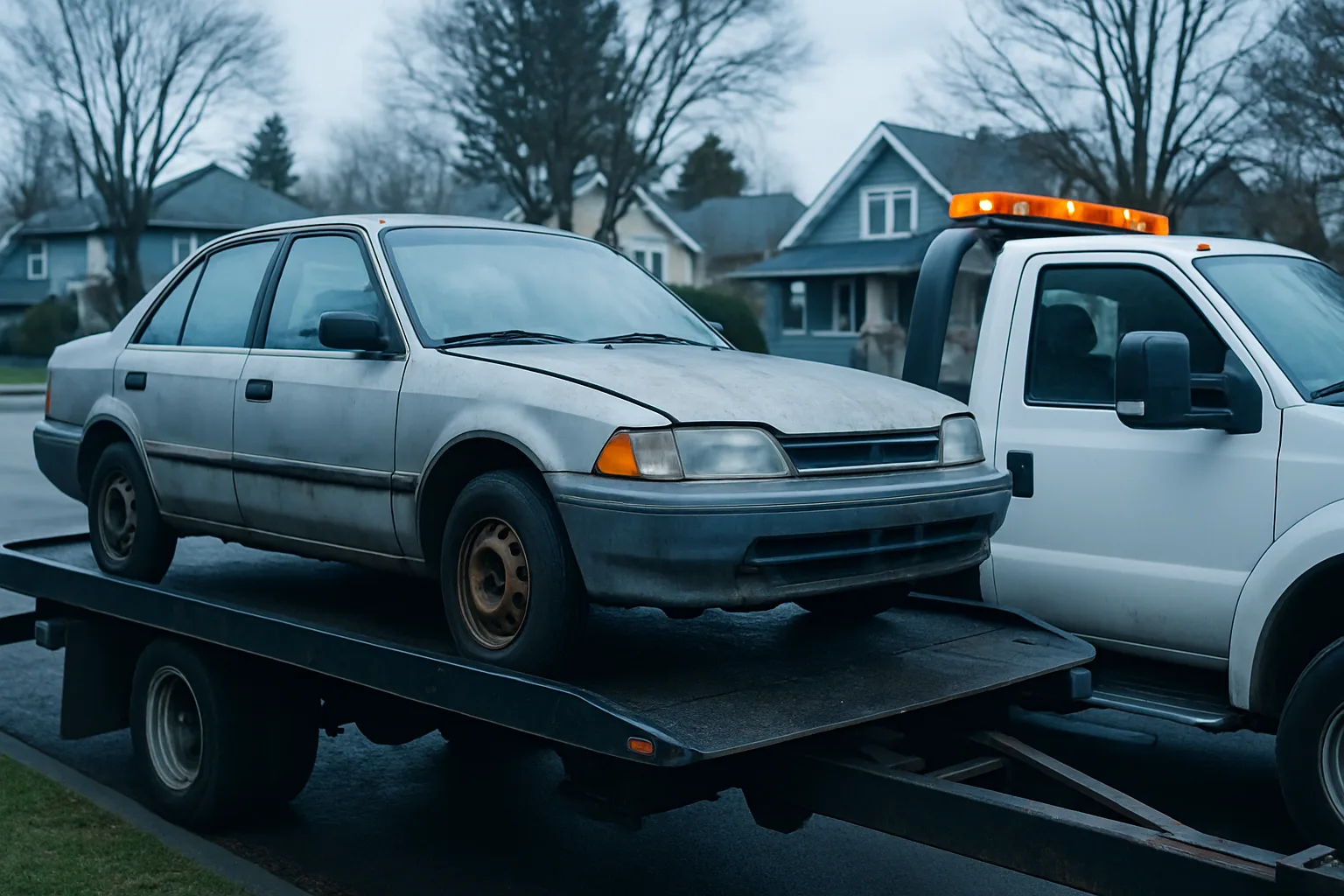
Catalytic converter theft jumped so sharply in recent years that some insurance companies started treating it like a separate risk category. If you own an older vehicle sitting in a driveway in Burnaby or anywhere else in British Columbia, there's a real chance this has crossed your mind — or already happened to you. What most vehicle owners don't realize is how directly converter theft affects the resale and scrap value of a car. This article breaks down exactly what's going on, why it matters if you're trying to sell your scrap car in Canada, and what your options actually look like in 2026.
Why Catalytic Converters Keep Getting Stolen — and Why It Still Matters in 2026
The short answer: precious metals. Catalytic converters contain platinum, palladium, and rhodium — three of the most valuable metals on the planet by weight. A single converter can hold anywhere from 3 to 7 grams of platinum group metals (PGMs). At current market rates, that's real money for a thief who can cut one off in under two minutes with a battery-powered saw.
The targets haven't changed much. Trucks and SUVs with high ground clearance — Toyota Tacomas, Honda CR-Vs, Ford F-Series, and hybrid vehicles like the Prius — remain the most common victims. Hybrids use more PGMs because their converters run fewer hours and stay cleaner longer, meaning higher metal content when sold to a recycler. In urban areas like Burnaby, where vehicles often sit parked overnight on residential streets or in surface lots, opportunity is everywhere.
The theft wave created a secondary problem: a flood of stolen converters moving through scrap channels, which pushed regulators to tighten documentation requirements across Canada. Auto recyclers, scrap yards, and platforms dealing in catalytic converter cores now face stricter record-keeping rules. That's relevant to you if you're trying to sell a vehicle — with or without its converter intact.
How a Missing Catalytic Converter Changes Your Scrap Car Value
Here's the part that hits vehicle owners hardest. If your car was stolen from or the converter was cut off, you've already lost value — and not just the replacement cost of the part. The catalytic converter is often one of the highest-value components on a scrap vehicle, second only to the battery on hybrids and EVs. When a buyer or recycler quotes your car, they're pricing the whole package: body steel, aluminum, copper, fluids, and high-value components like the cat.
Pull the cat out of that equation and the offer drops. How much depends on the vehicle. On a standard sedan, losing the converter might reduce your scrap offer by a few hundred dollars. On a hybrid or a late-model truck, the gap can be significantly larger. This is why getting a quote before and after converter theft can feel like two completely different conversations.
A few factors that affect how much a missing cat hurts your car's scrap value:
- Vehicle make and model — Hybrid and luxury models carry more PGMs; the loss is bigger.
- Year of the vehicle — Newer converters are worth more. Older ones less so.
- Condition of the rest of the car — If the vehicle was already near end-of-life, the percentage impact is higher.
- Current PGM spot prices — Platinum, palladium, and rhodium prices fluctuate constantly. A converter's market value today isn't the same as it was six months ago.
- Whether the exhaust was damaged during theft — Cut pipes and broken mounting hardware can reduce the overall vehicle value further.
The honest reality: a car without a catalytic converter is still worth scrapping. It still has weight in steel and aluminum, and other reusable parts. But you should go in knowing the value is lower, and ask buyers to explain exactly how they're pricing the vehicle.
What Scrap Yards and Auto Recyclers Actually Look For When They Quote Your Car
Understanding how recyclers assess a vehicle helps you negotiate better — or at least avoid getting lowballed without knowing it. Most scrap buyers start with curb weight. Steel is still the dominant value driver for most passenger vehicles. A typical sedan weighs between 1,200 and 1,600 kilograms; a full-size truck can hit 2,500 kg or more. At current scrap steel prices, that weight alone generates the base offer.
From there, buyers factor in:
- Non-ferrous metals — aluminum wheels, wiring harness copper, radiator material
- High-value components — the catalytic converter (if present), battery packs on hybrids, starter motors
- Reusable parts — engines, transmissions, doors, and other parts with aftermarket demand
- Fluids and environmental handling — coolant, oil, and refrigerant all factor into processing cost
- Documentation — a clear title or proof of ownership speeds everything up
This is where transparency matters. A single-buyer, over-the-phone quote system — the way most people have always sold their scrap cars — gives you one number with no context. You don't know how the buyer arrived at that number, and you can't compare it to anything. Platforms like SMASH operate differently. When your vehicle's specs go to multiple vetted buyers at once, competition does the pricing work. More buyers means better price discovery, and documented inventory — including photos and component details — gives buyers more confidence to bid higher. You can read Canadian scrap car guides to get familiar with how this process works before you reach out to anyone.
Selling a Car With a Stolen Catalytic Converter in Burnaby — What You Need to Know
If your converter was stolen, you have a few options. You can replace it before selling — but that rarely makes financial sense on a vehicle you were already planning to scrap. New OEM converters are expensive, and aftermarket units don't recover full value. You can file an insurance claim if you have comprehensive coverage, which many drivers in British Columbia do through ICBC. Or you can sell the vehicle as-is and let the buyer price it accordingly.
Selling as-is is usually the most practical path. Be upfront about the missing converter. Buyers who are quoting accurately already know to ask. Hiding it doesn't help — it just causes problems at pickup when the driver inspects the vehicle and adjusts the offer anyway. You're better off with an honest quote upfront than a last-minute renegotiation in your driveway.
In Burnaby specifically, the density of auto recyclers and the accessibility of the Lower Mainland scrap market means competition exists. The problem is most vehicle owners don't access that competition — they call one number and take the first offer. Getting multiple quotes from verified buyers, whether through direct outreach or through a platform like SMASH, is how you find out what your car actually worth, even without the converter.
If you want a straight path to a fair offer without the runaround, schedule a free scrap car pickup and let a buyer assess the full vehicle — cat or no cat. You'll know exactly where you stand before anyone touches your car.
How the B2B Scrap Metal Marketplace Is Responding to Converter Theft
The rise in catalytic converter theft didn't just affect individual vehicle owners — it reshaped how the B2B scrap metal marketplace operates at every level. Recyclers and buyers now face tighter compliance requirements. In British Columbia and across Canada, regulations introduced in recent years require scrap buyers to document the source of catalytic converters, verify seller identity, and in many cases delay payment to create a paper trail that discourages theft-driven selling.
For legitimate sellers — people scrapping a vehicle they actually own — this means more paperwork. You'll typically need:
- Proof of ownership (vehicle title, registration, or bill of sale)
- Government-issued ID matching the ownership documents
- Vehicle VIN, which ties the converter to a specific car
- In some cases, a signed declaration confirming the vehicle isn't reported stolen
SMASH builds this documentation into the process from the start. VIN lookup, photo documentation, and serial tracking aren't add-ons — they're part of how listings are built. That documentation gives vetted buyers confidence to bid on loads, including vehicles with missing or damaged components. It also protects sellers: a documented transaction is a clean transaction. For anyone looking to Canadian scrap car removal from GetMyScrapCar, having your paperwork ready before you call speeds everything up and reduces friction at pickup.
Getting the Best Scrap Car Value Near You — Even in a Tough Market
Scrap metal markets move. Palladium prices that drove catalytic converter theft to a peak have moderated from their highs, but PGMs are still valuable — and so is the steel, aluminum, and copper in every vehicle. The key to getting fair value is knowing what you have and putting it in front of the right buyers.
A few practical steps before you sell:
- Document your vehicle's condition honestly — photos of the exterior, engine bay, and undercarriage help buyers price accurately.
- Note any missing components — including whether the catalytic converter is present or has been stolen.
- Have your ownership documents ready — title, registration, and ID.
- Get more than one quote — one offer tells you nothing. Two or three tells you what the market actually thinks your car is worth.
- Ask about free towing — reputable buyers in British Columbia include pickup at no charge. If someone's quoting you and then adding a tow fee, that's a red flag.
Catalytic converter theft is frustrating. Dealing with a depreciated car in an uncertain market is frustrating. But the scrap value near you is real, and it's accessible — you just need to approach it the right way. If you're ready to move, the easiest next step is getting a quote from a buyer who explains their pricing and includes free towing in the deal.
Sell your scrap car in Canada and find out what your vehicle is actually worth — get a free, no-obligation quote at sell-myscrapcar.ca and get your car picked up on your schedule.
Frequently Asked Questions
Q: Can I sell my car for cash in Burnaby if the catalytic converter has been stolen?
Yes. A missing catalytic converter reduces your vehicle's scrap value, but the car is still worth selling. Steel, aluminum, and other non-ferrous metals still have market value. Be upfront about the missing converter when getting quotes — it leads to a more accurate offer and no surprises at pickup.
Q: How much does a stolen catalytic converter reduce my scrap car value?
It depends on the vehicle make, model, and year, as well as current platinum group metal prices. The impact is larger on hybrids and trucks than on standard sedans. Get quotes from multiple buyers to understand what the market is offering for your specific vehicle.
Q: Do I need proof of ownership to sell my junk car in Burnaby?
Yes. British Columbia regulations — and responsible buyers everywhere — require you to show proof of ownership before a vehicle is purchased for scrap. Have your title or registration and a matching government-issued ID ready. Buyers are also required to document the vehicle's VIN.
Q: Is free towing included when I sell my junk car for cash today in British Columbia?
Reputable scrap car buyers in British Columbia include free towing as part of the offer. If a buyer is quoting you and then adding a separate pickup fee, get a second opinion. The quote you agree to should be the final number — no deductions at the curb.
Q: How do I know if I'm getting a fair scrap car value near me?
The only way to know is to get more than one offer. A single quote gives you no reference point. Platforms like SMASH connect sellers with vetted buyers in a competitive format, which helps reveal what the market will actually pay — not just what one buyer feels like offering that day.
Follow SMASH on LinkedIn for industry updates, scrap metal market insights, and news from the North American recycling sector.