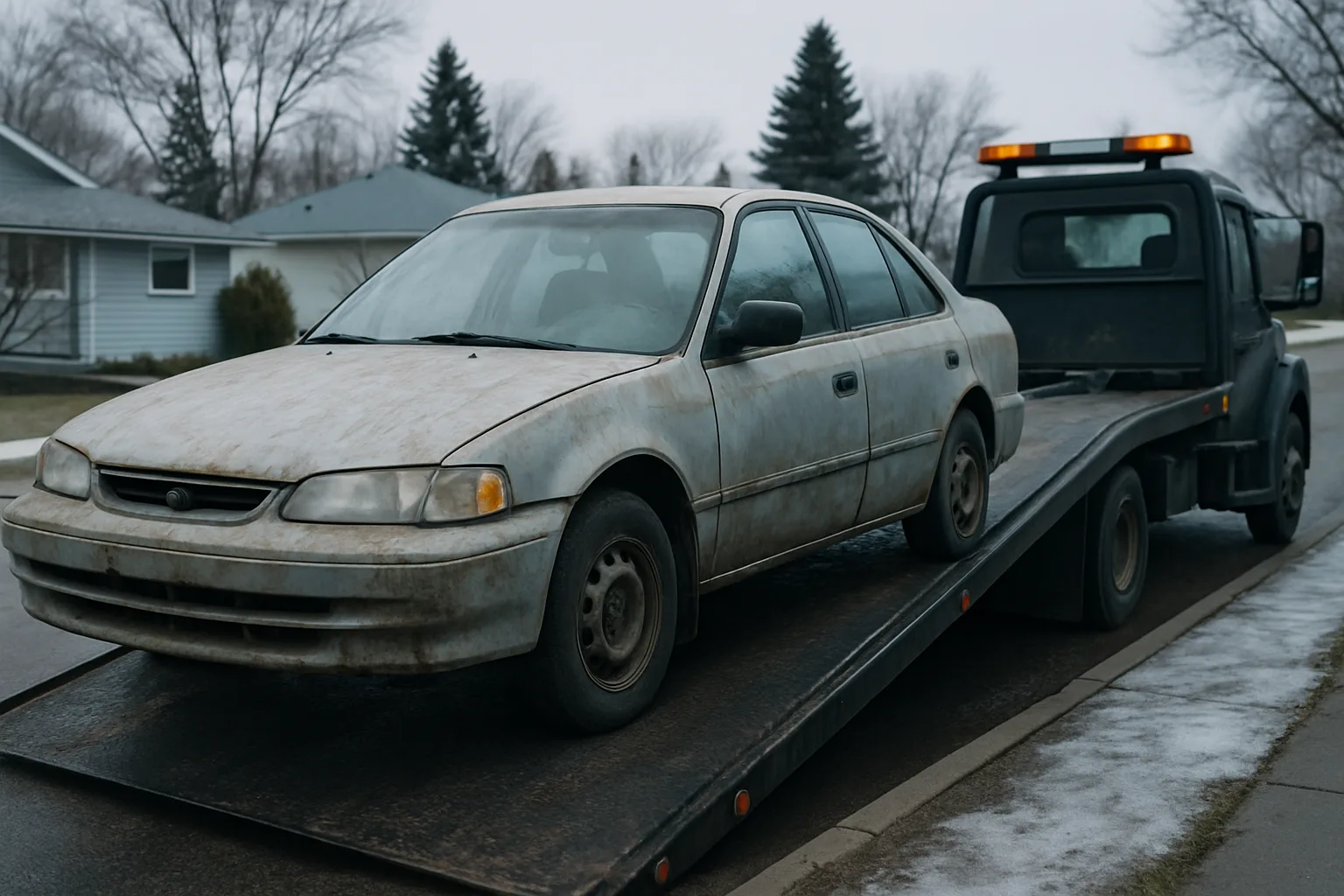
A flood-damaged or fire-damaged vehicle sitting in your driveway isn't just an eyesore — it's a liability. If you've been wondering how to sell my junk car Saskatoon after a disaster, you're not alone. Saskatchewan sees its share of spring flooding and vehicle fires every year, leaving owners holding titles to cars that no insurer wants and no private buyer will touch. The good news? A damaged vehicle still has real value — you just need to know where to look and how to move it.
This guide breaks down exactly what flood and fire damage means for your vehicle's scrap value, what to expect from the removal process, and how to get paid fairly without the runaround.
What Happens to a Vehicle After Flood or Fire Damage?
Flood damage doesn't just ruin carpets. Water infiltrates electrical systems, corrodes frame components, seizes brake calipers, and destroys engine internals. A car submerged even briefly can have hidden damage that surfaces weeks later. Insurance companies write these vehicles off for a reason — repair costs routinely exceed the vehicle's actual cash value.
Fire damage is often even more decisive. A vehicle fire — whether from an electrical fault, fuel leak, or collision — can compromise structural steel, melt wiring harnesses, and destroy the cabin entirely. Even a partial engine bay fire can render a vehicle unsafe and unsellable on any public road. What's left is still worth something, but only to the right buyer.
- Flood damage red flags: rusted subframe, seized drivetrain components, fried ECU, mold growth in the cabin
- Fire damage red flags: warped frame rails, melted plastic and rubber components, compromised fuel system, destroyed interior
- In both cases: the steel, aluminum, copper wiring, and catalytic converter still hold scrap value
The vehicle is done as a road-going machine. But as a source of raw scrap metal and salvageable parts, it still has a market — and that market is more competitive than you think.
Why the Old Way of Scrapping a Damaged Car Doesn't Work
Most Saskatoon vehicle owners try the same route: call one local wrecker, accept whatever number they're offered, and hand over the keys. That single-buyer model has one massive flaw — you have no idea if you're getting a fair price. You're not comparing anything. You're just guessing.
Scrap metal prices fluctuate based on commodity markets, regional demand, and what buyers are currently short of. A wrecking yard that was paying top dollar for aluminum-heavy vehicles last month might be sitting on inventory today. Another buyer across town might desperately need a specific model for parts. Without competition, you'll never know.
That's where platforms like SMASH (Scrap Metal Auction Sales Hub) change the equation. Instead of one phone call to one buyer, SMASH puts your vehicle in front of vetted buyers who bid against each other. More buyers means better price discovery. Competition can help reveal the market — and that's exactly what a single cold call never does.
If you want to sell your scrap car in Canada and actually understand what it's worth, competitive pricing is the only honest answer.
How Scrap Value Is Calculated for Flood and Fire Vehicles in Saskatchewan
Here's the reality: a flood or fire-damaged vehicle is priced primarily on its scrap metal content, not on any remaining mechanical value. Buyers will look at curb weight, metal composition, and whether any salvageable components remain. A full-size pickup truck destroyed by fire still weighs 3,000 to 4,500 lbs — most of that is steel, and steel is always worth something.
Key factors that affect what you're offered:
- Vehicle weight: Heavier vehicles yield more scrap metal. Trucks and SUVs typically return more than compact sedans.
- Metal composition: Aluminum-intensive vehicles (many newer trucks and crossovers) carry a premium over all-steel builds.
- Catalytic converter condition: Fire can destroy a cat. Flood typically doesn't. If your cat is intact after a flood, that's meaningful value.
- Salvageable parts: Even a flooded vehicle may have undamaged suspension components, wheels, or glass that a wrecker can pull and resell.
- Current commodity prices: Scrap steel and aluminum prices shift constantly. What you're offered today may differ from next month.
Don't let anyone tell you a fire or flood write-off is worthless. It isn't. But getting fair value means working with buyers who compete for it — not just accepting the first number thrown at you over the phone.
Disclaimer: Scrap metal prices fluctuate with commodity markets. Always check current rates before accepting any offer.
The Saskatoon Scrap Car Removal Process — What to Expect
If your vehicle is sitting damaged, immobile, or partially burned out, the removal process matters just as much as the price. You need a service that handles the towing, handles the paperwork, and doesn't complicate what should be a straightforward transaction.
Here's what a smooth scrap car pickup in Saskatoon looks like:
- Get your quote. Provide the year, make, model, and a description of the damage. Photos help — especially for fire or flood claims where condition varies widely.
- Accept the offer. A competitive platform gives you offers from multiple vetted buyers, not just one number from one yard.
- Schedule free towing. A reputable service picks up the vehicle at no charge. You don't pay for removal — that's non-negotiable.
- Handle the title transfer. You'll need your vehicle registration and, depending on the province, a signed bill of sale. Saskatchewan has straightforward requirements here.
- Get paid. Payment should happen at pickup or shortly after — not weeks later.
Saskatoon's geography matters here. The city spans both sides of the South Saskatchewan River, and surrounding rural areas can mean longer tow distances. Work with a service that confirms free towing regardless of your exact location — whether you're in Sutherland, Stonebridge, or a rural property outside the city limits.
For local coverage and to connect with experienced local operators, check out Saskatoon scrap metal services — they understand the regional market and can match you with the right buyer.
Documents You Need Before Selling a Written-Off Vehicle
A flood or fire vehicle that's been written off by insurance has a specific paper trail. Getting this right speeds up your sale and protects you legally. Missing or incorrect documentation is the single most common reason scrap car transactions get delayed.
What you'll typically need in Saskatchewan:
- Vehicle registration: Confirms you are the registered owner
- Insurance write-off documentation: If your insurer declared the vehicle a total loss, they may hold or have already transferred the title — confirm this before listing the vehicle
- Photo ID: Standard for any vehicle transfer
- Bill of sale: Many scrap buyers require a signed bill of sale confirming the transaction terms
- Release of liability: File with SGI (Saskatchewan Government Insurance) to confirm you've transferred the vehicle and are no longer responsible for it
If your insurer took possession of the salvage title as part of the claim settlement, you may need to confirm whether you or the insurance company is the legal seller. This varies by claim type. When in doubt, call SGI directly — they're straightforward about what's required.
For a broader look at how the Canadian scrap car process works, read Canadian scrap car guides that walk through province-specific requirements in plain language.
Why SMASH Makes a Difference for Saskatchewan Vehicle Owners
Selling a damaged vehicle in a mid-sized market like Saskatoon can feel like you're at a disadvantage. There are fewer buyers than in Calgary or Toronto, and local wreckers know that. A vehicle owner with no competing offers has very little leverage.
SMASH changes that dynamic directly. As a scrap metal auction platform, SMASH connects Saskatchewan sellers with vetted buyers across North America — buyers who actually compete for your load. Documented inventory, photo documentation, and VIN tracking give buyers the confidence to bid higher because they know exactly what they're getting. Transparency on your end creates competition on their end.
No subscription fees. SMASH only wins when you win — the platform earns on completed transactions, not on your monthly credit card statement. That alignment matters when you're trying to get fair value for a vehicle you've already lost to a disaster.
You can also explore Canadian scrap car removal from GetMyScrapCar for additional options that connect you with removal specialists across the country.
Whether you're in Saskatoon or anywhere else across Saskatchewan, the principle is the same: one buyer means one price. More buyers means a real market. Use the tools that work in your favor.
Ready to stop guessing what your flood or fire write-off is worth? Schedule a free scrap car pickup and find out what competitive buyers will actually pay. At sell-myscrapcar.ca, you get a real quote, free towing, and no obligation — which is exactly what you deserve after a vehicle loss.
Frequently Asked Questions
Q: Can I sell my junk car in Saskatoon if it was declared a total loss by insurance?
Yes — but confirm who holds the salvage title first. If your insurer settled your claim and took possession of the vehicle, they may own the salvage rights. If you retained the vehicle after a payout, you can sell it as scrap directly. Contact SGI or your insurer to clarify your situation before arranging a pickup.
Q: Does flood damage or fire damage affect how much I get for scrap?
It can. Fire damage may destroy high-value components like the catalytic converter, reducing your total return. Flood damage often leaves more salvageable parts intact. Either way, the base scrap metal value — driven by vehicle weight and composition — remains. Get competing offers rather than relying on a single quote.
Q: How fast can I sell my car fast in Saskatoon after it's been damaged?
With the right service, same-day or next-day pickup is often possible. Have your registration, insurance write-off documents, and a photo of the vehicle ready. The faster you can provide accurate vehicle information, the faster buyers can make a firm offer and schedule removal.
Q: Is towing really free when I sell my scrap car in Saskatchewan?
With reputable scrap car removal services, yes — towing is included at no cost to you. Always confirm this upfront. Any service that charges you for pickup is taking money out of your pocket that should stay there. Free towing is a standard part of legitimate scrap car transactions across Canada.
Q: What if my flood-damaged car has no title or the title was lost?
You can typically apply for a replacement title through SGI before completing the sale. Selling a vehicle without documentation creates legal risk for both you and the buyer — it's worth the small administrative step to get the paperwork straight. Most reputable buyers will wait a few days for proper documentation rather than cut corners.
Follow SMASH on LinkedIn for ongoing scrap metal market updates, industry insights, and tips that help Canadian vehicle owners and recyclers get more from every transaction.