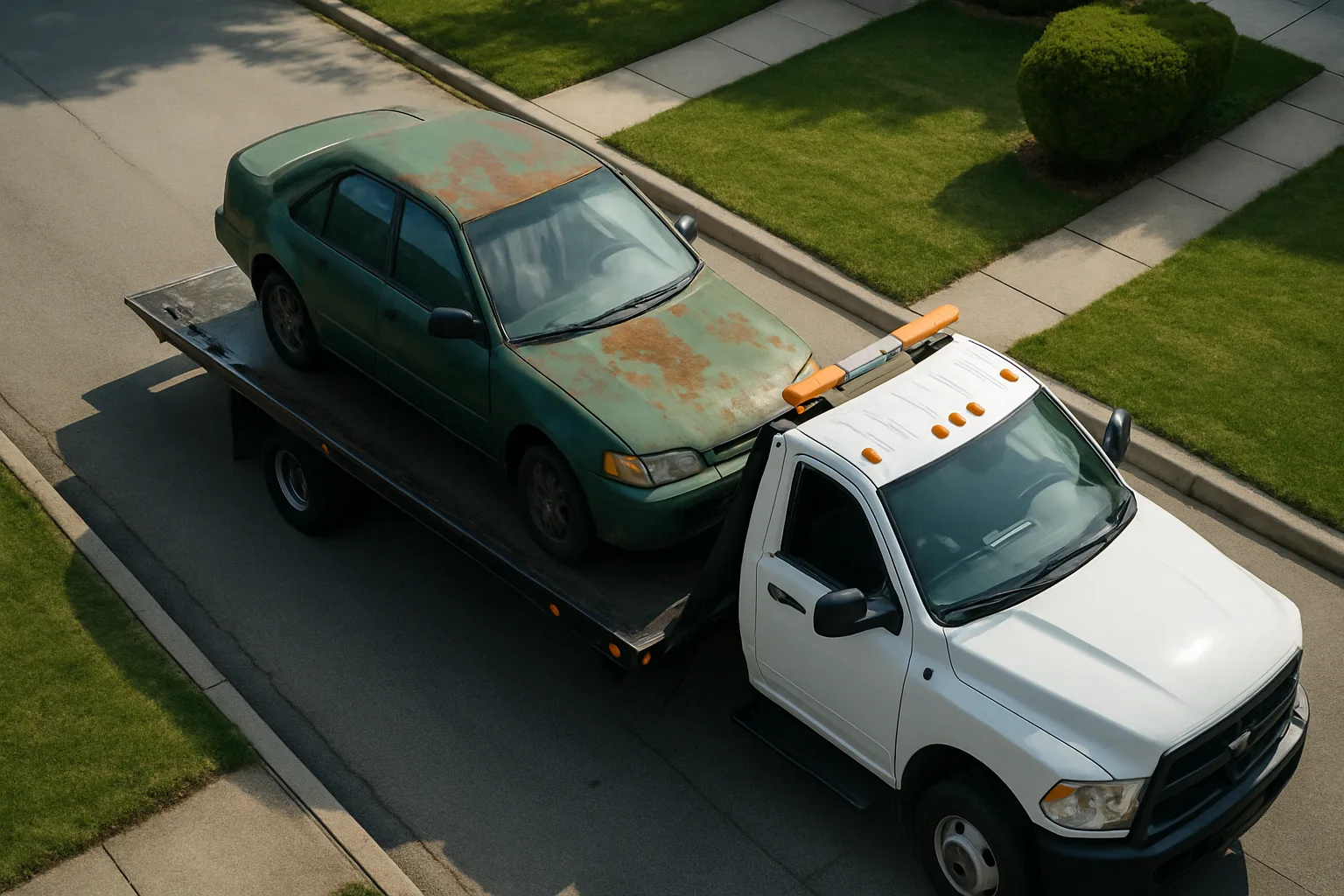
Your car just died in your driveway. Maybe it's a 2009 Civic with a blown head gasket, or a half-rusted F-150 that hasn't moved since last winter. You know it's time to let it go — but then the questions start. Do you call a junkyard? A salvage yard? An auto recycler? Are those even different things? And more importantly, which one gives you the best scrap car value today?
Most vehicle owners have no idea these are distinct operations with different processes, different payouts, and different outcomes for your wallet. Getting this wrong means leaving real money on the table. Getting it right means a smooth pickup, fair pricing, and zero headaches.
Let's break it down — and show you how knowing the difference puts more cash in your hands when you sell your scrap car in Canada.
Junkyard, Salvage Yard, or Auto Recycler — They're Not the Same Thing
These three terms get used interchangeably online, but they operate very differently. Understanding the distinction is the first step toward knowing who to call — and who to avoid.
Junkyards are the old-school model. You bring your vehicle (or they tow it), they strip what's obvious, crush the rest, and sell scrap metal by weight. There's minimal processing, minimal parts inventory, and often minimal transparency on pricing. You're getting a flat rate based on what the market will bear that day — which they decide, not you.
Salvage yards go a step further. They pull usable parts before crushing — engines, transmissions, doors, glass, electronics — and resell those parts to mechanics and DIY builders. Because parts hold more value than raw metal, salvage yards can sometimes pay more for specific vehicles. But it depends entirely on what your car has that they can sell. A 2005 Camry with a clean interior? They're interested. A flood-damaged minivan with 400,000 km? Probably not.
Auto recyclers are the most structured of the three. They follow end-of-life vehicle (ELV) protocols: draining fluids, cataloguing parts, tracking VINs, documenting the dismantling process. In Ontario, licensed auto recyclers must meet provincial environmental standards. That means your old car doesn't just get crushed — it gets processed responsibly, with proper handling of oils, coolant, refrigerants, and battery acids.
Here's a quick comparison:
- Junkyard: Weight-based payout, minimal processing, basic towing
- Salvage yard: Parts-first model, variable payout depending on vehicle condition
- Auto recycler: Regulated, documented, environmental compliance, often better price transparency
Why Scrap Car Value Today Depends on Who's Buying — Not Just What You're Selling
Here's the part most people miss: scrap car value today isn't just about the weight of your vehicle or the current price of steel. It's about who's evaluating your car, what they need, and whether there's any competition for it.
When you call one buyer — one junkyard, one salvage yard — you get one number. That number is based on their costs, their current inventory needs, and what they think you'll accept. There's no pressure on them to be fair. They know you have a dead car in your driveway and you want it gone.
That single-buyer model is where most vehicle owners get undercut. Platforms like SMASH exist to fix exactly this problem. Instead of calling one buyer and hoping for a fair offer, you put your vehicle in front of a network of vetted buyers — recyclers, processors, dismantlers — who compete for your load. Competition does what a phone call to one yard never can: it reveals the actual market value.
This is particularly relevant in markets like St. Catharines, where you're within reach of buyers across the Niagara region and into the broader Ontario market. More buyer reach means more competition. More competition means better price discovery for your vehicle.
A Real Scenario: What Happens When You Know the Difference
Consider this situation — not a specific customer story, but a realistic scenario that plays out across Ontario every week.
A vehicle owner in St. Catharines has a 2012 Dodge Journey sitting dead in their driveway. They call the first junkyard they find online. The offer: $175, towing included. They accept because they don't know what else to do.
Now imagine the same vehicle owner knows to ask a few more questions. They contact an auto recycler who explains that the Journey's catalytic converter — a non-ferrous core — holds real value. The catalytic converter alone, depending on the metals inside, could push the vehicle's total value significantly higher than a flat junkyard quote. Add in any salvageable parts — a working transmission, clean airbags, intact door panels — and the picture changes further.
That same vehicle, processed correctly and offered to multiple buyers, could yield a meaningfully different outcome. Not because anything changed about the car — but because the right buyers saw it.
Using the getmyscrapcar.ca platform connects you with buyers who understand the full picture of your vehicle's value, not just the crushed weight. And if you're working with a yard or recycler that uses the SMASH scrap metal auction model on the B2B side, your vehicle's materials are being priced against real market competition — not a single buyer's daily guess.
Free Towing and Fair Pricing — What to Actually Expect in Ontario
One of the most common concerns from vehicle owners is the towing cost. People assume getting their dead car removed is going to cost them money before they even see a payout.
Reputable scrap car services — including those connected through schedule a free scrap car pickup — include towing at no charge. That's standard. If a buyer is quoting you a removal fee on top of a low offer, that's a red flag. Walk away.
Here's what fair pricing actually looks like in Ontario in 2026:
- Vehicle weight matters: Steel scrap pricing is tied to global markets. Heavier vehicles generally yield more, but weight alone isn't the whole story.
- Non-ferrous components add value: Catalytic converters (platinum, palladium, rhodium), copper wiring, aluminum rims — these are priced separately from bulk steel and can meaningfully affect your total.
- Condition affects parts recovery: A cleaner vehicle with intact interior components may attract interest from salvage buyers, not just scrappers.
- Market timing matters: Steel and non-ferrous prices fluctuate. What your car is worth today may differ from what it's worth in 60 days.
Disclaimer: Scrap metal prices fluctuate with global commodity markets. Always check current rates before accepting an offer.
For vehicle owners near St. Catharines, the local presence of St. Catharines scrap metal services means you don't have to settle for a lowball offer from the nearest yard. There are buyers in this market who compete for vehicles — you just need to know how to reach them.
How the B2B Side of Scrap Metal Affects What You Get Paid
Most vehicle owners never think about what happens to their car after it leaves the driveway. But the downstream market — the B2B scrap metal marketplace where yards and recyclers sell processed material — directly affects what you get offered upfront.
When scrap yards use platforms like SMASH to sell their loads, they're getting competitive pricing for processed steel, non-ferrous metals, and cores. That means their margins improve when they sell — which means a responsible operator can afford to pay more when they buy from you.
Yards that are still operating on old-school single-buyer relationships — one call to a broker, one price, done — are often paying you less because they're also getting paid less when they sell their material downstream. The inefficiency compounds at every step of the chain.
This is why understanding the difference between a junkyard and an auto recycler isn't just academic. It's directly tied to the offer you receive and the experience you have. Recyclers plugged into competitive, transparent B2B markets — like the SMASH scrap metal auction system — have better visibility into actual market pricing. That visibility flows back to you as the seller.
Want to understand more about how this all connects? Read Canadian scrap car guides that break down pricing, timing, and what your vehicle is actually worth in today's market.
Choosing the Right Buyer When You're Ready to Sell
You don't need to be an expert in scrap metal commodities to make a smart decision. You just need to ask the right questions and use the right platforms.
When you're ready to move your end-of-life vehicle, here's a practical checklist:
- Ask if towing is included. It should be, at no charge to you.
- Ask how they determine your vehicle's value. A flat weight-only quote may leave money on the table.
- Ask about your catalytic converter. If the buyer doesn't mention it, they may be pricing it out of the equation — in their favor.
- Get more than one offer. One phone call is never enough to know your car's actual market value.
- Confirm they are a licensed auto recycler. In Ontario, licensed recyclers must meet environmental standards. This matters for your peace of mind and for the environment.
Whether you're in St. Catharines, Hamilton, Windsor, or anywhere else across Ontario, the process is the same. The difference between a good outcome and a bad one comes down to knowing who you're dealing with — and making sure they're competing for your vehicle rather than just quoting you a number they made up.
The scrap car market in 2026 is more connected than it's ever been. Buyers have better data. Sellers should too. If you're sitting on an end-of-life vehicle and wondering what it's actually worth, don't guess — and don't accept the first number you hear. Get a real quote from a real market, and let competition work in your favor.
Ready to find out what your vehicle is worth? Get a free quote and sell your scrap car in Canada through a service that brings buyers to you — not the other way around.
Frequently Asked Questions
Q: What is the difference between a junkyard and an auto recycler?
A junkyard typically crushes vehicles for bulk scrap metal value with minimal processing. A licensed auto recycler follows regulated end-of-life vehicle protocols — draining fluids, cataloguing parts, and tracking the full dismantling process. In Ontario, licensed auto recyclers must meet provincial environmental standards, which junkyards may not. The result is a more transparent process and often better pricing for the vehicle owner.
Q: How is scrap car value today calculated?
Scrap car value today depends on several factors: the vehicle's weight, the current market price for steel and non-ferrous metals, the condition and salvageability of parts, and the catalytic converter's precious metal content. Prices fluctuate with global commodity markets, so the value of your vehicle can change week to week. Always get a current quote rather than relying on outdated estimates.
Q: Is free towing actually free when I sell my scrap car in St. Catharines?
Yes — reputable scrap car services include free towing as part of the deal. There should be no deduction from your payout for pickup. If a buyer in St. Catharines or elsewhere in Ontario is quoting you a removal fee on top of a low offer, that's a red flag. Confirm the towing is included before agreeing to anything.
Q: How many times should I get quoted before accepting an offer for my scrap car?
At minimum, get two or three quotes before accepting. A single offer gives you no context for whether the price is fair. Platforms that connect you with multiple vetted buyers — rather than sending you to one yard — are the fastest way to understand what your vehicle is actually worth in the current market.
Q: Does the B2B scrap metal market affect what I get paid for my car?
Yes, directly. Yards and recyclers that sell their processed material through competitive B2B platforms like SMASH have better visibility into actual market pricing — and responsible operators pass some of that margin back to vehicle sellers in the form of fairer offers. If a yard is operating on outdated single-buyer relationships downstream, they often pay less upfront because they're also getting paid less when they sell the material.
Follow SMASH on LinkedIn for scrap metal market insights, industry updates, and practical information for anyone buying or selling in the recycling space.