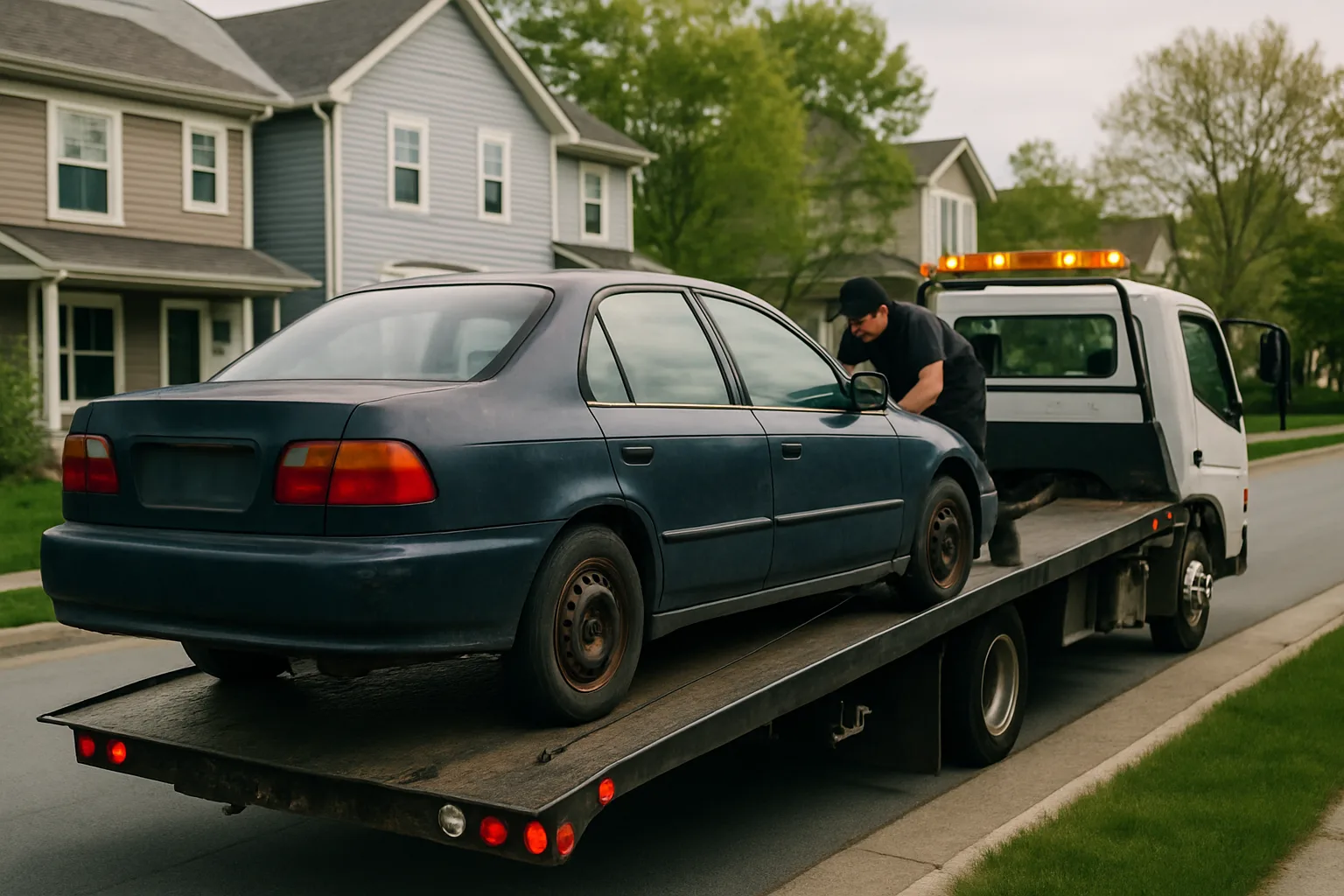
Most people selling a scrap car expect a number. What they get is a shrug, a lowball offer, or a quote that changes the moment the tow truck shows up. If you're sitting on a dead vehicle in St. John's or anywhere else in Canada, you deserve a straight answer — not a runaround. This guide breaks down exactly what your scrap car is worth, what actually drives the price, and how to make sure you're not leaving money on the table when you sell your scrap car in Canada.
What Actually Determines Your Scrap Car's Value?
Here's the honest truth: your scrap car's value isn't one fixed number. It's a range — and where you fall in that range depends on several real factors that buyers look at before they make an offer. Understanding those factors puts you in a much stronger position when you're ready to sell.
The two biggest drivers are vehicle weight and current scrap metal prices. A full-size pickup truck or a large SUV is going to weigh significantly more than a compact sedan. More metal means more money, plain and simple. A typical passenger car weighs between 1,200 and 1,800 kilograms. A truck or van can push past 2,500 kg. At current scrap steel rates — which fluctuate regularly — that difference in weight translates directly into a meaningful difference in payout.
Beyond weight, buyers also assess:
- Condition of salvageable parts — A working engine, transmission, or alternator adds real value beyond scrap weight alone.
- Catalytic converter presence — Cats contain platinum-group metals and are one of the most valuable components on an end-of-life vehicle. If yours is intact, that matters.
- Age and make of the vehicle — Some makes have stronger parts demand than others. A 2015 Ford F-150 has more salvage potential than an obscure mid-2000s import.
- Location and accessibility — If your car is buried in a field outside St. John's versus sitting in a driveway with easy road access, pickup logistics affect what buyers are willing to pay.
- Completeness of the vehicle — Missing doors, a stripped interior, or no wheels will reduce your offer. Buyers are pricing what's there, not what was there.
Scrap Metal Prices in Canada: What You Need to Know Right Now
Scrap metal prices move. They follow global commodity markets, and in 2026, those markets have been anything but predictable. Steel prices respond to manufacturing demand, energy costs, and trade flows. Non-ferrous metals like aluminum and copper swing even more dramatically. What your car was worth six months ago may be meaningfully different from what it's worth today.
That's why getting a quote from a single buyer and accepting it at face value is a risky move. One buyer's offer reflects one buyer's current book — their inventory position, their processing costs, their margin targets. It doesn't reflect the market. More buyers competing for your load means better price discovery. This is exactly the problem that platforms like SMASH are built to solve. Instead of one call, one offer, and a take-it-or-leave-it moment, SMASH connects sellers with vetted buyers who compete — which gives you a much clearer picture of what your vehicle is actually worth at this moment in the market.
Disclaimer: Scrap metal prices fluctuate daily based on market conditions. Always check current rates before accepting any offer.
Free Scrap Car Pickup in St. John's — What to Expect
If you're in St. John's, Newfoundland and Labrador, the logistics of scrap car removal come with their own regional character. The island geography means fewer buyers operating locally compared to major urban centres like Toronto or Vancouver. That reduced competition has historically meant lower offers for vehicle owners who didn't shop around. It doesn't have to be that way.
Legitimate free scrap car pickup in St. John's means the tow truck comes to you at no cost, the vehicle is loaded and removed, and your payment is issued — all without you paying a dime in towing fees. If a buyer is quoting you a "net" number after deducting towing, that's not free pickup. Ask the question directly: "Is towing included in the price, or deducted from it?" The answer tells you a lot about who you're dealing with.
When you schedule a free scrap car pickup, here's what a straightforward process looks like:
- You describe the vehicle — year, make, model, condition, and whether it's complete.
- You receive an offer based on current scrap metal pricing and vehicle details.
- A pickup time is confirmed. The tow truck arrives as scheduled.
- The vehicle is removed and payment is issued — cash, e-transfer, or cheque depending on the buyer.
- You receive documentation for the transfer (important for deregistering the vehicle with the province).
The whole process, from first contact to pickup, typically takes between 24 and 72 hours for most locations in Newfoundland and Labrador — sometimes faster if a buyer has a truck in your area.
How SMASH Helps You Stop Guessing and Start Knowing Your Car's Value
The old way of selling a scrap car looks like this: you call one yard, they quote you a number, you have no idea if it's fair, and you either take it or spend an afternoon making more calls with no guarantee the next number is better. That process hasn't changed in decades — until now.
SMASH is a scrap metal auction platform that connects vehicle sellers with a network of vetted buyers across Canada. Instead of one cold call and a gut-feel offer, your vehicle goes to buyers who bid. Competition reveals the actual market value. Documented inventory — photos, VIN lookup, vehicle details — gives buyers more confidence, and more confident buyers bid higher. That's not a marketing promise. That's how competitive markets work.
For vehicle owners doing this for the first time, the SMASH process removes the guesswork. You're not negotiating blind. You're not hoping the one yard you called happens to be having a good day. You're seeing what the market will actually pay. If you want to understand scrap car pricing before you commit to anything, read Canadian scrap car guides to get a grounding in how the process works from start to finish.
Junk Car Removal in St. John's: Getting the Title and Paperwork Right
One of the most common anxieties about selling a scrap car is the paperwork — specifically, what happens if you don't have the title or ownership documents. In Canada, requirements vary by province. In Newfoundland and Labrador, you'll generally need to be able to demonstrate ownership, but many legitimate scrap buyers will work with you if you have other supporting documentation like a registration or insurance record.
The short answer: don't let missing paperwork stop you from getting a quote. Explain the situation upfront to the buyer. Reputable operators in the junk car removal space deal with these situations regularly and can advise you on what's required in your province. What you want to avoid is a buyer who is willing to take your car with zero documentation and no receipt — that's a red flag for an unregistered operation, and it creates liability for you.
Always get a signed receipt when the vehicle is picked up. That document is your proof of transfer. You'll need it to cancel your registration and insurance, and to protect yourself from any future claims tied to the vehicle.
Realistic Price Ranges: What Canadian Scrap Cars Are Fetching in 2026
Without inventing specific numbers, here's a realistic framework for thinking about scrap car value in the current Canadian market:
- Small sedans and hatchbacks — Lower weight, fewer salvage parts in demand. Expect the lower end of the range unless the car has a desirable drivetrain or a functional catalytic converter.
- Mid-size cars and older SUVs — More metal, more potential parts value. These tend to attract stronger offers, especially if they're complete.
- Full-size trucks and vans — Typically the strongest scrap offers. High weight, high parts demand, and often more valuable catalytic converters.
- Vehicles with engine or transmission damage only — May still carry strong value if the rest of the car is intact. Don't assume a mechanical failure kills the offer.
- Stripped or heavily damaged vehicles — Worth less, but still worth something. Even a crushed shell has scrap steel value.
The single most important thing you can do to maximize your return is to get more than one offer. A platform that creates competition among buyers — like SMASH — does that work for you automatically. You don't have to spend your afternoon on the phone. The buyers come to you.
Frequently Asked Questions
Q: How does free scrap car pickup in St. John's actually work?
A licensed buyer or recycler sends a tow truck to your location at no charge to you. They load the vehicle, remove it, and issue payment on the spot or shortly after. You should receive a receipt confirming the transfer. The whole process typically takes 24 to 72 hours from your first contact.
Q: Do I need a title or ownership documents to sell my scrap car in Newfoundland and Labrador?
In most cases, yes — you'll need some form of proof of ownership. In Newfoundland and Labrador, this is typically the vehicle registration. If you don't have the title, talk to the buyer upfront. Many reputable operators can advise on what documentation is acceptable in the province and guide you through the process.
Q: What's the best way to get a fair price for my junk car in St. John's?
Get more than one offer. Single-buyer quotes reflect that buyer's position, not the market. Using a platform like SMASH that connects your vehicle with vetted buyers creates the competition that reveals what your car is genuinely worth at current scrap metal prices.
Q: Will they pick up a car that doesn't run?
Yes. Virtually all scrap car buyers operate flatbed or wheel-lift tow trucks specifically for non-running vehicles. A car that doesn't start, has flat tires, or is sitting on blocks is still pickupable. The condition may affect your offer, but it won't prevent removal.
Q: How long does it take to get paid after the pickup?
Most buyers in Canada issue payment at the time of pickup — either cash, e-transfer, or cheque. Some may require a short processing period. Confirm payment timing before you confirm the pickup, so there are no surprises when the truck arrives.
You've got a vehicle sitting there. It's not getting more valuable with time, and the longer it sits, the more it costs you in space, stress, and lost opportunity. Get a real offer based on real market competition. If you're ready to move forward, sell your scrap car in Canada and get a free quote at sell-myscrapcar.ca — no pressure, no runaround, just a fair process that starts with what your car is actually worth.
For ongoing scrap metal market insights and industry updates, follow SMASH on LinkedIn — it's where the industry conversation is happening.