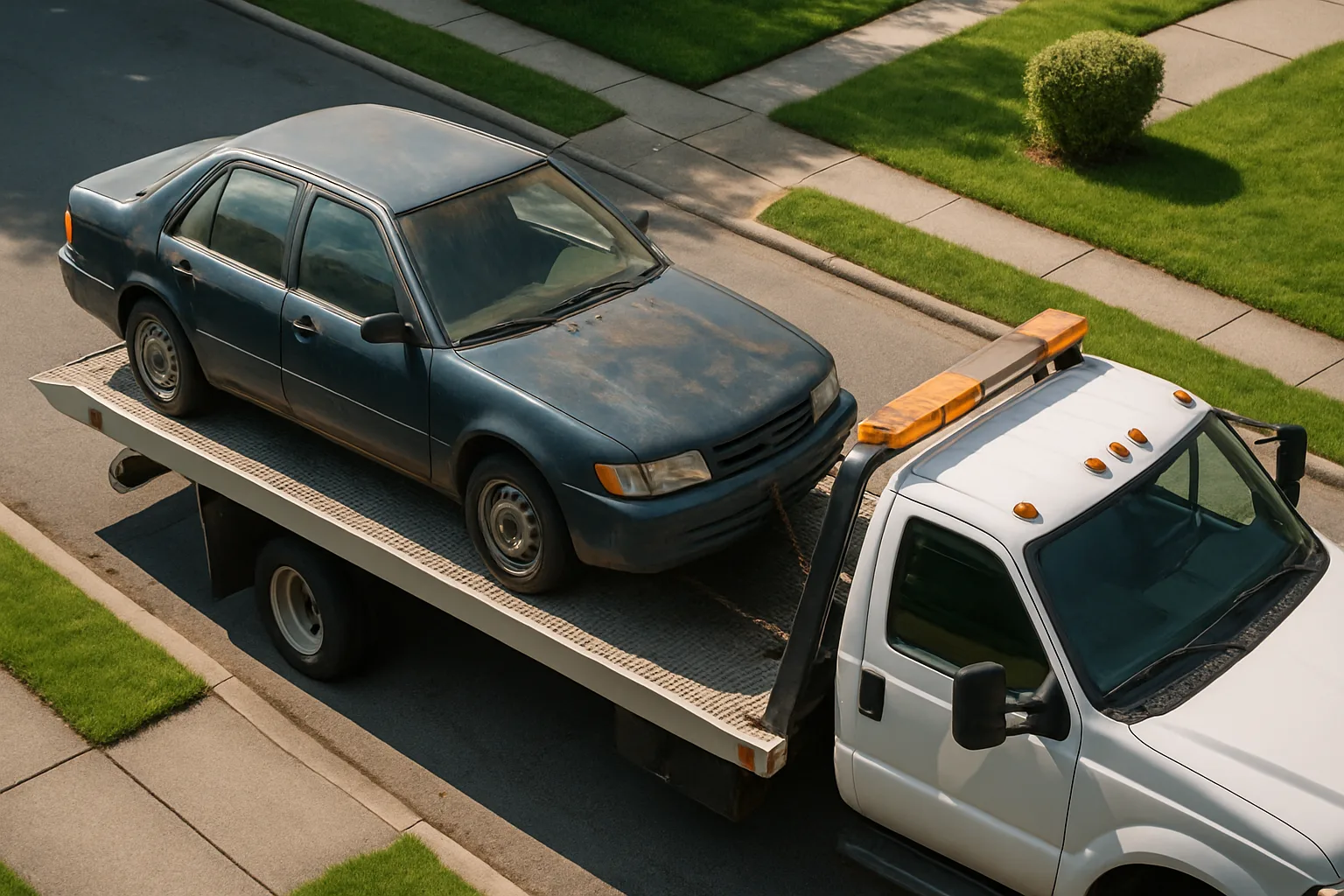
Not All Junk Cars Are Worth the Same — Here's Why
Pull up two identical-looking rusted-out sedans sitting in two different driveways, and they might fetch completely different prices at the scrap yard. That surprises a lot of people. If it's junk, it's junk — right? Not exactly. When you want to sell my car for cash Abbotsford, the number you get back depends on a mix of factors that most vehicle owners have never thought about. Make, model, condition, weight, and even which metals are inside your specific vehicle all play a role.
Understanding why prices vary isn't just interesting — it puts money in your pocket. Sellers who know what drives scrap car value walk into the process with realistic expectations and spot a fair offer when they see one.
Weight Is the Starting Point — But It's Not the Whole Story
Scrap yards and auto recyclers start with one simple number: how much does the vehicle weigh? Steel is priced by the tonne, and the heavier the vehicle, the more raw metal goes into the crusher. A full-size pickup truck or an old SUV will almost always outperform a compact sedan on base scrap value for exactly this reason.
But weight alone doesn't tell the full story. A 2009 Honda Civic and a 2009 Ford F-150 are not just different in size — they're different in metal composition, part availability, and resale demand for salvageable components. The truck might bring more on weight, but the Civic might carry parts that recyclers can actually sell. Both factors feed into the final number.
- Heavy vehicles (trucks, vans, full-size SUVs): Higher base scrap value from steel weight alone
- Mid-size sedans and crossovers: Moderate base weight, but often strong parts demand
- Compact and subcompact cars: Lower steel weight, final price depends heavily on parts and metals
If you're in Abbotsford and trying to estimate what your vehicle is worth before you call anyone, start by looking up the curb weight of your specific year and model. It gives you a rough anchor point before the real assessment begins.
Why Make and Model Drive Scrap Car Pricing More Than You Think
Not every vehicle is stripped for parts at equal rates. Recyclers and auto dismantlers know which makes have high parts demand and which ones sit on the shelf for years. Vehicles with large ownership bases — where parts get searched for constantly — are worth more in the recycling stream than obscure imports or discontinued models where nobody's looking for the fender or the alternator.
Domestic trucks and popular Japanese brands tend to hold stronger scrap and salvage value simply because parts move. A recycler pulling a late-2000s Toyota Camry or a Ford F-Series knows those parts will sell. That confidence gets factored into what they're willing to pay you upfront. Platforms like SMASH help reveal this dynamic by bringing multiple vetted buyers into the equation — which means competition, not guesswork, drives your final number.
Beyond parts demand, certain makes contain more valuable non-ferrous metals by design. Some European and luxury vehicles use more aluminum in their frames and body panels. Aluminum brings significantly more per pound than steel. If your vehicle happens to have a higher aluminum content — even in an end-of-life state — that matters at the scale.
Condition Matters — Even When the Car Doesn't Run
Here's what people get wrong: "condition" in the scrap world doesn't mean the same thing as in a private sale. Nobody expects your 2003 minivan to start on the first try. What recyclers actually care about is a different checklist entirely:
- Is the catalytic converter still on the vehicle? Cats contain platinum, palladium, and rhodium — all valuable non-ferrous metals. A missing cat drops your price noticeably.
- Are the tires still on it? Tires affect how the vehicle is moved and processed. Some yards factor this in.
- Has the vehicle been sitting in water? Flood damage affects the structural steel and the value of salvageable components.
- Is the engine intact? A vehicle with a complete engine — even a seized one — often brings more than one that's been picked over.
- Is there significant body damage that reduces the weight or makes loading dangerous? Heavily crushed vehicles may not load cleanly, which affects logistics and price.
The point isn't that your car needs to be in good shape. The point is that what's still on the vehicle determines how much value a buyer can extract. Sellers in British Columbia who sell your scrap car in Canada with full documentation of what's still intact tend to get stronger offers because buyers can quote with confidence instead of building in a discount for unknowns.
How the Scrap Metal Market Affects What You're Offered Today
Even if your vehicle is identical to one that sold six months ago, you might get a different number today. Steel prices, aluminum prices, and the value of catalytic converter metals fluctuate with global demand, trade conditions, and manufacturing cycles. In 2026, North American metal markets continue to respond to shifts in EV production, infrastructure spending, and international trade flows. What a tonne of shredded steel fetches in September can look different from what it fetched in March.
This is exactly why getting multiple competing offers — rather than accepting the first call you get — matters. When one buyer names a price, you have no reference point. When three or four vetted buyers are competing for the same load, the market speaks for itself. SMASH operates on exactly this principle: more buyers means better price discovery, not a single operator deciding what your vehicle is worth on a phone call. If you want to schedule a free scrap car pickup with real transparency behind the number, competition is the mechanism that gets you there.
Disclaimer: Scrap metal and vehicle prices fluctuate based on market conditions. Always check current rates before finalizing any transaction.
What Sellers in Abbotsford Should Know Before They Call
Abbotsford sits at a useful geographic crossroads in British Columbia — close enough to the Lower Mainland that you have access to multiple buyers and recyclers, but without the premium overhead that drives up costs in Vancouver proper. That's actually good news for sellers. More competition in your market means more options, and more options generally mean better outcomes.
Before you reach out to anyone, gather the basics about your vehicle:
- Year, make, and model
- Approximate mileage (even a rough number helps)
- Whether the catalytic converter is still in place
- Current location of the vehicle — driveway, acreage, strata parking, etc.
- Whether you have the title or registration in hand
You can also read Canadian scrap car guides that break down exactly what the pickup and quote process looks like, so there are no surprises on the day of removal. Local services that handle free towing and same-day or next-day pickup make the logistics easier — and sellers shouldn't be paying out of pocket to get a dead vehicle off their property.
For local residents, Abbotsford scrap metal services are available with free towing included, so there's no deduction from your offer to cover the haul.
How to Get the Most Accurate Quote for Your Specific Vehicle
Generic online calculators will give you a ballpark. But your specific vehicle — with its specific condition, specific missing or present components, and the current state of the metal market — deserves a quote based on real information, not a formula designed to handle every car the same way.
The most reliable path: provide detailed information upfront. Photos help. A VIN helps even more, because it gives buyers the exact build specs of the vehicle without relying on your memory of whether it came with aluminum wheels or steel. Platforms that use VIN lookup and photo documentation — the way the SMASH system is built — eliminate the guesswork on both sides. The buyer knows what they're bidding on. The seller gets an offer that holds up on pickup day rather than getting revised at the curb.
If you're ready to move forward, schedule free scrap car pickup in Canada and get a quote based on your actual vehicle, not a generic estimate. The whole process — from quote to tow — is designed to take the friction out of what should be a straightforward transaction.
Scrap car selling shouldn't be a guessing game. Know what you have, understand why buyers value it the way they do, and put your vehicle in front of more than one buyer. When you're ready to do that in Abbotsford or anywhere else in British Columbia, sell-myscrapcar.ca is built for exactly this — fair pricing, free towing, and no runaround.
Frequently Asked Questions
Q: How much can I get when I sell my car for cash in Abbotsford?
The amount depends on your vehicle's make, model, weight, condition, and current scrap metal prices. A heavy-duty truck will generally bring more than a compact car, but a well-preserved vehicle with the catalytic converter intact will always outperform one that's been stripped. Get a quote based on your specific vehicle rather than relying on generic estimates.
Q: Does a non-running car still have scrap value?
Yes — absolutely. Most vehicles that get scrapped don't run. What matters is what's still on the vehicle: the catalytic converter, intact engine, body panels, and core metals. A non-running car with everything in place can still generate a solid offer from the right buyer.
Q: Is free towing actually included, or is it deducted from my payout?
Reputable scrap car services include free towing as part of the deal — meaning no deduction from your quoted price. Always confirm this before you agree to anything. If a buyer quotes you a number and then subtracts a towing fee at pickup, that's a red flag.
Q: How does selling my junk car in Abbotsford work from start to finish?
You provide your vehicle details (year, make, model, VIN, condition), receive a quote, agree on a pickup time, and the tow truck comes to your location. You hand over the keys and paperwork, and you get paid. The whole process typically takes one to two days from first contact to completed pickup, depending on scheduling.
Q: Why do scrap car prices change so often?
Scrap car prices are tied directly to the steel, aluminum, and precious metal markets — all of which move based on global supply and demand. Trade conditions, manufacturing trends, and seasonal factors all influence what buyers are willing to pay on any given week. This is why getting a current quote matters more than relying on what your neighbour got for a similar car six months ago.
Follow SMASH on LinkedIn for ongoing scrap metal market updates and industry insights across North America.
```