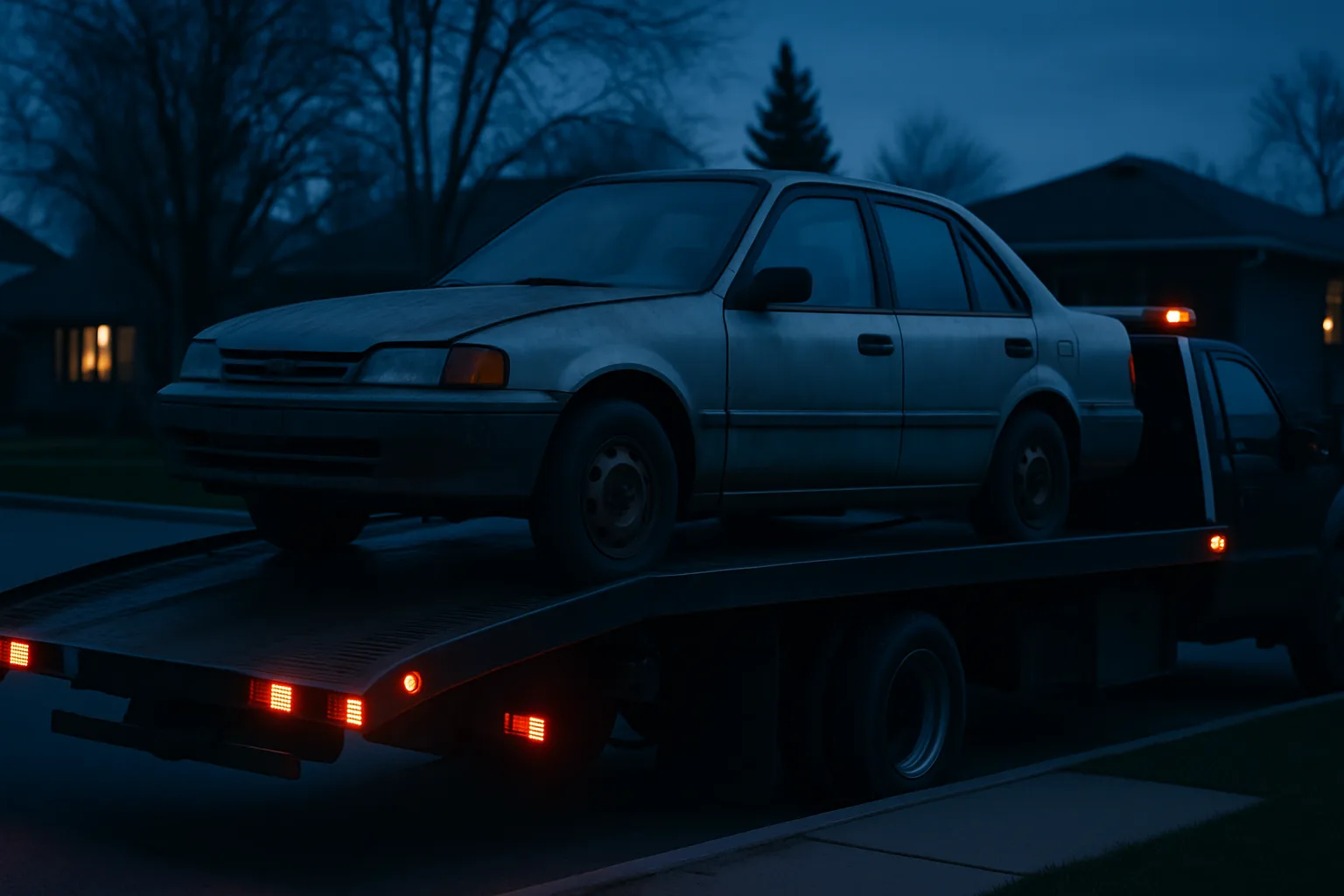
Most people never think about what happens to a car after they're done with it. They drive it, maintain it (sometimes), and then one day it won't start — or the repair estimate hits four figures — and suddenly it's just sitting there. But that vehicle has a story that started long before you owned it, and it doesn't end in your driveway.
Understanding the full lifecycle of a car — from raw steel to scrap yard — changes how you think about end-of-life vehicles. It also helps you understand why sell scrap car Red Deer searches spike every spring and fall, and why getting the right buyer for your old vehicle matters more than most people realize.
Stage One: Birth of a Vehicle — Steel, Aluminum, and Assembly
Before a car ever touches pavement, it starts as raw material. A typical passenger vehicle contains roughly 900 kg of steel, 150 kg of aluminum, and a mix of copper wiring, rubber, plastics, and precious metals in its catalytic converter. Those materials are mined, smelted, shaped, and assembled across global supply chains before a finished vehicle rolls off a line in Detroit, Windsor, or overseas.
The manufacturing process is energy-intensive and material-heavy. That's actually why recycling end-of-life vehicles matters so much — the metals inside a scrapped car go straight back into that same supply chain. Recycled steel uses significantly less energy than virgin steel production. When you sell your scrap car in Canada, you're not just clearing your driveway. You're feeding material back into the manufacturing cycle.
Stage Two: Years on the Road — What Wears, What Holds
The average Canadian vehicle stays in service for about 12 to 15 years. During that time, most of the mechanical wear happens in predictable patterns. Engines accumulate carbon deposits. Brake systems wear through rotors and pads. Suspension components fatigue. In Alberta, where road salt, freeze-thaw cycles, and gravel roads are facts of life, frame rust and undercarriage corrosion can accelerate that timeline significantly.
Red Deer sits in a climate that's tough on vehicles — cold winters, road treatment chemicals, and temperature swings that stress rubber seals and metal components. It's not uncommon for a vehicle to hit the end of its practical life faster here than it would in a milder climate. That's not a complaint, it's just physics. And it's one reason why junk car removal in Alberta is a steady business year-round.
By the time a car reaches end-of-life status, it's typically showing one or more of these:
- Repair costs that exceed the vehicle's market value
- Structural rust that fails safety inspection
- Engine or transmission failure with no cost-effective fix
- Collision damage beyond what insurance will cover
- An odometer reading past the point of reliable daily use
Stage Three: The Decision Point — Selling, Trading, or Scrapping
This is where most vehicle owners get stuck. The car isn't worth selling privately — nobody wants it. The dealer won't touch it on trade. So it sits. Sometimes for months. Sometimes years. Meanwhile, it's depreciating to zero and potentially becoming a bylaw issue if it's parked on a public street.
Here's what a lot of people don't know: a vehicle doesn't need to run, pass inspection, or have a clean title to have real value as scrap. The steel alone in most passenger vehicles is worth something. The catalytic converter — especially on trucks and SUVs — can carry meaningful value depending on the platinum group metals inside. A working alternator, a salvageable transmission, or a set of decent tires can all add to what a buyer will pay.
The problem has always been price discovery. Who's buying? What are they paying? Is this buyer legitimate? That's where platforms like SMASH change the equation. Instead of one phone call to one buyer who quotes you whatever number they feel like that day, a scrap metal auction platform puts your vehicle in front of vetted buyers who compete. Competition reveals the actual market. That's not theory — that's how pricing works.
If you're ready to stop guessing, you can schedule a free scrap car pickup and get a real number for your vehicle.
Stage Four: Arrival at the Scrap Yard — What Actually Happens to Your Car
Once a vehicle reaches a recycling facility, the process is methodical. Here's the general sequence most auto recyclers in Canada follow:
- De-pollution: Fluids are drained and captured — engine oil, coolant, brake fluid, transmission fluid, fuel, and refrigerants. This step is regulated and non-negotiable under Canadian environmental standards.
- Parts harvesting: If the vehicle has salvageable parts — engines, transmissions, doors, glass, wheels — they're pulled before shredding. These go into the used parts market and extend the life of other vehicles.
- Catalytic converter removal: Cats are separated for precious metal recovery. The platinum, palladium, and rhodium inside are extracted and recycled into new catalysts or industrial applications.
- Shredding: The remaining hulk goes through an industrial shredder that reduces it to fist-sized pieces of mixed metal in seconds.
- Sorting: Shredded material is sorted magnetically and by density — ferrous steel separates from aluminum, copper, and other non-ferrous metals.
- Sale to mills: Sorted metal bales or shredded material is sold to steel mills and smelters, where it gets melted down and re-enters the manufacturing supply chain.
The metal from your old Red Deer beater could end up in a new appliance, a construction beam, or — ironically — another vehicle. The cycle is real and it's efficient. Auto recyclers in Canada divert hundreds of thousands of vehicles from landfill every year.
How SMASH Fits Into the Lifecycle
Most of the friction in scrapping a vehicle happens at the handoff point — the moment between "I want to get rid of this" and "I actually got paid fairly for it." That gap is where sellers lose money, time, and patience.
SMASH operates as a scrap metal auction platform that connects sellers with vetted buyers across North America. For vehicle owners in Alberta, that means your load — whether it's a single junk car or a batch of scrap vehicles — gets seen by real buyers who are actively competing for material. No guessing. No single phone call to a buyer who has zero reason to offer you a fair price.
Features that matter in this context:
- Photo documentation — Buyers see exactly what they're bidding on. No surprises at pickup.
- VIN lookup and serial tracking — Adds legitimacy and confidence for both sides of the transaction.
- Vetted buyers — Not every buyer who shows up on a platform is worth dealing with. SMASH screens them.
- No subscription fees — You pay nothing to list. SMASH only wins when you do.
For yards and recyclers handling volume, the difference between one buyer and five competing buyers can be significant. More buyers means better price discovery. That's the whole point. You can also read Canadian scrap car guides to understand how the pricing and process works before you commit to anything.
Selling Your Scrap Car in Red Deer — What the Process Looks Like
If you're in Red Deer and you've got a vehicle you're done with, the process doesn't have to be complicated. Here's what a straightforward junk car removal looks like when you go through a legitimate service:
- Get a quote. Provide basic details — year, make, model, condition, location. You get a number. No pressure.
- Schedule pickup. Free towing is standard. You shouldn't be paying to get rid of something that has value.
- Get paid. Payment happens at pickup or by e-transfer, depending on the service. Get it in writing.
- Transfer the title. Even if your vehicle doesn't have a title, reputable buyers in Alberta can often work with a bill of sale and your ID. Don't let a missing title stop you from calling.
Red Deer's Red Deer scrap metal services are set up to handle exactly this kind of transaction. Whether your vehicle is sitting in a garage, a field, or a back alley, pickup is pickup. You don't need to move it yourself.
For more options and buyer comparison across the region, getmyscrapcar.ca is another resource worth checking.
When you're ready to close the chapter on that old vehicle and actually get something for it, the right move is to sell your scrap car in Canada through a service that puts multiple buyers in competition for your material. That's how you find out what it's actually worth — not what one buyer decided to offer on a slow Tuesday.
Note: Scrap metal and vehicle prices fluctuate with commodity markets. Check current rates at time of sale for accurate quotes.
Frequently Asked Questions
Q: Do I need a title to sell my scrap car in Red Deer?
Not always. Many scrap car buyers in Alberta can complete a transaction with a valid bill of sale and government-issued ID. That said, having your title makes the process faster and cleaner. Contact the buyer directly to confirm what documentation they require before pickup.
Q: How much is a scrap car worth in Red Deer right now?
Vehicle scrap value depends on weight, metal composition, condition, and current commodity prices — all of which fluctuate. A typical passenger car might yield a few hundred dollars in scrap value; trucks and SUVs tend to return more due to size and catalytic converter content. Get a current quote rather than relying on general estimates.
Q: Is free towing actually free, or are there hidden fees?
Reputable scrap car services in Alberta include towing at no cost to the seller — it's built into the transaction. Before you confirm a pickup, ask specifically whether towing is included and whether there are any deductions from the quoted price. Get the final number confirmed before they load your vehicle.
Q: How long does the scrap car pickup process take in Red Deer?
Most services can schedule pickup within one to three business days, and the actual removal typically takes under an hour. Same-day service is sometimes available depending on location and demand. Once pickup is confirmed, you don't need to be home in some cases — coordinate the details with your buyer.
Q: What happens to my car after it's picked up?
Your vehicle goes to a licensed auto recycler where it's de-polluted, stripped of salvageable parts, and then shredded. The sorted metal gets sold to mills and re-enters the manufacturing supply chain. In Alberta, this process is regulated to ensure proper handling of fluids and hazardous materials.
---The lifecycle of a car is a long one — from a blast furnace to your driveway and eventually back to raw material. If yours has reached the end of the road, the smart move is to make sure it exits the right way. Get a fair price, use a service that includes free towing, and let the metal go back to work. Sell your scrap car in Canada and get a free quote at sell-myscrapcar.ca — no pressure, no commitment, just a real number for your vehicle.
Follow SMASH on LinkedIn for scrap metal market updates and industry insights across North America.