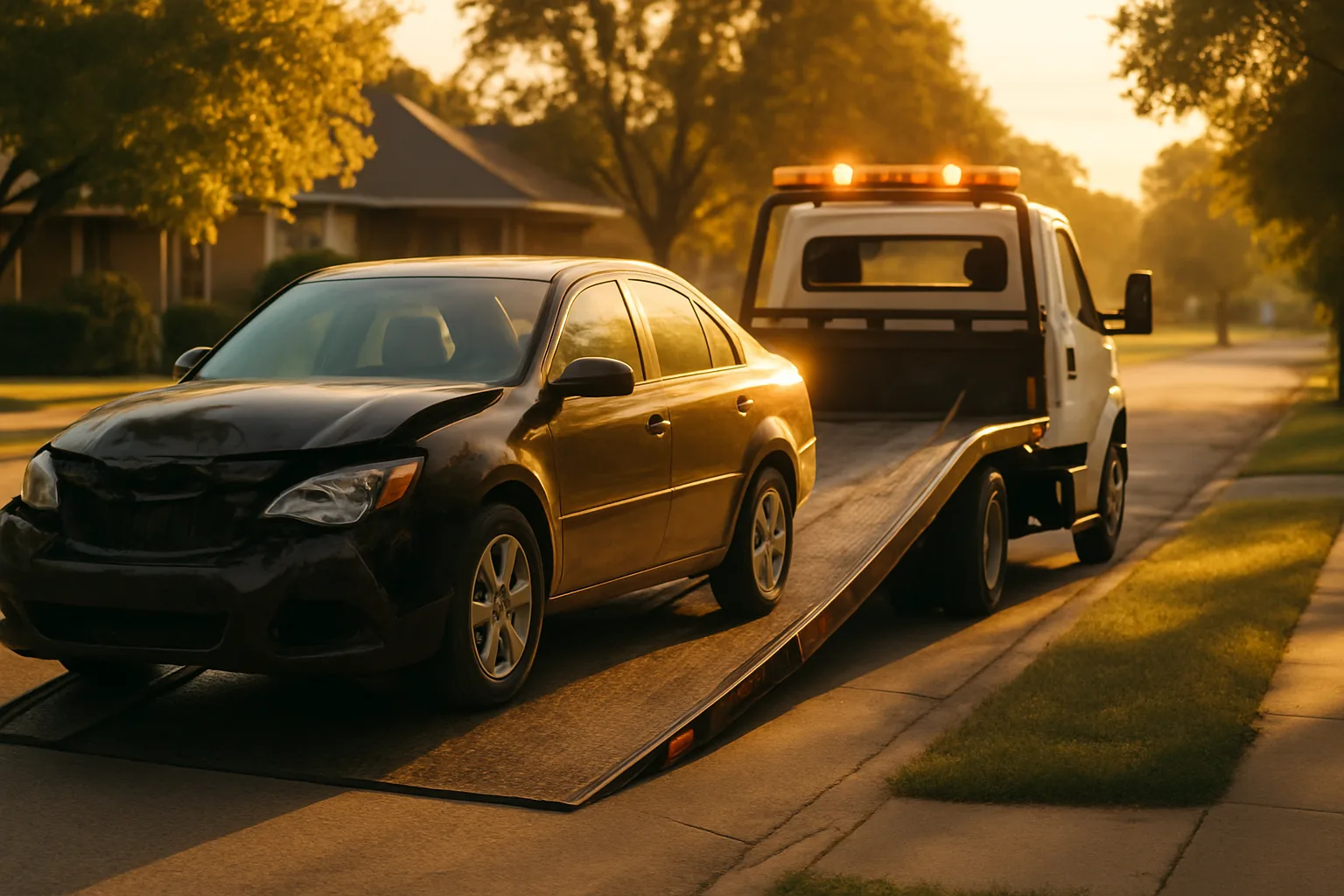
Your Accident-Damaged Car Might Be Worth More Than the Tow Bill
Most people assume a car that's been in a serious collision is worthless. Write it off, pay someone to haul it away, move on. But here's what actually happens at the yard: accident-damaged vehicles still carry real recoverable value — in steel, aluminum, copper, and catalytic converters. If you're searching for junk car buyers near me Richmond, the first thing you need to know is that "totalled" doesn't mean "worthless."
This guide walks you through everything — from what your wrecked car is actually worth, to how to handle the paperwork, to why platforms like SMASH are changing how accident vehicles get sold across British Columbia and the rest of Canada.
What "Totalled" Actually Means — And Why It Doesn't Change the Scrap Value
When your insurer writes off a vehicle as a total loss, they're making a repair-cost decision, not a material-value decision. The car still has a body full of steel, a catalytic converter packed with platinum group metals, an aluminum engine block, copper wiring, and sometimes a battery worth recycling separately. The insurance company doesn't care about those — but a scrap yard absolutely does.
In British Columbia, a vehicle written off by ICBC goes through a salvage title process. Once that's done, the car is legally yours to sell as scrap or salvage — as long as you have the paperwork in order. Don't skip that step. A vehicle without a clear title or a proper salvage declaration will slow down your sale or kill it entirely.
Here's what recyclers and scrap buyers look at when they assess an accident vehicle:
- Curb weight and steel content — A full-size truck or SUV holds significantly more recoverable steel than a compact sedan.
- Catalytic converter condition — Even a damaged cat can hold value if the substrate is intact. Fire damage or severe crush damage affects this.
- Non-ferrous metals — Aluminum wheels, copper wiring harnesses, and the engine block all add to the total.
- Usable parts — If the rear of the car is untouched and the engine runs, a dismantler may pay a premium for parts.
- Age and make — Certain makes hold better scrap and parts value. A 2018 half-ton is not the same as a 2006 economy car.
The point is simple: get an actual quote before you assume the car has zero value. You might be surprised.
The Right Way to Handle Paperwork After an Accident Write-Off
Skipping the paperwork is how people get burned. Whether you're in Richmond or anywhere else in Canada, the title has to be clean before any reputable buyer will touch the vehicle. Here's what you typically need to have ready:
- Proof of ownership — Your vehicle registration or title in your name. If there's a lien, the lender needs to release it before you can sell.
- Salvage or total loss declaration — In BC, ICBC issues documentation when a vehicle is declared a total loss. Keep this. You'll need it.
- Government-issued ID — Standard for any vehicle transaction.
- Keys and any second sets — Not always required, but most buyers expect them.
- Personal belongings removed — Obvious, but people forget things in glove boxes, under seats, and in trunks.
If your car was financed and the insurer paid out the lienholder directly, confirm in writing that the lien has been discharged. This matters more than most people realize, and it's a common holdup in the selling process.
How Cash for Cars Richmond Works for Accident Vehicles
The cash for cars Richmond market functions differently than selling a running used car privately. You're not negotiating with someone who wants to drive it. You're dealing with scrap yards, auto recyclers, and dismantlers who are calculating recoverable value. That means the process is faster, less emotional, and more transactional — which is a good thing when you just want the wreck gone.
Here's what a typical scrap car removal looks like for an accident vehicle in Richmond:
- You request a quote — online, by phone, or through a platform that aggregates buyers.
- You provide the year, make, model, weight class, and condition (be honest about fire or flood damage — it affects the cat and electrical value).
- You get an offer. A legitimate buyer gives you a real number, not a "it depends" non-answer.
- You confirm the pickup — most reputable services offer free towing as part of the deal. You don't pay to have your wreck hauled.
- Payment happens at pickup or within an agreed timeframe — cash, e-transfer, or cheque depending on the buyer.
The key advantage of working through a service like SMASH is that your vehicle goes to multiple vetted buyers simultaneously — not just the first yard that picks up the phone. That's how sell my junk car for cash actually pays what it should: competition between buyers drives better price discovery. More buyers bidding means you're not leaving money on the table because one yard low-balled you and you had no comparison.
If you're ready to get started, you can schedule a free scrap car pickup and have your vehicle assessed quickly — no pressure, no runaround.
What Happens to Your Catalytic Converter in a Scrap Sale
The catalytic converter on your accident-damaged vehicle deserves its own conversation. Cats contain platinum, palladium, and rhodium — precious metals that retain value even when the rest of the car is crushed. For some vehicles, the cat alone represents a meaningful portion of the scrap value. This is especially true for larger engines: trucks, SUVs, and certain import models carry cats with higher PGM content.
A catalytic converter auction environment — where multiple buyers compete for the converter — tends to produce better outcomes than selling it to a single buyer who sets the price unilaterally. This is part of what SMASH facilitates: buyers who specialize in cats see the VIN, the vehicle specs, and the condition documentation, and they bid accordingly. Serial tracking and photo documentation on the cat means there's no guessing about what you have.
If your vehicle sustained front-end damage in the collision, have someone check whether the cat substrate is intact before assuming fire or crush damage destroyed the value. A dented shield doesn't always mean a ruined converter. Get eyes on it before you write off that value.
Want to understand how this works in practice? Read Canadian scrap car guides for more on how different vehicle components are valued during the scrap process.
Scrap Car Removal Across Canada — What Richmond Sellers Should Know
If you're in Richmond, you're in one of the more active scrap vehicle markets in British Columbia. The Lower Mainland has a dense network of auto recyclers, dismantlers, and scrap processors — which works in your favour. More buyers in your area means more potential competition for your vehicle. That said, geography alone doesn't guarantee you get a fair price. The buyer pool you access matters as much as where you're located.
This is why working with a platform that connects you to vetted buyers — rather than cold-calling yards one at a time — makes a real difference. You can sell your scrap car in Canada through a service that handles the outreach, the documentation trail, and the pickup logistics. You focus on getting paid; the platform handles the rest.
It's also worth knowing that scrap car removal isn't just a Richmond or BC issue — the same principles apply whether you're in Hamilton, Calgary, or Halifax. Services like explore scrap car removal in Canada at GetMyScrapCar operate nationally, so if you've relocated or have a vehicle in another province, the process is consistent. And if you're looking at scrap car removal Hamilton specifically, the same vetted-buyer model applies — free towing, transparent pricing, no subscription games.
Connecting with Richmond scrap metal services through a platform that vets its buyers means you're not flying blind. You're working with buyers who know what your accident vehicle is worth and have to compete to earn your business.
Common Mistakes to Avoid When Scrapping an Accident-Damaged Car
People make predictable mistakes when scrapping a wrecked vehicle. Avoid these and you'll come out ahead:
- Accepting the first offer without comparison — One quote isn't a market. Get multiple offers, even if it takes an extra day.
- Selling before clearing the title — A lien or unresolved insurance paperwork can legally complicate the sale. Sort it out first.
- Leaving the catalytic converter behind or selling it separately without proper documentation — In BC, there are regulations around cat sales. Make sure the transaction is documented properly.
- Assuming fire or flood damage makes the car unsellable — It reduces value, but it doesn't eliminate it. Steel is still steel.
- Paying for towing — Any reputable scrap car buyer in Richmond should offer free towing. If they don't, that's your first red flag.
- Not cancelling your insurance and plates — Once the car is gone, return your plates to ICBC and cancel the policy. You're paying for coverage on a car you no longer own.
These aren't complicated steps. But skipping any one of them costs you time, money, or both.
Frequently Asked Questions
Q: Can I sell a car that's been declared a total loss by ICBC?
Yes. Once ICBC declares the vehicle a total loss and the payout process is complete, the vehicle's title transfers to you (or the insurer, depending on your settlement). If you retained ownership after a cash settlement, you have the right to sell it as scrap or salvage. Make sure your salvage paperwork is in order before approaching a buyer.
Q: How do junk car buyers near me in Richmond determine the price for an accident-damaged car?
Buyers look at the vehicle's curb weight, the condition of high-value components like the catalytic converter, the make and model, and the extent of damage. Fire and flood damage typically reduce value more than collision damage. Getting multiple offers through a vetted platform gives you a clearer picture of the actual market value.
Q: Is free towing actually included, or is that a bait-and-switch?
Reputable scrap car services in Richmond and across British Columbia include free towing as a standard part of the transaction. The tow cost is factored into the buyer's pricing model. If a buyer quotes you a price and then adds a tow fee at pickup, walk away — that's a common low-ball tactic.
Q: What happens to my catalytic converter when I scrap my car?
The converter is removed during the dismantling process and either sold separately to a cat buyer or processed for its platinum group metals. In a competitive buying environment — like what platforms such as SMASH facilitate — the cat value is factored into your overall quote and buyers compete on it. This is typically better than a yard that values the cat internally and doesn't disclose the breakdown.
Q: Do I need both keys to sell my junk car for cash in Richmond?
Having both keys is helpful but rarely a dealbreaker for scrap sales. Unlike private buyers who need a working vehicle, scrap buyers are focused on material value. If you only have one key or no key at all, disclose that upfront — it rarely kills a deal for a vehicle going to the crusher.
If you've got an accident-damaged vehicle sitting in your driveway in Richmond — or anywhere else across Canada — the best move is to get a real quote from buyers who compete for your business. Platforms like SMASH put your vehicle in front of vetted buyers who bid based on actual value, not guesswork. No subscription, no runaround, free towing included. That's how sell scrap car in British Columbia should work. Get your free quote at sell-myscrapcar.ca and find out what your wrecked car is actually worth.
Scrap metal and vehicle prices fluctuate based on commodity markets. Check current rates before making selling decisions.
Stay current on scrap market trends and industry news — follow SMASH on LinkedIn for regular updates on scrap pricing, platform features, and recycling industry insights across North America.
```