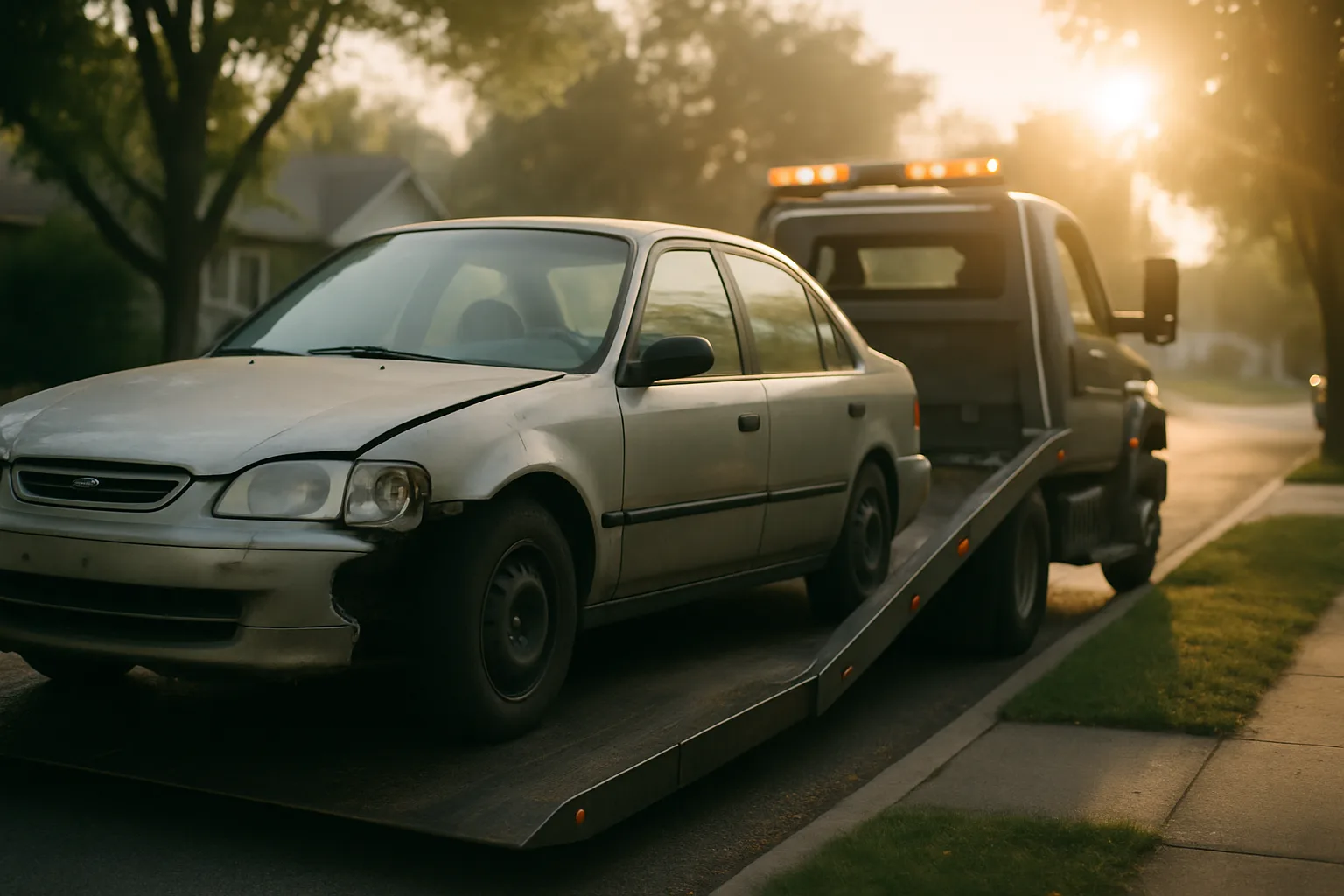
Most people use "junkyard," "salvage yard," and "auto recycler" interchangeably. They're not the same thing — and if you're trying to get free scrap car pickup in Regina, knowing the difference can save you time, money, and a frustrating phone call to the wrong place.
Here's the breakdown you actually need before you make a call or fill out a form.
What Is a Junkyard — And What Does It Actually Do?
A junkyard is the oldest model in the business. You pull in with a dead car. They pay you a flat rate — sometimes nothing — and the vehicle sits in a field until someone comes to strip parts off it. What's left eventually gets crushed and sold as bulk scrap metal.
Junkyards operate on volume. They're not spending time documenting your catalytic converter serial numbers or running VIN lookups to determine what a car is actually worth. You get a quick offer based on rough weight, and that's the end of the conversation. If you're in Regina and you've tried this route, you already know the experience: a lowball number, no explanation, and a take-it-or-leave-it attitude.
- Pays based on weight, not actual vehicle value
- Minimal documentation — no itemized breakdown of what you're getting paid for
- Parts may be resold with little quality control
- Environmental compliance varies widely by operator
Salvage Yards: A Step Up — But Still Not the Full Picture
A salvage yard takes a more structured approach. These operations focus on buying vehicles, pulling usable parts, cataloguing them, and reselling those parts to mechanics or DIY repair shops. The car still ends up crushed eventually, but the salvage yard extracts more value before that happens.
Because they're extracting parts value, a legitimate salvage yard might offer you more than a junkyard — especially if your vehicle has high-demand components like a newer transmission, low-mileage engine, or intact catalytic converter cores. That said, pricing is still largely internal. You're relying on their appraisal of what your parts are worth, with no competition to verify it. For junk car removal in Regina, a salvage yard is a step in the right direction, but it still leaves the seller without leverage.
- Pays for parts value, not just scrap weight
- Better pricing potential for newer or lower-mileage vehicles
- Still a single-buyer model — no competitive pricing
- Offer varies significantly based on staff knowledge and inventory needs
Auto Recyclers: The Professional End of the Industry
Auto recyclers are the regulated, professionally run version of the whole operation. They're licensed, environmentally certified, and required to follow provincial standards for fluid draining, parts handling, and material disposal. In Saskatchewan, that means meeting specific environmental guidelines around refrigerants, oil, coolant, and battery acid before a vehicle is crushed.
A good auto recycler documents everything. VINs get logged. Catalytic converter serial numbers get tracked. Hazardous materials are handled properly. The parts that come off your car end up in a catalogued inventory that's sold to verified buyers — not just whoever shows up with cash. This is the model that scrap metal recycling in Canada has been moving toward for the past decade, and for good reason. It protects sellers, buyers, and the environment.
If you're looking to sell your scrap car in Canada and want to know your vehicle is being handled responsibly, an auto recycler is the type of operation you want on the other end of the transaction.
- Licensed and environmentally certified
- Full documentation — VIN, parts inventory, fluid disposal records
- Higher confidence for sellers and downstream buyers
- Typically offers the most transparent pricing process
Where Does Competitive Pricing Actually Come In?
Here's the problem all three of these models share: they're single-buyer transactions. Whether it's a junkyard offering you $150 flat, a salvage yard with a parts estimate, or an auto recycler with a documented quote — it's one number from one buyer. You either take it or start calling around.
That's where the model changes. Platforms like SMASH — the Scrap Metal Auction Sales Hub — bring competition to the scrap car transaction. Instead of one buyer making a take-it-or-leave-it offer, vetted buyers compete for your vehicle or load. That competition creates real price discovery. You find out what the market actually thinks your car is worth, not what one buyer thinks they can get away with paying.
For sellers who've been running the old way — one call, one offer, no options — this is a fundamentally different experience. SMASH handles photo documentation, inventory tracking, and auto-invoicing, so the transaction doesn't fall apart on paperwork. More buyers means better price discovery. That's not a promise of higher prices — it's just math.
You can also read Canadian scrap car guides to understand more about how the pricing process works before you make a call.
Free Scrap Car Pickup in Regina — What to Expect
If you're in Regina and you want your car gone without paying for a tow truck, free pickup is a standard part of the deal when you go through the right service. The vehicle doesn't need to run. It doesn't need to be pretty. It just needs to exist.
Here's what a legitimate free pickup process looks like in Saskatchewan:
- Get a quote. You provide year, make, model, condition, and location. The buyer comes back with an offer based on that information.
- Confirm pickup details. A time is scheduled. No-shows are a red flag — a real operation respects your time.
- Sign over the title (if available). More on this below. Most services work with what you have.
- Vehicle gets towed. Free of charge. You hand over the keys and that's the end of your involvement.
- You get paid. Cash, e-transfer, or cheque depending on the service.
The Regina scrap metal services available through this platform make that process straightforward — no hidden tow fees, no last-minute price drops at pickup.
For anything non-ferrous — copper wiring, aluminum trim, a catalytic converter with value left in it — make sure the service you're using documents those components separately. That's where a lot of sellers leave money on the table when they go with a junkyard that only prices by the ton.
No Title, No Registration? Here's What You Need to Know
One of the most common reasons people hesitate to scrap a car is paperwork. They've lost the title. The registration expired years ago. The car was bought informally and never properly transferred. This situation is more common than you'd think — and it's not necessarily a dealbreaker.
Many junk car buyers and auto recyclers across Canada work with vehicles that have incomplete documentation, especially when the car is clearly end-of-life. In Saskatchewan, the process for handling a vehicle without a title typically involves providing proof of identity and completing a statutory declaration confirming ownership. The specifics depend on the buyer and the situation.
What you should avoid: any buyer who offers to buy your car with zero documentation and no questions asked. That's not a feature — it's a risk. Legitimate cash for cars operations want to know the vehicle is yours to sell. That protects you legally as much as it protects them.
If you're unsure about your paperwork situation, free junk car removal across Canada services can often walk you through what's needed before you commit to anything.
Frequently Asked Questions
Q: What's the fastest way to get free scrap car pickup in Regina?
Fill out an online quote form with your vehicle details — year, make, model, and current condition. A legitimate service will respond within hours, not days. Once you accept an offer, pickup can often happen within 24–48 hours in Regina.
Q: Do I need a running car to get cash for junk car removal in Regina?
No. Most scrap car buyers in Saskatchewan will take vehicles that don't run, don't drive, or are missing major components. The offer will reflect the condition, but the car doesn't need to be operational to be worth something.
Q: What happens to my car after it's picked up?
Depending on the buyer, usable parts may be pulled and resold, and the remaining metal goes to a scrap processor. Regulated auto recyclers drain all fluids before crushing, which is the environmentally responsible way to handle end-of-life vehicles. Ask your buyer about their process if this matters to you.
Q: Can I sell a scrap car in Canada without a title or registration?
In many cases, yes — but the process varies by province and buyer. In Saskatchewan, you'll typically need government-issued ID and may need to complete a statutory declaration. Avoid any buyer who accepts a vehicle with zero documentation and no verification of your identity.
Q: How does SMASH fit into selling a scrap car?
SMASH is a scrap metal auction platform that connects sellers with vetted buyers who compete for loads. For yards and recyclers managing multiple end-of-life vehicles, SMASH brings price competition and documentation tools to transactions that used to be based on a single phone call and a gut-feel offer.
You've got options when it comes to getting rid of an old car — more than most people realize. Knowing whether you're dealing with a junkyard, a salvage yard, or a regulated auto recycler helps you ask the right questions and walk away with a fair deal. If you're ready to move on from a vehicle that's sitting in your driveway in Saskatchewan, schedule a free scrap car pickup and find out what it's actually worth. No subscription fees, no runaround — just a straightforward process built for sellers who are done guessing.
Stay current on scrap metal markets and industry updates by following SMASH on LinkedIn.