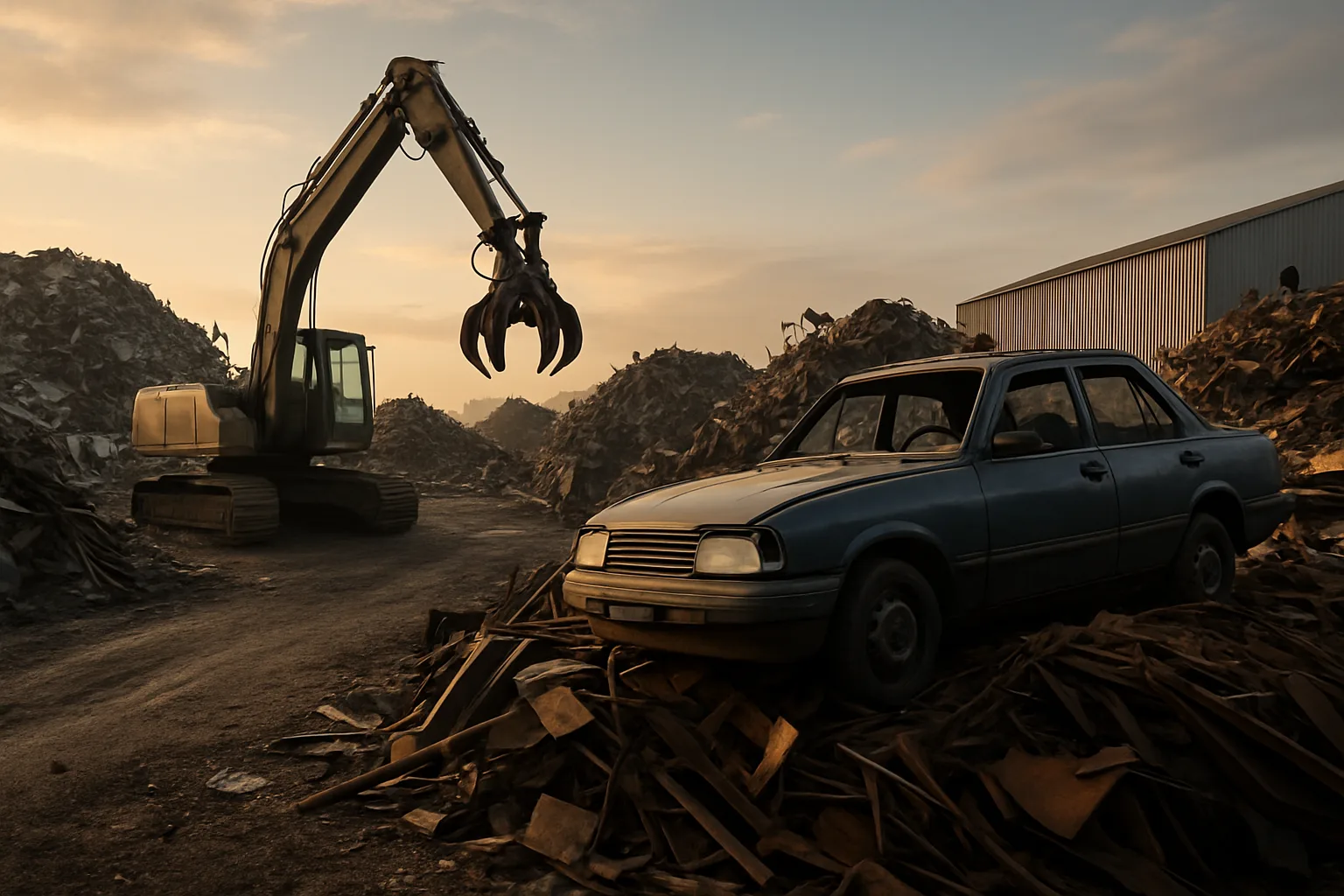
Why Your Junk Car's Make, Model, and Condition Directly Affect What You Get Paid
Two neighbours. Two scrap cars. Two very different payouts. That's not a fluke — that's how scrap car pricing actually works. If you've ever wondered why your 2009 F-150 fetches more than your buddy's 2006 Civic at the same yard, the answer comes down to weight, metal composition, parts demand, and condition. Understanding these factors before you call anyone is the difference between accepting a lowball offer and knowing exactly what your car is worth.
For drivers in London, Ontario looking to get rid of an end-of-life vehicle, this guide breaks down what actually drives scrap car value today — and how to use that knowledge to your advantage.
Weight Is the Foundation of Scrap Car Pricing
Scrap yards aren't buying your memories. They're buying steel, aluminum, copper, and other recoverable metals by weight. The heavier the vehicle, the more raw material it represents. A full-size pickup truck or a heavy-duty van can easily tip the scale at two to three times the weight of a compact sedan — and that gap shows up directly in the payout.
Here's a rough weight breakdown to give you a sense of scale:
- Compact cars (Honda Civic, Toyota Corolla): 2,600–3,000 lbs curb weight
- Mid-size sedans (Toyota Camry, Ford Fusion): 3,100–3,600 lbs
- Full-size trucks (Ford F-150, Chevy Silverado): 4,500–5,600 lbs
- SUVs and minivans (Dodge Grand Caravan, Ford Explorer): 3,800–5,000 lbs
Steel scrap prices fluctuate with global commodity markets, so the dollar-per-ton rate changes month to month. But the weight of your vehicle is constant — and it's one of the most reliable indicators of baseline scrap value. If you're in London and you're sitting on a full-size truck, you're already starting from a stronger position than someone scrapping a subcompact.
Make and Model Affect Parts Value, Not Just Metal Weight
Not every car going to a yard gets immediately crushed. Many get stripped for usable parts first — and that's where make and model matter enormously. High-demand vehicles with widely available repair markets generate more parts revenue. That revenue often gets factored into what the yard offers you upfront.
Think about it from the buyer's side: a 2012 Honda CR-V has a massive owner base in Ontario. Its doors, axles, alternators, and body panels are in constant demand. A 2007 Pontiac Aztek? Fewer owners, less parts demand, lower resale potential on individual components. The Pontiac still has scrap metal value — it just doesn't carry the same parts premium.
Vehicles that tend to hold stronger scrap-plus-parts value include:
- Ford F-Series trucks (dominant market share means constant parts demand)
- Toyota Camry and Corolla (extremely common across Ontario)
- Honda Civic and Accord (popular for DIY repair market)
- Dodge Ram and Grand Caravan (high volumes on Canadian roads)
- Chevy Silverado (especially in rural and industrial areas near London)
This doesn't mean obscure makes are worthless — it means the calculation is different. Platforms like SMASH help create actual market competition around loads and vehicle materials, which can surface better price discovery regardless of what you're selling. More on that below.
How Condition Shifts Your Scrap Car Value Today
Condition matters — but maybe not in the way you think. For a true end-of-life scrap car, "condition" isn't about whether the paint looks good. It's about whether the engine block is seized, whether the catalytic converter is still intact, whether the car is complete or stripped, and whether it can be towed or needs to be winched out of a ditch.
Here are the condition factors that most directly affect what you're offered:
- Completeness: Is the car intact, or have parts already been removed? A stripped shell is worth less than a complete vehicle.
- Catalytic converter presence: Cats contain platinum, palladium, and rhodium — precious metals with real market value. A missing cat is a meaningful deduction.
- Fluid leaks and environmental hazards: Yards factor in handling costs for vehicles leaking oil, coolant, or fuel. It affects their processing time and compliance obligations.
- Accessibility: Is the car in a driveway with easy tow access, or is it buried in a backyard behind a fence? Recovery difficulty affects the net offer.
- Mileage on major components: If the engine or transmission still has usable life, that's a parts value conversation. High mileage on a seized motor means straight-to-crush.
A complete, intact vehicle with its catalytic converter, fluids drained or manageable, and easy tow access is going to generate a better offer than a gutted shell sitting in mud. That's not a secret — but knowing it means you don't strip parts yourself unless you're equipped to sell them independently, which most private sellers aren't.
For anyone ready to move forward, you can sell your scrap car in Canada and get a free quote that accounts for your specific vehicle's make, model, and condition — no guesswork required.
The London Market: What Local Conditions Mean for Your Payout
London, Ontario sits in a strong position for scrap car sellers. The city's manufacturing base, proximity to major auto recyclers, and consistent vehicle density mean buyers are active and pickup logistics are manageable. That matters because transportation costs eat into offers — a yard that's 20 minutes from your driveway in London is going to bid differently than one routing a truck from three hours away.
Accessing London scrap metal services through a structured platform means you're not just calling one buyer and hoping for the best. Competition among vetted buyers is what drives price discovery. One offer with no comparison is just a number — it might be fair, or it might not be. You have no way to know without a benchmark.
London also has a strong secondary market for used auto parts, particularly for domestic trucks and vans. If your vehicle is a popular make with serviceable components, local demand can push the offer higher than straight metal weight would suggest. This is especially true for cash for cars Ontario buyers who operate stripping operations before crushing.
The scrap car market in Ontario is also subject to provincial regulations around title documentation, fluid disposal, and deregistration. You don't need a clean title in every situation — but having your paperwork in order typically speeds up the process and removes friction from the transaction. If you're unsure about your documentation, read Canadian scrap car guides to understand what's typically required in Ontario before you book a pickup.
How SMASH Brings Transparency to Scrap Car and Metal Pricing
Here's the old way: you call one yard, they give you a number, you take it or spend two days calling around trying to do your own price comparison. Most people take the first number. That's how low offers stick — because the hassle of comparison shopping feels worse than the money left on the table.
SMASH (Scrap Metal Auction Sales Hub) exists to fix exactly that problem. By putting scrap loads — including vehicles and vehicle-derived metals — in front of vetted buyers simultaneously, SMASH creates competitive bidding where price discovery happens in real time. More buyers seeing the same material means better price signals for the seller.
For vehicle owners, this matters at the material level. When your car becomes a load of processed steel, non-ferrous metals, or stripped components moving through the recycling chain, the platform that handles that transaction shapes what the recycler gets paid — and that flows upstream to what they can offer you. Documented inventory, photo documentation, and transparent auction processes give buyers more confidence, which typically supports stronger bids.
You can schedule a free scrap car pickup to start the process on your end. For the downstream metal trading side — where recyclers and buyers connect — SMASH handles the competitive market mechanics that make pricing more honest.
Want to explore more about how scrap is bought and sold across North America? Explore scrap car removal in Canada at GetMyScrapCar for additional options and regional coverage.
What You Can Do Right Now to Maximize Your Scrap Car Payout
You can't change what your car weighs or what make it is. But you can control a few things that affect your offer:
- Don't strip the catalytic converter yourself unless you have a direct buyer for it. Selling a car without a cat to a yard usually results in a deduction larger than what you'd get selling the cat privately without the right contacts.
- Have your ownership or title documentation ready. It speeds up the transaction and removes friction for the buyer.
- Be accurate about condition. Describing your car as "runs fine" when it doesn't wastes everyone's time and can result in a revised offer at pickup.
- Know your vehicle's weight class. Look up your car's curb weight. It gives you a baseline to sanity-check any offer you receive.
- Get more than one offer. This sounds obvious, but most people don't do it. Even a quick comparison gives you leverage.
Scrap car pricing isn't arbitrary — it's a function of weight, metal composition, parts demand, condition, and logistics. Once you understand what's driving the number, you stop guessing and start negotiating from a position of knowledge. If you're in London or anywhere across Ontario, that knowledge is the difference between a fair deal and a forgotten one.
Ready to find out what your vehicle is actually worth? Sell your scrap car in Canada — get a free, no-obligation quote at sell-myscrapcar.ca and find out what the market says your car is worth today.
Frequently Asked Questions
Q: How much is my junk car worth for scrap in London, Ontario?
Scrap car value depends on the vehicle's weight, make, model, condition, and current metal prices. A full-size truck will typically yield significantly more than a compact car. For an accurate number specific to your vehicle in London, request a free quote — general estimates without inspecting the vehicle aren't reliable.
Q: Does junk car removal in London include free towing?
Yes. Free towing is standard with most reputable scrap car services in the London area. The towing cost is covered by the buyer, not the seller. Confirm this before agreeing to any offer, and make sure it's included in writing or clearly stated upfront.
Q: Can I sell a scrap car in Ontario without a title?
In many cases, yes — but requirements vary by buyer and province. Having your vehicle ownership documentation speeds up the process and may result in a stronger offer. If you don't have the title, disclose that upfront so the buyer can confirm their process before scheduling pickup.
Q: Why does the catalytic converter matter so much to scrap car buyers?
Catalytic converters contain platinum, palladium, and rhodium — precious metals with significant market value. A vehicle with an intact cat is worth more than one without. Buyers factor this in when making offers, so removing it yourself beforehand rarely works in your favour unless you have a direct channel to sell it.
Q: How does SMASH relate to selling a scrap car?
SMASH is a scrap metal auction platform that brings competitive bidding to the recycling industry. For vehicle owners, the connection is indirect but meaningful: SMASH helps recyclers and metal buyers operate more transparently, which supports better pricing throughout the scrap supply chain. When recyclers get better prices downstream, they can offer more competitive rates to sellers upstream — like you.
Disclaimer: Scrap metal and vehicle prices fluctuate based on commodity markets, local demand, and processing costs. All pricing references in this article are general in nature. Check current rates directly with buyers before making any decisions.
Stay current on scrap metal market trends and industry updates — follow SMASH on LinkedIn for regular insights from inside the recycling industry.