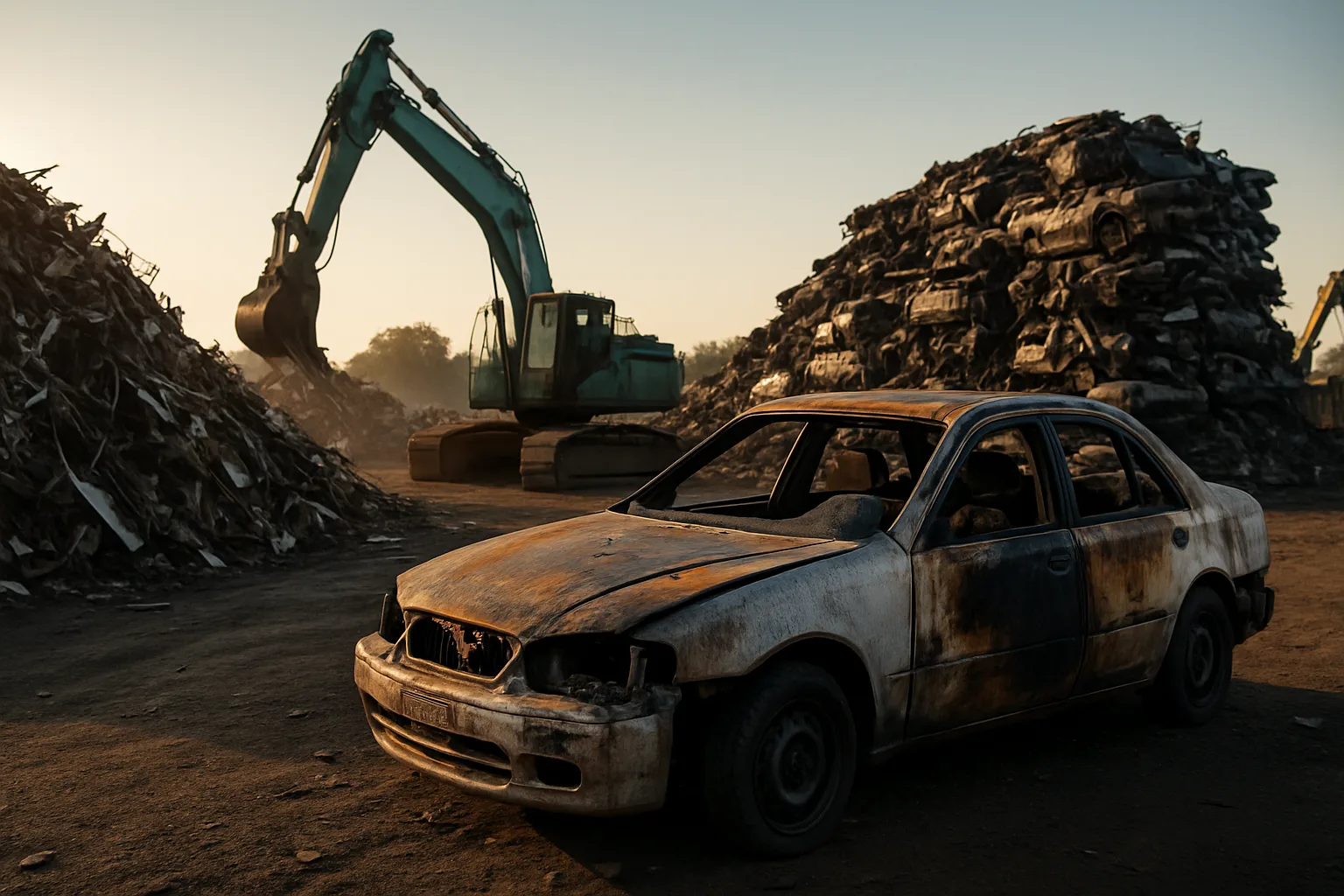
When Fire or Flood Totals Your Vehicle, Here's What Happens Next
A flood-damaged or fire-damaged vehicle sitting in your driveway isn't just an eyesore — it's a depreciating liability that most private buyers won't touch. If you're in Trois-Rivières and wondering whether your wrecked vehicle has any value left, the answer is almost always yes. The question is knowing where to go and what to expect before someone lowballs you on it.
This week's roundup covers what you need to know about selling a flood or fire-damaged vehicle in Quebec, what parts still hold value, how the process actually works, and why using a competitive platform like SMASH is one of the smartest moves you can make before you hand over the keys.
Flood and Fire Damage: What It Actually Does to a Vehicle's Value
Not all damage is equal. A car that sat in standing water for 48 hours during a spring flood event is a very different situation than one that had an engine fire that burned through the firewall. Buyers and recyclers assess damage differently depending on what's salvageable — and that distinction directly affects your payout.
Flood-damaged vehicles typically suffer the most from electrical system corrosion, mold in the cabin, and compromised safety sensors. Even if the engine runs, lenders and insurers treat these vehicles as high-risk. Fire-damaged vehicles may have intact drivetrains but destroyed interiors or melted wiring harnesses. In both cases, the retail resale market is essentially closed off — but the scrap and recycling market remains wide open.
Here's what recyclers are typically looking at when they assess a damaged vehicle:
- Catalytic converter: Often survives flood damage. Contains platinum, palladium, and rhodium — still highly valuable even on a non-running vehicle.
- Ferrous metal (body, frame): Priced by weight. A typical passenger car runs 1,200 to 1,800 kg, with most of that being recoverable steel.
- Non-ferrous components: Aluminum wheels, copper wiring, and radiator cores add meaningful value on top of the base scrap price.
- Reusable parts: Depending on fire or flood extent, doors, glass, suspension components, and transmissions may be pulled and resold.
- Engine block: Cast iron or aluminum — either way, it has scrap value even if it never runs again.
The key point: a damaged vehicle is not a worthless vehicle. Its value has just shifted from the retail market to the recycling and parts market. Knowing that going in protects you from accepting a lowball offer out of frustration.
Why Selling a Damaged Vehicle in Trois-Rivières Is Different From a Normal Sale
Selling a working vehicle in Trois-Rivières through a private sale or dealership involves negotiation, test drives, financing, and paperwork. None of that applies here. A flood or fire-damaged vehicle with a salvage title — or one that's been written off by an insurer — follows a completely different path.
In Quebec, once an insurer declares a vehicle a total loss, the ownership situation changes. You may hold the title or the insurer may take possession depending on how the claim was settled. If you kept the vehicle after a payout (often called a "buyback"), you need to be transparent about its status when selling. Buyers in the recycling sector expect this — it's standard procedure, and there's no need to be embarrassed about it.
The practical steps for most Trois-Rivières vehicle owners look like this:
- Confirm your ownership status. Do you still hold the title? Was the vehicle written off? Get your paperwork in order before you contact anyone.
- Remove personal belongings. Sounds obvious, but flood and fire scenes are chaotic. Check the glove compartment, trunk, and under seats before the vehicle leaves.
- Note what's intact. Catalytic converter still attached? Wheels and tires present? This affects your quote.
- Get a quote — ideally from more than one buyer. This is where most people leave money behind. One phone call to one buyer is not a competitive process.
- Schedule free towing. Reputable services pick up at no cost to you. If someone is quoting you and then charging for tow — that's a red flag.
Platforms like SMASH exist specifically to solve step four. Instead of calling one buyer and hoping they're fair, SMASH puts your vehicle in front of vetted buyers who compete for it. That competition is how you find out what your damaged vehicle is actually worth — not what one recycler decides to tell you.
The Catalytic Converter Question: What Flood and Fire Do to Your Cat
One of the most common questions from vehicle owners dealing with flood damage is whether the catalytic converter still has value. The short answer: usually yes, and sometimes significantly so.
Catalytic converters contain platinum group metals — platinum, palladium, and rhodium — that are extracted and refined regardless of whether the vehicle itself runs. A flooded vehicle's cat may be physically intact and fully recoverable. A fire-damaged vehicle's cat depends on where the fire originated. Engine bay fires near the exhaust system can damage the substrate inside, reducing value. A fire that started in the interior may leave the cat completely untouched.
This matters because catalytic converter auction platforms and buyers factor this value into their bids separately from scrap metal weight. If you're selling a damaged vehicle without anyone itemizing the cat, you may be leaving real money on the table. SMASH handles this through inventory documentation — VIN lookup, photo documentation, and serial tracking — so buyers know exactly what they're bidding on. That transparency drives better price discovery on every component, not just the steel.
If your cat has already been removed (common with vehicles that sat unattended after an accident), note that clearly. Hiding missing components creates problems down the line and isn't worth the risk.
Free Towing: What It Means and What to Confirm Before You Agree
If you're looking to sell my car fast Trois-Rivières after flood or fire damage, free towing is one of the most important parts of the deal — and one of the most misunderstood. Not every "free tow" offer is actually free.
Some buyers advertise free towing but then deduct the cost from your payout, or they apply it only to certain vehicle types or distances. Before you confirm any pickup, get the following in writing or confirmed verbally:
- Is the tow 100% free with no deduction from your quote?
- What is the pickup timeline? (Same day? Next business day?)
- Do they handle vehicles that aren't running or are structurally compromised?
- Will they bring paperwork for the transfer on pickup?
When you schedule a free scrap car pickup through a reputable service, all of this should be straightforward. Flood and fire vehicles often aren't driveable, which means flatbed or wheel-lift equipment is required. Confirm they have it. A provider who shows up with the wrong truck wastes your time and theirs.
In Trois-Rivières, the logistics of scrap car removal are generally well-established — the region has active recycling infrastructure. The issue isn't availability; it's making sure you're getting fair value before you hand over the keys. That's the piece most vehicle owners skip, and it's the piece that costs them the most.
What a Fair Process Looks Like When You Sell Scrap Car in Quebec
There's a version of this transaction that takes 20 minutes of your time, pays you fairly, and ends with a tow truck pulling a problem out of your driveway. That's what a good process looks like. There's also a version where you accept the first number someone throws at you, find out later that the cat alone was worth more than you received, and spend the next month second-guessing yourself.
The difference between those two outcomes usually comes down to one thing: competition. When only one buyer sees your vehicle, they set the price. When multiple vetted buyers see it and bid against each other, the market sets the price — and that's almost always better for you.
Platforms like SMASH bring that competitive dynamic to scrap car sales across North America, including Quebec. The inventory tool documents your vehicle's condition with photos and VIN data. Buyers know what they're bidding on. Auto-invoicing handles the paperwork. And because SMASH only makes money when the seller does, there's no subscription fee pulling value out of your pocket before you even start.
If you want to understand more about how this works before you commit to anything, read Canadian scrap car guides that walk through the process step by step — from documentation to payout.
You can also check out getmyscrapcar.ca for additional options and resources if you're comparing services before making a decision.
Getting Paid: Timelines, Methods, and What to Expect
Once your vehicle is assessed and a buyer is confirmed, payment should follow quickly. Most reputable scrap car services in Quebec pay at time of pickup — either by cheque or e-transfer. Be cautious of any buyer who wants to delay payment or tie it to a future process on their end.
For flood or fire-damaged vehicles specifically, the quote you receive is based on current scrap metal pricing and the assessed condition of key components. Prices do fluctuate — steel prices, aluminum prices, and platinum group metal values all move with global markets. A quote given today reflects today's market. If you wait two weeks to confirm, ask for a refreshed quote.
Disclaimer: Scrap metal prices fluctuate based on global market conditions. Always confirm current rates directly with your buyer or platform before finalizing any sale.
If you're ready to move forward and want a straight answer on what your damaged vehicle is worth, the best first step is simply to sell your scrap car in Canada through a service built to get you a fair number without the runaround. The vehicle is already damaged — the process doesn't have to be.
Frequently Asked Questions
Q: Can I sell my junk car in Trois-Rivières if it has flood or fire damage?
Yes. Flood and fire-damaged vehicles still have significant scrap and parts value. Steel weight, catalytic converters, aluminum components, and reusable parts all contribute to your payout even if the vehicle isn't driveable. Recyclers and scrap buyers in the Trois-Rivières area regularly handle damaged vehicles — it's a standard transaction in this market.
Q: Do I need the title to sell a flood-damaged car in Quebec?
In most cases, yes. Quebec requires proof of ownership to transfer a vehicle, even for scrap. If your insurer paid out a total loss claim and took possession, you may not hold the title — confirm your status before contacting buyers. If you completed a buyback through your insurer, you should have documentation confirming your ownership rights.
Q: Will someone tow my damaged car for free in Trois-Rivières?
Reputable scrap car services offer free towing with no deduction from your quote. Confirm this explicitly before agreeing to anything. Flood and fire vehicles often require flatbed equipment since they may not roll — verify the provider has the right truck for your situation before scheduling pickup.
Q: How do I get the best price when I sell my junk car for cash after an accident or disaster?
Don't accept the first offer you receive. Getting multiple buyers to compete for your vehicle — through a platform like SMASH — is the most reliable way to find out what the market will actually pay. Documented inventory (photos, VIN, condition notes) gives buyers the confidence to bid higher because there are fewer unknowns.
Q: Does a catalytic converter from a flood-damaged car still have value?
Usually yes. The precious metals inside a catalytic converter — platinum, palladium, and rhodium — are recovered through smelting and are largely unaffected by water damage. Fire damage to the cat itself can degrade the substrate, reducing value. A catalytic converter auction buyer or scrap platform that itemizes components will give you a more accurate number than one that just quotes by weight.
Follow SMASH on LinkedIn for weekly scrap metal market insights, industry updates, and tips for getting more value out of every load.