5 Myths About Junk Car Removal That Are Costing Vancouver Drivers Real Money
Nearly half of vehicle owners with a dead or damaged car leave hundreds of dollars on the table — not because the market is bad, but because they believe things about scrap car removal that simply aren't true. If you've been putting off dealing with that rusted-out truck in your driveway or the flood-damaged sedan sitting at the back of your property, there's a good chance a myth is holding you back. Let's cut through the noise.
Scrap car removal Vancouver has changed significantly. The days of getting lowballed by a single buyer with no recourse are fading. Platforms like SMASH and services like sell your scrap car in Canada have introduced competition, transparency, and real price discovery into a market that used to run entirely on guesswork and handshakes.
Here are the five most common myths — and the truth behind each one.
Myth #1: Your Junk Car Has No Real Value
This is probably the biggest lie in the scrap car world. People look at a vehicle that doesn't run, has a smashed front end, or has been sitting in the rain for three years and assume it's worthless. It's not. Far from it.
A scrap vehicle is essentially a collection of raw materials. Steel, aluminum, copper wiring, and non-ferrous metals all carry market value. Even the fluids — drained and disposed of properly — have handling value built into the recycling process. The catalytic converter alone on many vehicles can carry meaningful value depending on the platinum group metals inside.
- Steel: The body and frame of most passenger vehicles contains 400–900 lbs of steel, depending on size.
- Aluminum: Wheels, engine blocks, and transmission housings are aluminum-rich.
- Copper: Wiring harnesses, starters, and alternators all contain copper.
- Catalytic converters: Depending on the make and model, these can carry significant value due to palladium, platinum, and rhodium content.
The vehicle being non-running doesn't reduce these values. What changes the equation is the current commodity market — and that's exactly why getting multiple quotes matters. More buyers competing means better price discovery. That's the core principle behind platforms like SMASH, which connects yards and buyers in a structured auction environment rather than a one-call, take-it-or-leave-it transaction.
Myth #2: You Can't Sell a Junk Car Without a Title in Canada
This one stops a lot of people cold — especially in British Columbia, where title confusion around older vehicles, inherited cars, and financed wrecks is common. The short answer: not having a title doesn't automatically mean you can't sell your scrap car. But it does mean you need to go in with the right information.
Licensed auto recyclers in British Columbia work with ICBC and provincial databases to verify ownership. If you've lost your registration or are dealing with a vehicle that was passed down through an estate, many buyers will work through the process with you. Requirements vary, so contact the service directly and be upfront about your situation. Trying to sell a vehicle without proper documentation on your end isn't a dead end — but it does require a legitimate buyer who understands provincial compliance.
The keyword phrase sell my junk car without a title near me gets searched thousands of times a month across Canada for exactly this reason. People assume it's impossible. Often it isn't — it just takes the right buyer who operates by the book. Always read Canadian scrap car guides before making assumptions about what documentation you actually need.
Myth #3: All Junk Car Buyers Offer the Same Price
This myth is dangerous because it leads sellers to accept the first offer they get. The reality is that prices between buyers can vary significantly — not because some are dishonest, but because their cost structures, resale networks, and commodity exposure are completely different.
A buyer who crushes and sells bulk steel to a local mill has a different margin profile than one who dismantles vehicles and resells parts individually. A buyer with access to a strong network through a B2B scrap metal marketplace can often offer more because they have downstream buyers competing for the material. One with a single offtake agreement is locked into whatever that contract says.
That variance is your opportunity. In Vancouver, where there are multiple licensed auto recyclers operating across the Lower Mainland, getting two or three quotes before accepting an offer is entirely reasonable and takes very little time. You don't have to negotiate. You just have to get competitive offers. Schedule a free scrap car pickup through a service that connects you with vetted buyers — not just the nearest one who picks up the phone.
The question of junk car prices near me is less about geography and more about competition. Price discovery only happens when buyers compete. That's the entire premise of auction-based scrap platforms.
Myth #4: Free Towing Means a Lower Payout
This one is understandable. It feels like there's no such thing as a free service — someone has to pay for that tow truck. But here's how it actually works: legitimate scrap car buyers build towing into their logistics costs. It's not a line item they're removing from your payout. It's a cost of doing business, the same way a grocery store doesn't charge you a "restocking fee" when they deliver your order.
Services that offer free towing as part of their standard offer are simply operating a different model — one built on volume and efficiency rather than extracting every possible dollar from the seller. The value is in acquiring the vehicle, processing it, and recovering material value from the metals inside.
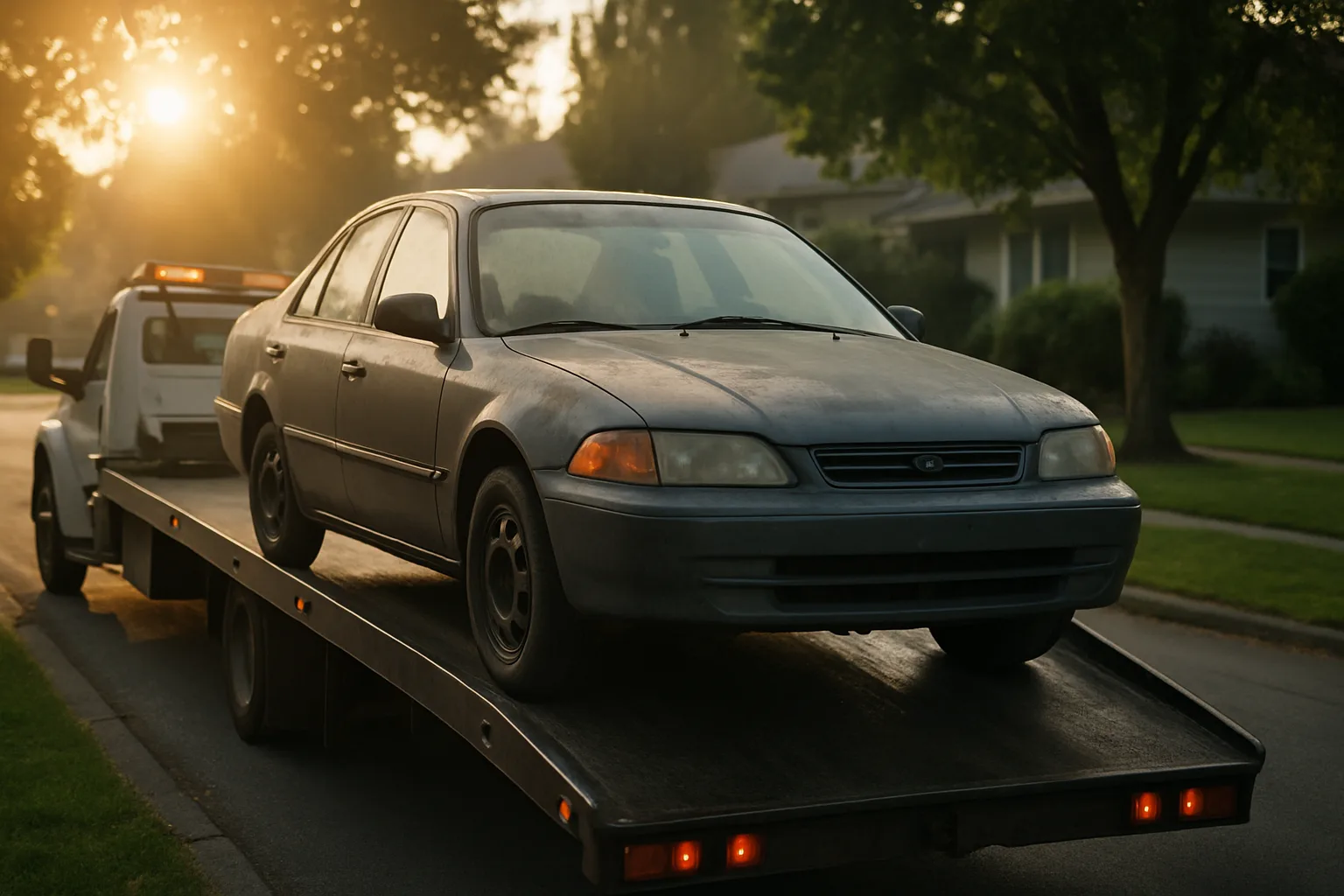
In a city like Vancouver, where traffic and logistics can be genuinely complex — think the North Shore, East Vancouver, or Surrey — a buyer with a reliable towing network isn't doing you a favour. They're running a professional operation. Canadian scrap car removal from GetMyScrapCar is one example of a service built around exactly this model: fair pricing, no towing fees, and straightforward process.
If a buyer quotes you one price and then reduces it on pickup because of "towing fees," that's not a legitimate free towing offer. Walk away. Free means free.
Myth #5: The Junk Car Market Is Too Unpredictable to Bother
Yes, scrap metal prices fluctuate. Yes, commodity markets move. But using that as a reason to delay or avoid selling your scrap car entirely is like not cashing a cheque because currency exchange rates change daily. The metal in that car isn't gaining value sitting in your driveway. Every month it sits, there's more corrosion, more parts degradation, and in British Columbia, more potential for an ICBC or municipal compliance issue with a derelict vehicle on your property.
The smarter approach is to understand that the market moves, time your sale when conditions are reasonable, and get multiple quotes to ensure you're seeing actual market value rather than one buyer's lowball. Tools that connect you to a network of vetted buyers — like the infrastructure SMASH brings to the B2B scrap metal side — mean you're not guessing. You're seeing real bids from real buyers on real loads.
For individual vehicle sellers, the equivalent is using a service that works through a legitimate buyer network rather than calling one number from a flyer on a telephone pole. Vancouver scrap metal services have matured. The infrastructure exists. Use it.
Explore Vancouver scrap metal services to understand what the current market looks like in your area and what your vehicle might actually be worth today.
What You Should Actually Do Before Selling
Now that we've cleared the air on myths, here's a practical checklist for anyone in British Columbia ready to move their junk car:
- Gather your documents. Registration, ID, and any transfer paperwork you have. If you're missing something, call your buyer first — don't assume it's a dealbreaker.
- Remove personal belongings. Glove box, trunk, under the seats. You'd be surprised what people leave behind.
- Pull your plates. In British Columbia, licence plates belong to the owner, not the vehicle. Remove them before the tow truck arrives.
- Cancel your insurance. Once the vehicle is picked up, report it to ICBC and cancel your policy to avoid paying premiums on a car you no longer own.
- Get multiple quotes. Don't accept the first number. Use services that bring buyer competition to your transaction.
- Confirm the towing is actually free. Ask directly. Get it confirmed before scheduling.
Selling your scrap car doesn't have to be complicated. The myths that make it feel that way are exactly that — myths. When you work with buyers who operate transparently, the process is usually same-day or next-day towing, a straightforward payout, and one less thing sitting in your yard.
If you're ready to stop letting that vehicle drain value and start recovering it, sell your scrap car in Canada through a service that gives you real offers, free towing, and no runaround.
Disclaimer: Scrap metal and junk car prices fluctuate based on commodity markets. Always check current rates before accepting an offer.
Frequently Asked Questions
Q: How does scrap car removal in Vancouver actually work?
You contact a licensed buyer or service, describe your vehicle, and receive a quote. If you accept, they schedule a tow truck to pick up the vehicle — usually within 24 to 48 hours in the Vancouver area. You hand over your documentation, they issue payment, and the car is taken to a licensed auto recycler for processing.
Q: Do junk car buyers near me in Vancouver offer free towing?
Many do, yes. Reputable junk car buyers in Vancouver build towing into their operational costs. Always confirm upfront that there are no towing fees or hidden deductions before scheduling. If a buyer quotes you one price and reduces it at pickup, that's a red flag.
Q: What affects junk car prices near me in Vancouver?
The primary factors are the vehicle's weight, metal composition, the current price of steel and non-ferrous metals on the commodity market, and the condition of high-value components like the catalytic converter. Getting multiple quotes is the most reliable way to understand what your specific vehicle is worth at current market rates.
Q: Can I sell my junk car without a title in British Columbia?
It depends on your situation. Licensed auto recyclers in British Columbia can often work with you if you have other proof of ownership, such as current registration or documentation from an estate. Be upfront with your buyer about what you have — don't assume missing a title means you can't sell. Each situation is different.
Q: How long does the scrap car removal process take in Vancouver?
From first contact to pickup, most transactions in the Vancouver area are completed within one to three business days. Some buyers offer same-day service. Payment is typically issued at the time of pickup, either by cheque or e-transfer depending on the buyer.
Stay current on scrap metal market trends and industry updates — follow SMASH on LinkedIn for regular insights from the B2B scrap metal world.