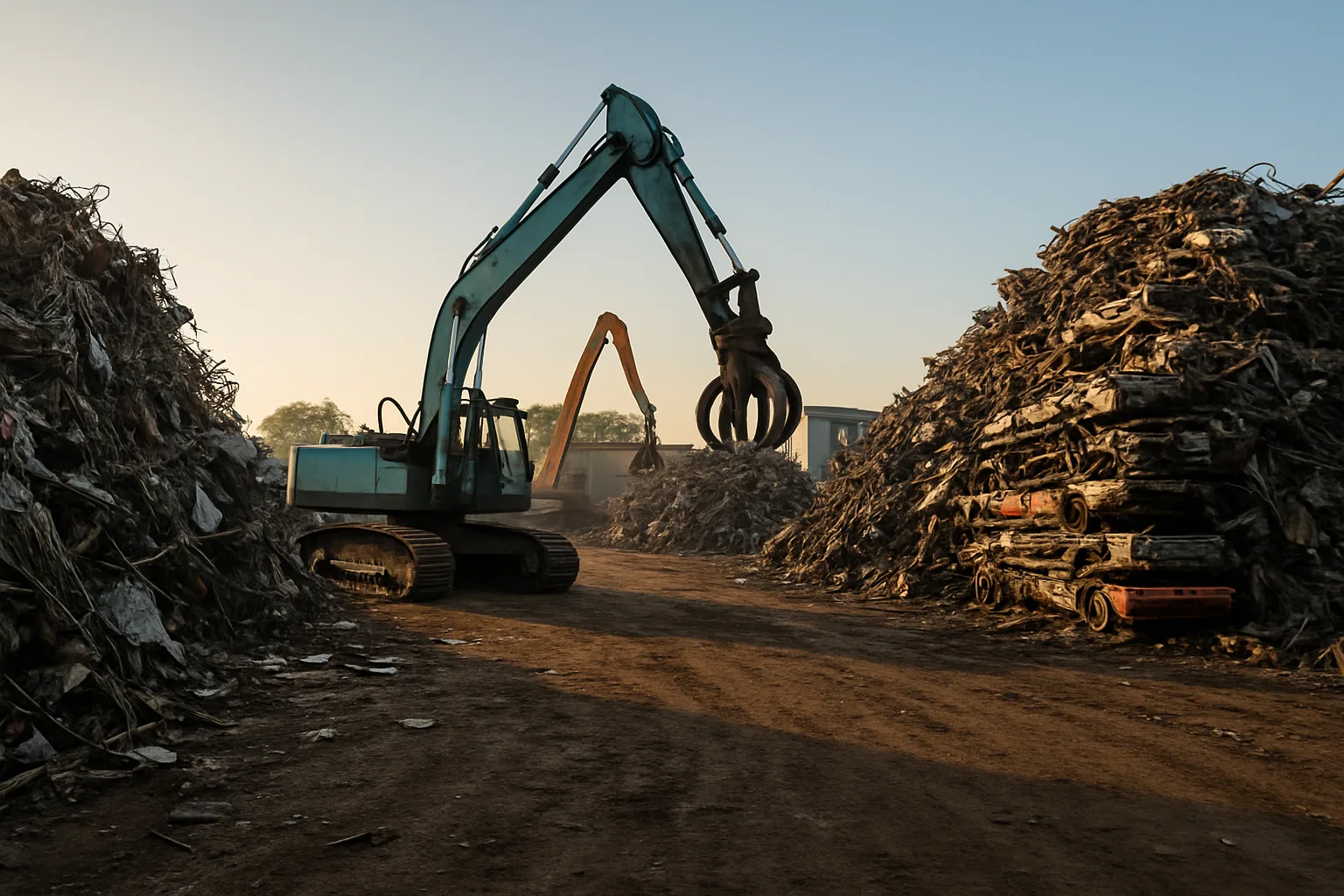
From Your Driveway to Dismantled: What Really Happens After a Scrap Car Pickup
Most people hand over their keys, watch the tow truck pull away, and never think about it again. But here's what's actually happening to your vehicle — and why it matters for understanding scrap car value today. The process is more systematic, more data-driven, and more valuable than most sellers realize.
This isn't a mystery tour. It's a real supply chain. And when you understand it, you'll see exactly why documentation, condition, and the right buyer network all affect how much money ends up in your pocket.
First Stop: The Yard — Intake and Initial Assessment
When your car arrives at an auto recycler, it doesn't just get parked and forgotten. The intake process starts immediately. A yard technician does a full walk-around, noting the make, model, year, overall condition, and what's still intact — doors, glass, interior, drivetrain components, catalytic converter, wheels.
This is where VIN verification happens. The VIN tells the yard what engine family the car belongs to, what trim level it was, and whether the catalytic converter is a high-value unit or a basic one. Platforms like SMASH use VIN lookup tools during inventory creation, so buyers know exactly what they're bidding on before they ever see a photo. That specificity matters for accurate pricing — guessing costs everyone money.
Key things logged during intake:
- VIN and vehicle identification details
- Gross weight and estimated scrap metal content
- Condition of catalytic converter (still attached, aftermarket, or missing)
- Presence of valuable cores — alternators, starters, A/C compressors
- Fluid status (fuel, oil, coolant, brake fluid — all regulated for disposal)
- Reusable parts flagged for resale
Depollution: The Step Most Sellers Never Know About
Before a single panel gets removed, the vehicle goes through depollution. This is mandatory across Canada, and for good reason. A typical end-of-life vehicle contains a surprising amount of hazardous material that can't go anywhere near a crusher or a shredder.
A certified auto recycler will drain and capture all of the following:
- Engine oil and transmission fluid
- Coolant and antifreeze
- Brake fluid
- Power steering fluid
- Gasoline remaining in the tank
- Air conditioning refrigerant (R-134a or R-1234yf)
- Battery acid
- Mercury switches (older vehicles)
This step alone can take 45 minutes to over an hour on a full-sized truck or SUV. The fluids are either recycled, reconditioned, or disposed of through licensed waste handlers. Skipping it isn't just irresponsible — it's illegal. Reputable Alberta recyclers follow strict environmental compliance guidelines, and most are audited regularly.
If you've ever wondered why a certified recycler matters more than some guy with a flatbed and a cash offer, this is a big part of the answer. Proper depollution protects the environment — and protects you from any downstream liability.
Parts Harvesting and Scrap Metal Inventory Management
Once depolluted, the real value extraction begins. An experienced dismantler knows that a vehicle's worth isn't always in its bulk metal — it's often in the individual components that still have service life left. This is the phase that directly affects how competitive buyers will be when bidding on a load.
High-demand parts pulled for resale typically include:
- Catalytic converters (one of the highest per-unit values in auto recycling)
- Engines and transmissions in working condition
- Wheels and tires
- Doors, hoods, fenders with intact paint
- Infotainment systems and instrument clusters
- Seats and interior trim in clean condition
- Headlights, taillights, and mirrors
What's left after usable parts are pulled is the "hulk" — the stripped body shell, frame, and any remaining metal. This goes to the scale. Weight is verified, and the hulk is either baled or shredded depending on the facility. Accurate scrap metal inventory management at this stage is what separates a professional recycler from a low-output operation. Documenting what's in each load — weight, composition, purity of material — gives buyers real confidence when placing bids.
This is exactly where SMASH adds serious value for yards. Instead of calling one buyer and taking whatever number they offer, the SMASH platform lets recyclers list documented loads — with photos, weights, and part-level detail — and run a competitive auction. More buyers. Real competition. Better price discovery. That's the difference between guessing at market value and actually finding it.
The Crusher and the Shredder: Bulk Metal Processing
After parts harvesting, hulks move through one of two processing paths depending on the facility's equipment and the downstream buyer's preference.
Baling compresses the hulk into a dense rectangular block — typically used for export or when a shredder isn't on-site. Shredding runs the entire hulk through a massive hammer mill that tears it into fist-sized pieces of mixed metal. The shredded output then goes through separation processes — magnets for ferrous steel, eddy currents for non-ferrous metals like aluminum and copper — to sort it into clean commodity streams.
Each commodity stream has its own market price, and those prices move. Shredded steel, #1 busheling, cast aluminum, and zorba (mixed non-ferrous) are all priced independently. A well-run yard tracks these prices daily and times their sales accordingly. If you're in Red Deer and wondering why your quote changes week to week, this is the reason. Scrap car value today is a real-time number, not a fixed rate.
If you want to understand what your vehicle is worth before you call anyone, read Canadian scrap car guides that break down the key factors — vehicle weight, metal composition, current commodity prices — so you walk in informed.
How Documentation Affects What You're Paid
Here's something most sellers in Red Deer — and across Alberta — don't know: the more documentation a yard has on a vehicle, the more competitive their buyers become. This sounds backwards. Why would paperwork matter to a metal buyer?
Because risk pricing is real. When a buyer doesn't know if a catalytic converter is original equipment or a cheap aftermarket replacement, they assume the worst and bid accordingly. When a yard can show serial-tracked cats, VIN-matched documentation, and photo evidence of what's in the load, buyers can bid with confidence instead of padding their offers for unknowns.
This is one of the reasons platforms like SMASH were built. The SMASH scrap metal auction platform gives yards the tools to document loads properly — photo uploads, serial number tracking, VIN lookup, packing lists — and puts that inventory in front of vetted buyers who compete for it. No subscription fees. SMASH only wins when the seller wins.
For sellers asking about cash for cars no title no keys situations — it's worth knowing that documentation gaps on the vehicle side (missing title, no keys) don't have to mean documentation gaps on the scrap side. A good recycler will still log and document what they receive. Your payout reflects the actual material value, not just the hassle of the situation.
What This Means If You're Selling a Scrap Car Right Now
Understanding the recycling process puts you in a stronger position as a seller. You know what the yard is looking for. You know what adds or subtracts value. And you know that the best yards aren't just crushing cars and hoping for decent prices — they're running documented operations that attract competitive buyers.
If you're in Red Deer or anywhere else across Alberta, working with a service connected to a serious buyer network makes a real difference. Red Deer scrap metal services through sell-myscrapcar.ca connect you with recyclers who know how to extract full value from your vehicle and have the buyer relationships to back it up.
Whether you've got a running car, a stripped hulk, or something in between, the path forward is straightforward: sell your scrap car in Canada through a service that handles the pickup, paperwork, and pricing — no guessing, no runaround. And if you want to schedule a free scrap car pickup, the process takes minutes. Free towing is standard. You don't need a title or keys in most cases.
For more about how scrap metal moves from your driveway to processed commodity, explore scrap car removal in Canada at GetMyScrapCar — another resource worth bookmarking if you're navigating this process for the first time.
The scrap industry isn't glamorous, but it's precise. Every kilogram gets accounted for. Every component gets assessed. And when you work with the right people — recyclers using tools like SMASH to document and auction their inventory — scrap car value today reflects what the market actually says, not what one buyer felt like offering on a Tuesday afternoon.
Ready to get an honest number for your vehicle? Sell your scrap car in Canada — get a free quote at sell-myscrapcar.ca. No pressure. No gimmicks. Just a straight answer on what your car is worth.
Frequently Asked Questions
Q: How is scrap car value today calculated after my car is picked up?
Value is based on the vehicle's weight, current commodity prices for steel and non-ferrous metals, the condition and presence of high-value components like catalytic converters, and whether usable parts can be resold. Prices fluctuate with market conditions, so the quote you get today may differ from one next month — always check current rates before committing.
Q: Can I sell a scrap car in Red Deer without a title or keys?
In most cases, yes. Many recyclers accept vehicles without a title or functioning keys, particularly for end-of-life cars with clear ownership. The specifics depend on the recycler and local Alberta regulations — it's worth confirming when you request your quote. Missing documents rarely eliminate your payout entirely.
Q: What happens to my catalytic converter at the recycler?
The catalytic converter is one of the most carefully tracked components in the process. Recyclers log the serial number and VIN to verify whether it's the original unit. Original equipment converters typically carry significantly more value than aftermarket replacements due to their platinum, palladium, and rhodium content. The cat is usually sold separately to a specialist processor rather than going to the shredder.
Q: How long does the full recycling process take after pickup?
Depollution, parts harvesting, and bulk processing can happen within a few days to a few weeks depending on the yard's volume and downstream buyers. From your perspective as the seller, the transaction is complete at pickup — payment is issued at that point, not after the yard processes the vehicle.
Q: Does using a platform like SMASH actually help me get more for my scrap car?
SMASH is a tool used by auto recyclers and scrap yards — not directly by individual car sellers. But when the yard you're working with uses documented inventory tools and competitive auctions through SMASH, it can support better price discovery for the loads your vehicle becomes part of. More competition among buyers generally means the yard has better margin to offer competitive seller quotes. It's indirect, but the effect is real.
Follow SMASH on LinkedIn for scrap metal market insights and industry updates — useful whether you're running a yard or just trying to understand what drives scrap pricing in Canada.