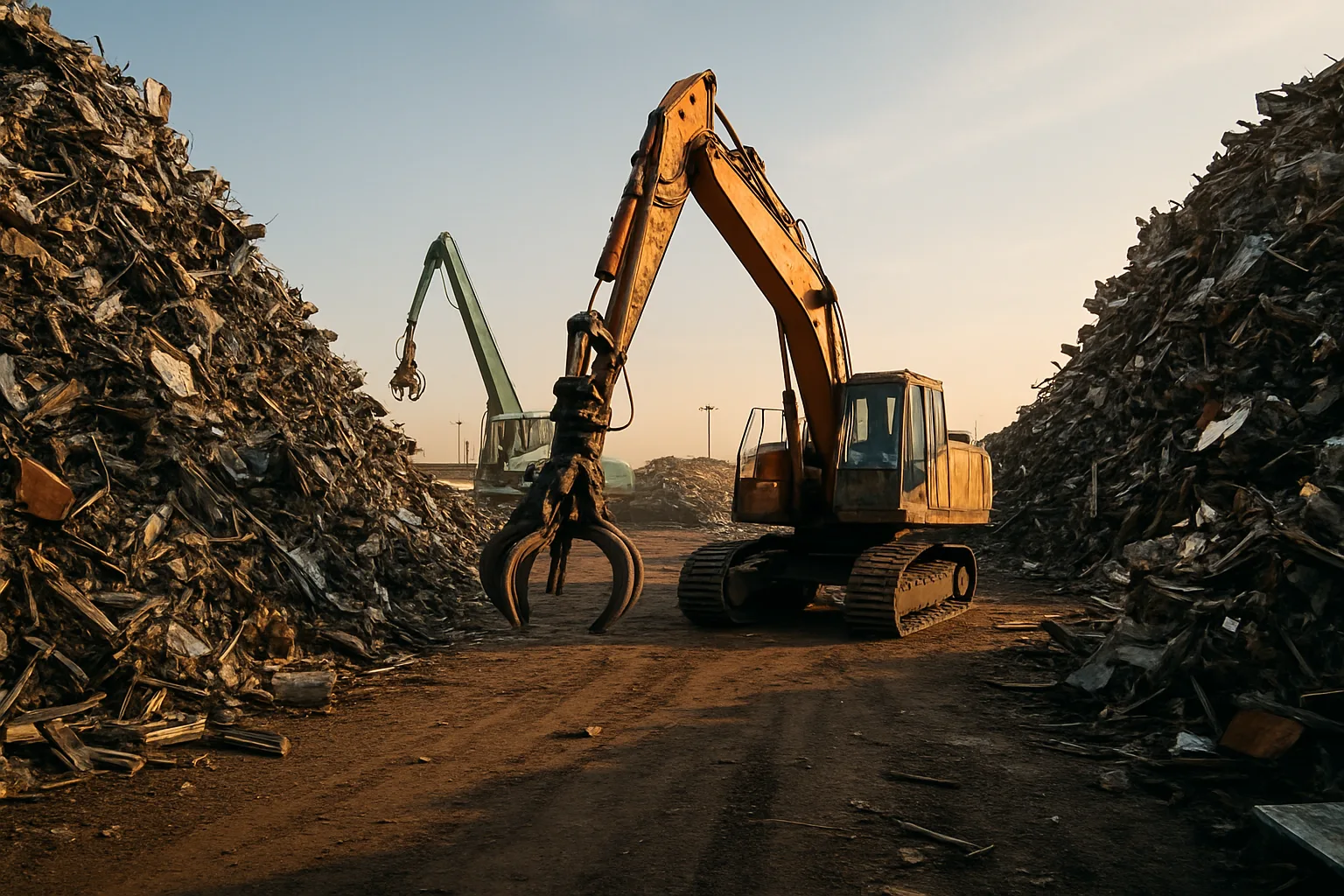
Junkyard, Salvage Yard, or Auto Recycler — What's the Difference and Where Should You Sell Your Car?
Most people use these three terms interchangeably. That's a mistake — and it could cost you money. If you're trying to sell my car for cash Calgary, knowing which type of facility you're dealing with changes the offer you get, the process you go through, and how much cash ends up in your pocket.
These aren't just different names for the same thing. A junkyard, a salvage yard, and an auto recycler operate under different business models, serve different buyers, and value your vehicle in completely different ways. Let's break it down so you're not walking in blind.
What Is a Junkyard? (And Why It's Not Always Your Best Option)
The word "junkyard" gets thrown around loosely, but in practice it refers to a facility that accepts end-of-life vehicles primarily to strip them for parts — or just to accumulate scrap metal by weight. The business model is simple: buy low, sell what they can off the car, crush the rest, and move on.
Junkyards tend to be the least organized option. Pricing is often informal, negotiated on the spot, and based on the operator's gut feeling rather than documented metal weights or market data. You might get a decent offer, or you might get a lowball number with no explanation. There's no auction, no competition, and no transparency — just one buyer making one offer.
Here's the problem with that for Calgary vehicle owners: Alberta has a robust scrap metal market. Your car has real commodity value. Accepting the first number from a single junkyard means you'll never know if you left money on the table. Platforms like SMASH exist specifically to solve this problem — putting your vehicle in front of multiple vetted buyers instead of one.
What Is a Salvage Yard? How It Differs From a Junkyard
A salvage yard is a step up in organization and specialization. These facilities focus heavily on parts recovery. They'll acquire a vehicle, catalog the usable components — doors, engines, transmissions, catalytic converters, airbag modules — and resell them to repair shops, body shops, or private buyers looking for affordable OEM parts.
Salvage yards typically pay more attention to the condition of your car. A 2019 truck with a blown engine but an intact interior and solid body panels is worth more to a salvage yard than a crushed-out 2004 sedan with no usable parts. They're buying the parts inventory, not just the weight.
That said, salvage yards can also lowball you — especially if your specific make and model isn't in demand in their current inventory. What looks like a fair offer might be well below what a competitive marketplace would generate. If you're trying to figure out how much is my car's scrap value, a single salvage yard quote gives you one data point. That's not enough.
- Parts-focused: Salvage yards prioritize vehicles with recoverable components in good condition
- Condition matters more: Higher-value offers possible for cars with intact, sellable parts
- Still one buyer: No competitive pressure, no transparency on pricing logic
- Vehicle age and make matter: Common makes get better offers; rare or older models may get scrap-weight pricing anyway
For Calgary sellers, it's worth calling a local salvage yard as one data point — but it shouldn't be your only call. sell your scrap car in Canada through a platform that brings multiple buyers to the table instead.
What Is an Auto Recycler — and Why the Industry Prefers the Term
Auto recyclers are the most regulated and environmentally accountable tier of the three. In Alberta, licensed auto recyclers operate under provincial environmental guidelines. They're required to properly drain fluids — oil, coolant, transmission fluid, brake fluid, refrigerants — before dismantling or crushing a vehicle. They track vehicles with documentation, often handle end-of-life vehicle (ELV) programs, and may participate in provincial recycling initiatives.
This matters for you as a seller for two reasons. First, you're legally protected when you sell to a licensed auto recycler — there's a paper trail, and you're no longer liable for what happens to the vehicle. Second, licensed recyclers tend to have more structured pricing because they operate at higher volumes and have real commodity relationships with downstream metal processors and parts buyers.
Auto recyclers are the backbone of the B2B scrap metal marketplace in Canada. When SMASH connects sellers with vetted buyers, many of those buyers are licensed recyclers operating at scale — which means they're paying based on actual market data, not guesswork. That's a fundamentally different conversation than walking into an unregistered junkyard and taking whatever number gets written on a sticky note.
How Junk Car Prices Today Are Actually Set — And Who Benefits From You Not Knowing
Here's something most casual sellers don't realize: junk car prices today aren't fixed. They fluctuate with commodity markets — specifically steel and non-ferrous metal prices like copper, aluminum, and the platinum group metals inside catalytic converters. A car that was worth $250 in scrap six months ago might be worth significantly more or less right now depending on where those markets are trading.
Junkyards and salvage yards that operate without transparency benefit when you don't know this. If you walk in thinking your car is "just junk," they'll price it that way. But a 2010 half-ton pickup with a full catalytic converter, aluminum wheels, and a copper-wound alternator has real commodity value beyond just the steel weight. The difference between an uninformed seller and an informed one can easily be hundreds of dollars.
This is exactly why platforms like SMASH — a B2B scrap metal marketplace — exist. When buyers compete for your vehicle, pricing gets closer to actual market value. No one buyer can lowball you if five others are ready to offer more. You can also read Canadian scrap car guides to understand how commodity pricing affects what your vehicle is worth before you make a single call.
Disclaimer: Scrap metal prices fluctuate based on commodity markets. Always check current rates before selling.
Selling a Junk Car in Calgary: What You Actually Need to Know
Calgary has a well-developed automotive recycling ecosystem. Alberta's vehicle population skews toward trucks and SUVs — which is good news for sellers, because larger vehicles carry more steel weight and often have higher-value components. But the market is still fragmented, and without a structured process, you're leaving it up to chance.
When you're ready to sell my junk car Calgary, here's the practical checklist that actually matters:
- Have your vehicle identification ready. The VIN tells buyers exactly what they're getting — make, model, trim level, engine type. A proper platform will use VIN lookup to document the load accurately.
- Know your car's condition honestly. Does it run? Is the catalytic converter intact? Are the wheels aluminum or steel? These details affect price significantly.
- Don't accept verbal quotes with no documentation. A legitimate buyer gives you a written offer with clear terms.
- Confirm free towing is included. Many buyers will deduct towing costs from your offer after the fact. Make sure it's in writing before you agree.
- Ask about transfer of ownership paperwork. In Alberta, you need to properly transfer the vehicle to protect yourself from future liability.
When you schedule a free scrap car pickup, these details get handled upfront — not after you've already handed over the keys. That's the difference between a structured process and a handshake deal with a junkyard.
For Calgary-area sellers looking for trusted local options, Calgary scrap metal services connect you with buyers who understand the Alberta market and price accordingly.
Which Option Is Right for You — Junkyard, Salvage Yard, or Auto Recycler?
Here's the honest answer: it depends on your vehicle, but in most cases, the right answer isn't to pick one and call it a day. The right answer is to get competitive quotes so you know what the market will actually pay.
If your car is newer (2015 and up) with intact parts, a salvage yard or licensed auto recycler will likely offer the most. If it's an older high-mileage vehicle with minimal usable parts, scrap weight and commodity pricing will dominate — and that's where having multiple buyers bidding matters most. Either way, one phone call to one buyer is the worst possible pricing strategy.
The old way — one buyer, one call, one number — only works if you're okay not knowing what you're leaving on the table. The better way is to use a platform that documents your vehicle properly, puts it in front of vetted buyers, and lets competition do the work. Explore scrap car removal in Canada at GetMyScrapCar to see how a structured process compares to the traditional junkyard experience.
If you're in Calgary or anywhere in Alberta with an end-of-life vehicle sitting in your driveway, now is a good time to find out what it's actually worth. Get a free quote at sell-myscrapcar.ca — no obligation, no pressure, and free towing included when you accept an offer. The market is what it is; you might as well find out what yours will pay.
Frequently Asked Questions
Q: What's the fastest way to sell my car for cash in Calgary?
The fastest path is to use a service that handles pickup and payment in one step. Get a quote online or by phone, confirm the offer in writing, and schedule free towing. Most reputable services in Calgary can complete the pickup within 24 to 48 hours of a confirmed offer.
Q: How do I know if I'm getting a fair price when I sell my junk car in Calgary?
The best way to validate any offer is to get more than one quote. Scrap car prices are tied to live commodity markets — steel, aluminum, and catalytic converter metals all fluctuate. A single offer from a junkyard or salvage yard tells you what one buyer thinks; multiple offers tell you what the market actually pays.
Q: Does it matter if my car runs or not when selling for scrap in Calgary?
It matters to your price but not to your ability to sell. Non-running vehicles are accepted — and free towing means you're not paying to move a car that won't start. Running vehicles may attract higher offers from salvage yards looking for usable parts, but even a completely dead vehicle has scrap metal value.
Q: What paperwork do I need to sell my scrap car in Alberta?
In Alberta, you'll typically need the vehicle registration and a signed bill of sale to transfer ownership. Removing your license plates before pickup is standard practice. A reputable buyer will walk you through the paperwork — if they're vague about it, that's a red flag.
Q: What happens to my car after it gets picked up by an auto recycler in Calgary?
A licensed auto recycler in Alberta will first drain all fluids safely to meet environmental regulations. Usable parts are cataloged and resold to repair shops or the public. What remains after dismantling gets crushed and sent to a metal processor where the steel and non-ferrous metals re-enter the supply chain as recycled commodities.
Stay current on scrap metal market trends and industry news by following SMASH on LinkedIn — useful if you want to know what's moving commodity prices before you decide when to sell.