7 Myths About Junk Car Removal That Are Costing You Money
Most people only scrap a car once or twice in their lives. That's exactly why so many myths about the process stick around — and why so many vehicle owners leave money on the table, or worse, pay someone to take a car that should have paid them. If you've got an old vehicle sitting in your driveway in Richmond, don't let bad information slow you down.
This article breaks down the most common myths about free scrap car pickup Richmond and junk car removal — so you know what's real, what's nonsense, and how to get the best outcome when you're ready to sell.
---Myth #1: You Need a Title to Sell a Junk Car
This is probably the most persistent myth in the scrap car world. People assume that without a clean title in hand, the car is worthless — or worse, unsellable. That's simply not accurate. Many legitimate scrap car buyers and recyclers across British Columbia work with vehicles that have lost, damaged, or missing titles every single day.
What you do need is proof that you're the registered owner. That can include your vehicle registration, a government-issued ID, and in some cases, a statutory declaration. It's a straightforward process. If you've been searching for cash for cars no title no keys near me, know that options exist — and the title issue alone shouldn't stop you from reaching out to a buyer.
- Contact your local registry or ServiceBC office to request a title reprint if needed
- Registered owner status is the key factor — not physical possession of the title document
- Reputable buyers will walk you through the paperwork requirements before pickup
Myth #2: You Need Keys to Get the Car Removed
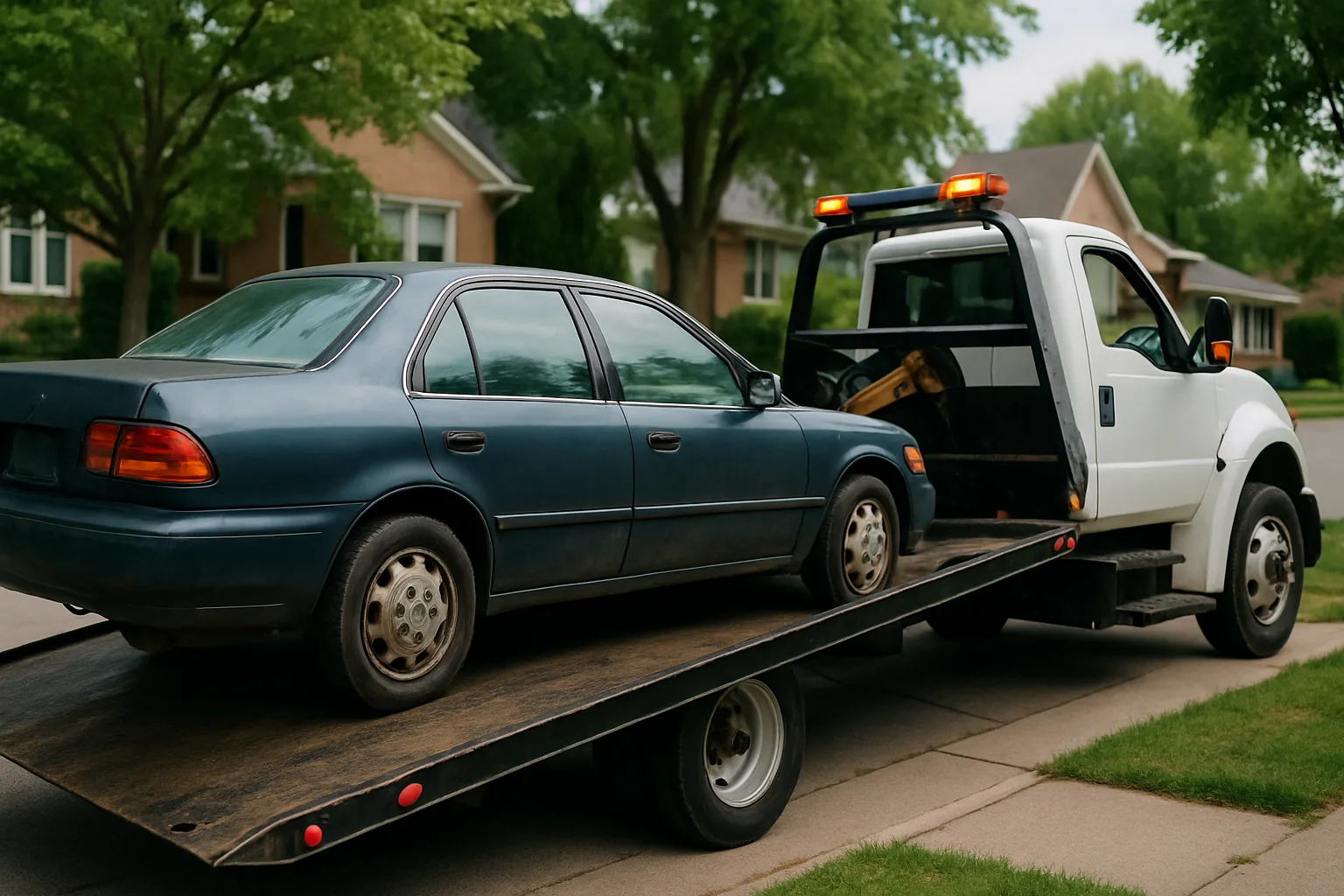
No keys? No problem — at least not for most legitimate junk car removal Richmond operators. If your car hasn't started in years, has a dead battery, or simply lost its keys long before you decided to scrap it, that doesn't automatically disqualify it. Professional tow operators deal with non-running, keyless vehicles all the time. A flatbed or dolly tow doesn't require the car to move under its own power.
What matters to a scrap buyer isn't whether the ignition works — it's the weight, the metal composition, the condition of high-value components like the catalytic converter, and whether the vehicle is complete. A non-running car with a good catalytic converter and intact body panels is still worth real money. Don't write off your vehicle just because you can't drive it to a yard.
Myth #3: All Scrap Car Buyers Pay the Same Price
This one costs people the most money. The assumption is that scrap metal is scrap metal, so every buyer will quote you the same number. That's not how it works. Prices vary based on the buyer's current inventory needs, their relationship with downstream processors, local scrap metal market conditions, and frankly — how much competition they're facing for your load.
This is where platforms like SMASH change the game. SMASH scrap metal auction creates real buyer competition for metal inventory. Instead of calling one yard, getting one number, and accepting it because you don't know better — you get multiple vetted buyers bidding. More competition means better price discovery. That's not a guarantee of a higher price every time, but it means you're not flying blind. You can also sell your scrap car in Canada through services that leverage that kind of competitive pricing infrastructure.
- Scrap prices fluctuate with commodity markets — get quotes on the same day for accurate comparisons
- A vehicle with a working catalytic converter can command significantly more than one without
- Some buyers pay premiums for complete vehicles with all major components intact
- Never accept the first offer without a basic comparison — even one additional quote gives you leverage
Myth #4: Free Towing Means a Lower Payout
A lot of vehicle owners assume there's a catch to free towing. They think the buyer is quietly deducting the towing cost from the offer, so you're really just paying for it differently. In some shady operations, that may well be true. But with reputable scrap car removal services, free towing is a genuine part of the deal — not a discount in disguise.
Why? Because established buyers have towing infrastructure built into their operating model. They're not hiring a random tow company at retail rates for every pickup. They run efficient routes, use their own equipment, and factor logistics into their overall margin — not your payout. When you schedule a free scrap car pickup with a legitimate buyer, the price you're quoted is the price you get. No deductions at the door. No surprise fees when the truck shows up.
The key is vetting your buyer in advance. Ask directly: "Is towing included in the offer, or will it be deducted?" Any trustworthy buyer will answer that question clearly before they send a truck.
Myth #5: Old, Damaged Cars Have No Real Value
This might be the most expensive myth on this list. Vehicle owners look at a rusted-out, non-running car with a cracked windshield and assume it's worthless. They pay someone to haul it away, or let it sit for years. In reality, even a heavily damaged vehicle contains materials with real market value.
A standard passenger car weighs between 1,200 and 1,800 kilograms. Even at modest scrap steel prices, that's a meaningful payout just from the bulk metal. Add in a functioning catalytic converter — which contains platinum group metals like platinum, palladium, and rhodium — and you could be looking at a significantly higher return depending on your vehicle's make and model. Copper wiring, aluminum components, and non-ferrous parts all add value on top of the base steel weight.
Scrap metal recycling in Canada processes millions of end-of-life vehicles every year. Every one of those vehicles had value. Yours does too. You can read Canadian scrap car guides to better understand what your specific vehicle might be worth before you get your first quote.
- Catalytic converters from certain makes (Honda, Toyota, Ford) carry premium value
- Aluminum wheels, radiators, and engine blocks attract non-ferrous pricing — higher than steel
- Even stripped or fire-damaged vehicles have bulk scrap value
- Complete vehicles with all core components intact typically pay more than stripped shells
Myth #6: Junk Car Buyers Near You Are Hard to Find or Unreliable
People in Richmond sometimes assume that junk car removal is a disorganized, cash-only, show-up-and-hope-for-the-best kind of market. And honestly? In the past, that reputation wasn't entirely unearned. But the industry has professionalized significantly, and finding junk car buyers near me within 20 mi is now a straightforward process.
Reputable buyers operating in Richmond and across British Columbia offer documented quotes, transparent pricing, scheduled pickups with confirmed arrival windows, and proper paperwork at the point of handoff. You should expect a bill of lading or receipt confirming the vehicle transfer — not just a handshake and cash. If a buyer can't provide basic documentation, that's a red flag worth taking seriously.
Services connected to platforms like SMASH bring additional accountability to the process. Buyers on the SMASH network are vetted — meaning you're not handing your vehicle over to an unknown operator with no accountability. For Richmond residents looking to move an end-of-life vehicle quickly and cleanly, that kind of infrastructure matters. You can also explore Richmond scrap metal services to find local options backed by that same standard.
Myth #7: Scrap Car Recycling Is Bad for the Environment
This one flips the concern entirely. Some vehicle owners hesitate to scrap their cars because they worry about environmental impact — fluids leaking, materials going to landfill, that kind of thing. The opposite is generally true when you use a licensed recycler.
End-of-life vehicle processing in Canada follows regulated depollution procedures. That means draining and properly disposing of engine oil, coolant, brake fluid, transmission fluid, and refrigerants before the vehicle is crushed or shredded. Steel recycling is also one of the most energy-efficient recycling processes available — producing new steel from scrap uses a fraction of the energy required to produce it from raw ore.
Leaving an old car to rust in a driveway or field is actually the worse environmental outcome. Fluids degrade containment over time and can leach into soil. Scrapping through a licensed operation keeps those materials out of the environment and puts the metal back into productive use. That's scrap metal recycling Canada working the way it's supposed to.
If you're in Richmond and ready to move forward, don't let myths hold you back. The process is simpler than most people expect, and the payout is real. You can also explore free junk car removal across Canada to see what options are available in your area right now.
When you're ready to get a real number for your vehicle — without the runaround — visit sell-myscrapcar.ca for a free quote. It takes minutes, and you'll know exactly what your car is worth before anyone shows up at your door.
Disclaimer: Scrap metal prices fluctuate with commodity markets. Vehicle valuations depend on weight, condition, make, model, and current market rates. Always confirm current pricing at the time of your quote.
---Frequently Asked Questions
Q: Can I get free scrap car pickup in Richmond without a title?
Yes, in many cases. Most reputable junk car removal services in Richmond will work with you if you can prove registered ownership through your vehicle registration and a valid government-issued ID. Contact your buyer before pickup to confirm what documentation they require — it varies by operator.
Q: How long does free scrap car pickup in Richmond typically take?
Most services can schedule a pickup within 24 to 72 hours of a confirmed quote. Same-day pickup is sometimes available depending on the buyer's schedule and your location within Richmond or the surrounding British Columbia area. Get your quote early in the day to maximize scheduling options.
Q: Do I need to drain fluids before a junk car pickup?
No. Fluid removal is part of the licensed depollution process handled by the recycler — not something you need to do yourself. A reputable buyer or recycler will manage coolant, oil, brake fluid, and refrigerant disposal as part of their standard procedure.
Q: What if my car has been sitting for years and won't start?
That's not a problem for professional junk car removal. Flatbed and dolly tow equipment handles non-running vehicles routinely. The car doesn't need to start, roll, or have keys present for a pickup to be arranged. Just be upfront about the vehicle's condition when you request your quote.
Q: How do I know if I'm getting a fair price for my scrap car?
Get more than one quote. Scrap car pricing depends on weight, metal composition, catalytic converter condition, and current commodity rates — so a single offer gives you no baseline. Platforms like SMASH create buyer competition that helps reveal true market value, rather than leaving you guessing on a single yard's offer.
---Stay sharp on scrap metal market trends and industry news — follow SMASH on LinkedIn for regular updates on pricing, market conditions, and what's moving in the recycling industry across North America.