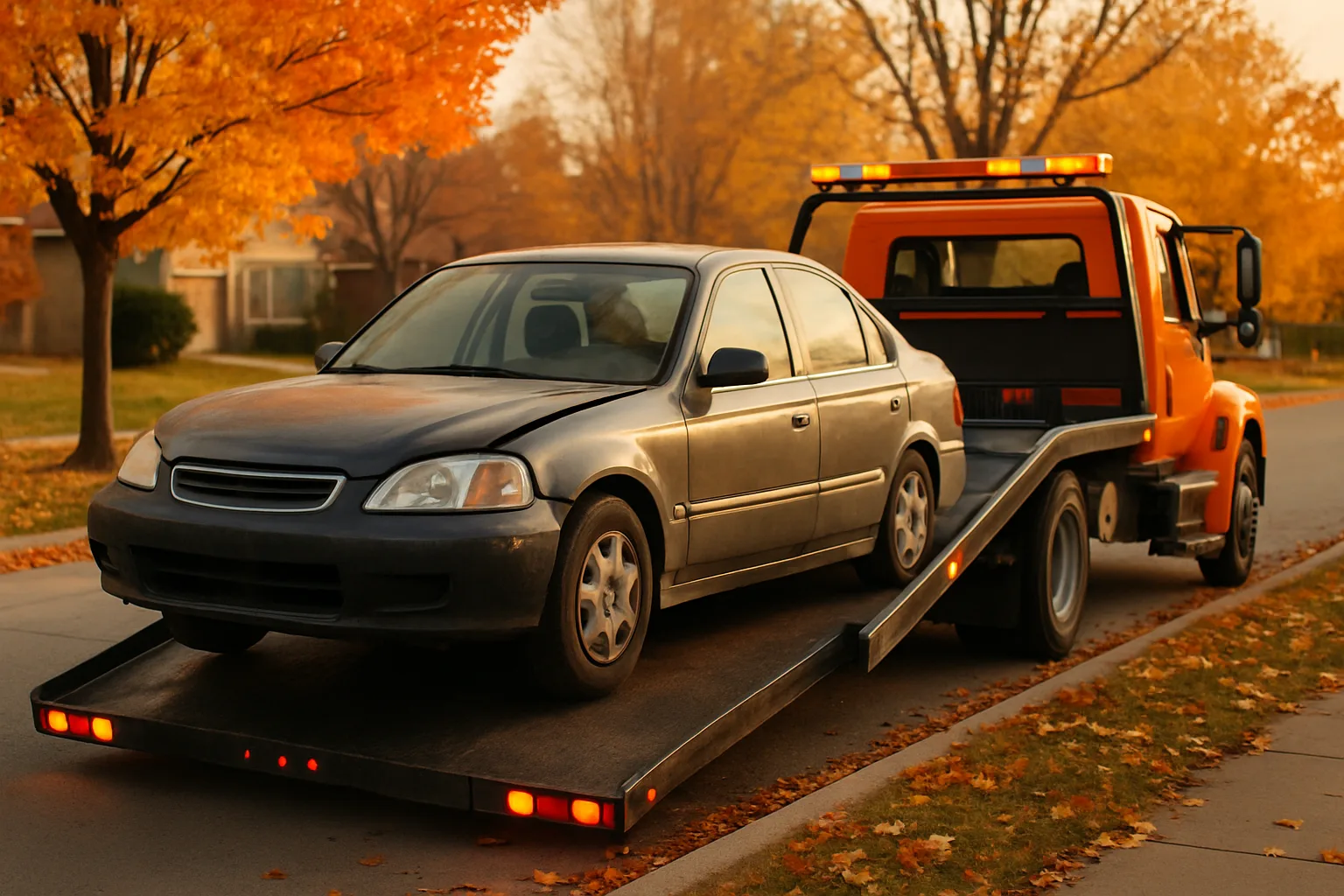
That rusted pickup sitting in your driveway? It's worth more than you think — and getting rid of it is easier than most people assume. If you've been putting off dealing with an end-of-life vehicle because you've heard it's complicated, expensive, or not worth the hassle, you've been lied to. There are more myths floating around about junk car removal than there are dents on a 2003 Civic with 300,000 kilometres on it. This guide cuts through the noise. Whether you're trying to sell my car fast Markham residents keep searching for, or you're just tired of looking at a vehicle that hasn't started in two years, here's what's actually true.
---Myth #1: Your Junk Car Isn't Worth Anything
This one stops people cold. They assume a non-running, rusted-out vehicle has zero value. That assumption is wrong. Every end-of-life vehicle contains steel, aluminum, copper wiring, and — depending on the make and model — a catalytic converter that contains platinum, palladium, and rhodium. Scrap metal recycling in Canada is a multi-billion dollar industry, and your car feeds directly into it.
Even a completely written-off vehicle that can't be driven, towed on its own wheels, or salvaged for parts still has value as raw scrap metal. A typical passenger car weighs between 1,200 and 1,800 kilograms. Steel prices fluctuate, but that weight adds up. Non-ferrous components — your cat, copper wiring, aluminum rims — sit on top of that base value. The point is: don't assume zero. Get a quote. You might be surprised.
- Steel: The bulk of your car's weight — body panels, frame, engine block
- Aluminum: Rims, engine components, transmission housings
- Copper: Wiring harnesses, starter motors, alternators
- Catalytic converter: Contains precious metals — one of the highest-value components per kilogram
Platforms like SMASH connect scrap yards and auto recyclers with competitive buyers across North America, which means better price discovery for everyone in the supply chain — including the yards that are quoting you for your vehicle. More competition at the buyer level means more accurate, market-reflective pricing. If you want to sell your scrap car in Canada without leaving money on the table, understanding what's actually in your vehicle is step one.
---Myth #2: You'll Pay for the Tow — So It's Not Really "Free"
Understandable skepticism. Nothing in life is truly free, right? But in the scrap car removal business, free towing is a legitimate standard practice — not a gimmick. Here's why it actually makes sense from a business standpoint: the buyer (the scrap yard or auto recycler) wants your vehicle. They're motivated. Covering the cost of a flatbed or wrecker to retrieve it is a cost of acquisition, baked into their margin.
Reputable scrap car removal services in Canada — including those serving Markham and the broader Greater Toronto Area — will pick up your vehicle at no charge. You don't write a cheque. You don't get surprised with a fuel surcharge after the fact. The tow is part of the deal. That said, always confirm the terms when you get your quote. Ask directly: "Is towing included, and are there any fees?" A legitimate operation will answer that without hesitation.
When you schedule a free scrap car pickup, the process should be straightforward: quote, confirm, they come to you, you hand over the keys and paperwork, you get paid. That's the whole transaction. No hidden deductions at the last minute.
---Myth #3: You Need the Car Running to Sell It
This myth keeps hundreds of vehicles sitting in Ontario driveways for years. People assume that because the car won't start, or because it failed a safety inspection, or because the frame is bent — nobody wants it. That's not how scrap car removal works. Auto recyclers and scrap processors buy vehicles specifically in non-running condition. That's their business model.
Think about it: if the car was running fine, you'd sell it privately or trade it in. The scrap and salvage industry exists precisely for vehicles that are past that point. Whether your car:
- Won't start and hasn't started in months
- Has a seized engine or blown transmission
- Was written off by insurance after a collision
- Failed an emissions or safety test and the repair costs outweigh the car's value
- Has severe rust on the frame or body
- Is missing major components
...a scrap car buyer will still come get it. They have the right equipment — flatbeds, wheel-lifts, dollies — to retrieve a vehicle that can't move under its own power. The condition of the car affects the price, yes. But it doesn't disqualify you from selling. Don't let a dead battery or a seized motor convince you the car is unsellable.
---Myth #4: Cash for Junk Cars Is Always a Lowball — Negotiation Is Pointless
Here's where it gets interesting. The myth isn't entirely wrong — if you're only calling one buyer. The old way of selling a junk car: call the one yard you've heard of, take whatever they offer, be done with it. That's not negotiation. That's surrender. When you have a single offer, you have no leverage and no benchmark.
The reality is that cash for junk cars in Markham varies from buyer to buyer. Different yards have different inventory needs, different processing capabilities, and different relationships with downstream buyers for specific metals and parts. A yard that just bought a load of catalytic converters may quote you lower on a cat-heavy vehicle. A yard short on aluminum may pay more for an engine-heavy car. These dynamics change week to week.
That's exactly why platforms like SMASH exist in the broader scrap industry — to bring multiple vetted buyers into the same transaction and let competition do the work. More buyers means better price discovery. You can apply that same principle at the personal level: get more than one quote. Call two or three services. Compare. The spread between offers on the same vehicle can be meaningful, especially on higher-value loads. Don't assume the first number you hear is the market rate.
For a deeper look at how pricing works and what affects your quote, read Canadian scrap car guides that break down the variables clearly.
---Myth #5: The Paperwork Is a Nightmare
For first-timers, the paperwork question is a real source of anxiety. Do you need the original ownership? What if it's in someone else's name? What if you've lost it? What about licence plates? What happens after the car leaves your driveway — are you still legally responsible for it?
Let's sort this out. In Ontario, to legally transfer a vehicle for scrap or salvage, you typically need:
- The vehicle ownership (permit) — signed and transferred to the buyer
- Government-issued ID — to confirm you're the registered owner
- Licence plates removed — plates stay with you, not the vehicle (surrender them to ServiceOntario or transfer to another vehicle)
If you've lost the ownership, it's not automatically a dealbreaker — but you'll need to work through ServiceOntario to get a replacement before the transaction. Some buyers will work with you through that process. Ask before you assume it's impossible.
Reputable scrap car removal services handle this kind of paperwork regularly. They know the process, they'll walk you through what's needed, and they won't leave you holding liability for a vehicle you no longer own. Once that ownership is signed over and the transaction is documented, the car is no longer yours — and that's the outcome you want. Also consider reaching out to Canadian scrap car removal from GetMyScrapCar for additional options and guidance through the process.
---What Scrap Metal Recycling in Canada Actually Looks Like in 2026
The Canadian scrap metal recycling sector has continued to evolve. Auto recyclers across Ontario and beyond are processing more end-of-life vehicles than ever, driven by demand for recycled steel and non-ferrous metals from domestic and international manufacturers. Environmental regulations continue to tighten, which means the documentation and fluid-draining requirements at licensed facilities have also become more rigorous — a good thing for the environment and for sellers who want to know their vehicle is being handled responsibly.
For Markham residents, the proximity to the GTA's network of auto recyclers and scrap processors is an advantage. There's no shortage of buyers in this region, which generally translates to competitive quotes and fast pickup times. Same-day or next-day removal is common for in-demand vehicles. Even for less desirable units, turnaround is typically within a few business days.
Scrap car prices fluctuate with global metal markets — steel, aluminum, and precious metal prices all feed into your vehicle's value. Always get a current quote rather than relying on what someone told you six months ago. Markets move. Disclaimer: scrap car prices vary based on current metal market conditions, vehicle condition, location, and buyer demand. Always confirm pricing directly with your buyer at the time of transaction.
If you're ready to stop letting that vehicle take up space, the process is genuinely simpler than the myths suggest. Get a quote, confirm the towing is included, have your paperwork ready, and let the buyer come to you. That's it. You can sell your scrap car in Canada without drama, without surprise fees, and without a running vehicle. The industry is set up to make this easy — take advantage of it.
---Frequently Asked Questions
Q: How fast can I sell my car fast in Markham?
Most reputable scrap car removal services in Markham offer same-day or next-day pickup, depending on availability and how quickly you can confirm your quote and paperwork. Have your ownership ready and the process moves quickly. Don't wait — the sooner you call, the sooner your driveway is clear and you have cash in hand.
Q: Do I need a running car to get cash for junk cars in Markham?
No. Non-running vehicles are bought and removed every day across Ontario. Scrap car buyers have flatbeds and the equipment to retrieve vehicles that can't move under their own power. The vehicle's condition affects the quote, but it doesn't disqualify you from selling.
Q: What if I lost the ownership for my scrap car?
You'll need to replace it before completing the sale in Ontario — visit ServiceOntario to request a replacement ownership document. Some buyers will help guide you through that process. Don't assume you're stuck; it's a solvable problem that scrap car removal services deal with regularly.
Q: How is scrap car pricing determined in Canada?
Pricing is based on the vehicle's weight, the current value of steel and non-ferrous metals, the condition and completeness of the car, and local buyer demand. Catalytic converters, aluminum components, and copper wiring all add to the base scrap value. Prices fluctuate with the market, so always get a current quote.
Q: Is towing really free, or are there hidden fees?
With legitimate scrap car removal services, towing is genuinely included at no cost to you. Always confirm upfront: ask specifically whether towing is free and whether there are any deductions or fees at pickup. A trustworthy buyer will confirm this clearly before you agree to anything.
---Ready to clear that vehicle out of your life? Sell your scrap car in Canada — get a free, no-obligation quote at sell-myscrapcar.ca and find out what your junk car is actually worth today.
Follow SMASH on LinkedIn for scrap metal market updates, industry news, and insights that help yards and sellers stay ahead of the market.