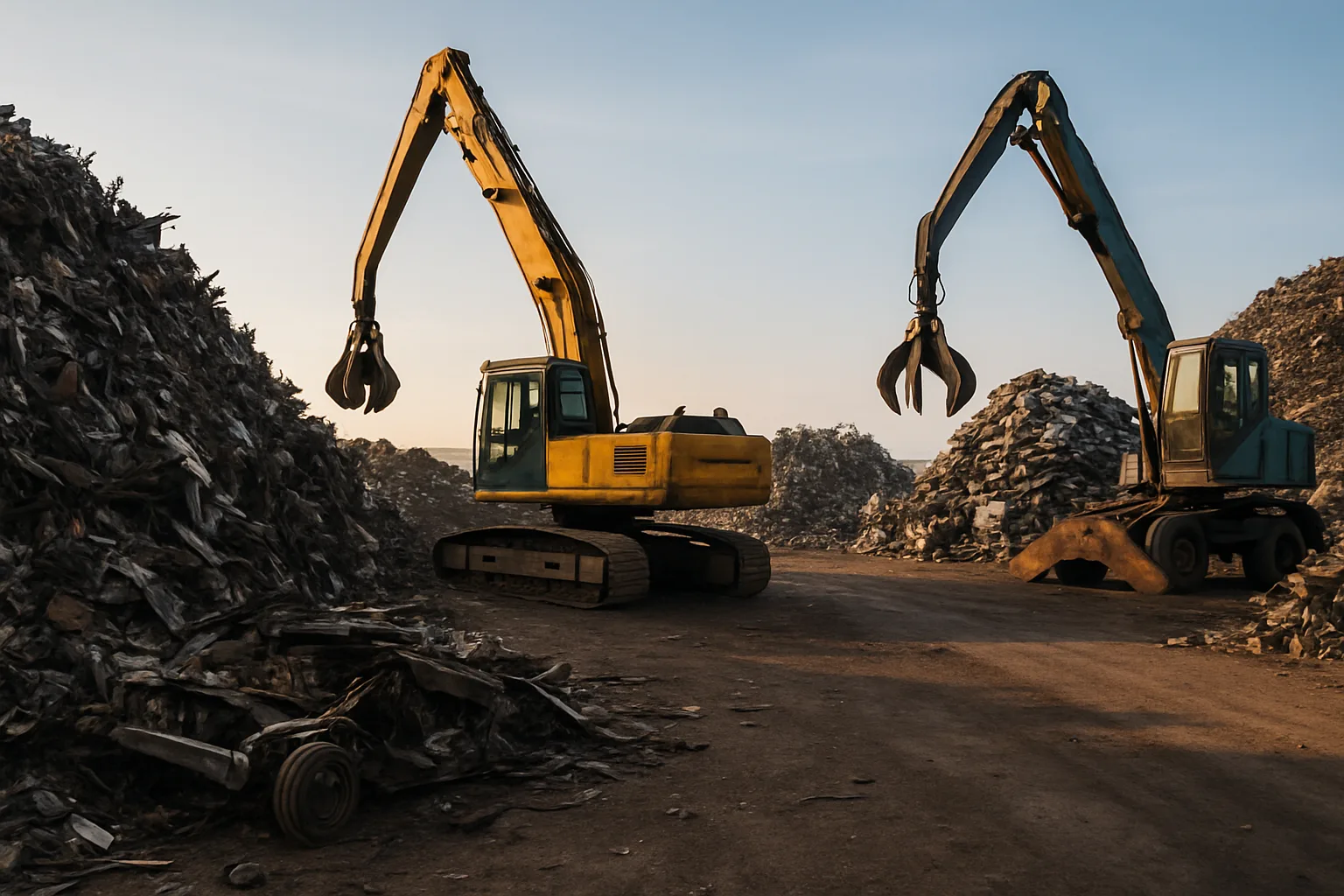
Junkyard, Salvage Yard, or Auto Recycler — What's the Actual Difference?
Most people use these three terms interchangeably. That's a mistake that could cost you money. If you're sitting on a dead car in Saskatoon trying to figure out where to take it — or who to call — knowing the difference between a junkyard, a salvage yard, and an auto recycler changes what you get paid and how smoothly the process goes.
These aren't just different names for the same thing. They operate differently, pay differently, and serve different purposes. Here's what you actually need to know before you make a call.
What Is a Junkyard? (And Why It's Not Always Your Best Option)
A junkyard is the oldest model in the business. You bring your car in — or they tow it — and it sits in a lot. Customers walk the yard, pull their own parts, and pay by the piece. The yard itself doesn't do much processing. The business model is volume: pack the lot, let buyers self-serve, collect cash at the gate.
For sellers, junkyards tend to offer the lowest returns. They're buying your vehicle as raw inventory for their walk-in customers. The condition of the car matters mainly in terms of whether parts are still viable. If your car has been stripped already, or it's a make and model nobody's pulling parts for, the junkyard's offer gets thin fast.
- Pros: They'll take almost anything. Low barriers to drop off a car.
- Cons: Often the lowest payout. Less transparency on how they price your vehicle. Some don't offer free towing.
- Best for: Vehicles with lots of reusable parts still attached — older domestic trucks, common sedans.
If your only goal is to get rid of the vehicle with no expectation of a fair price, a junkyard gets it done. But if you want to know how much is my salvage vehicle worth before you agree to anything, a junkyard isn't going to give you a transparent answer.
What Is a Salvage Yard? How It Differs From a Junkyard
Salvage yards operate on a slightly more sophisticated model. They typically buy vehicles, assess them for part value, and resell those parts — either retail or wholesale. Many salvage yards also work with insurance companies, buying write-offs and total-loss vehicles from claims. This gives them more volume and more predictable inventory than a traditional junkyard.
The key distinction: salvage yards are more selective. They're not just filling a lot. They're buying specific vehicles because those vehicles have parts with resale demand. That means they'll sometimes pass on your car entirely if it doesn't fit their current inventory needs — or if the model doesn't move parts well in their market.
In Saskatchewan, salvage yards tend to serve a mix of farmers, mechanics, and DIY repair shops looking for affordable used parts. Rural demand for older trucks and utility vehicles keeps many salvage operations busy year-round. But the price they offer you as a seller is still based on their resale margin — not on what the metal or components are actually worth on the open market.
- Pros: More organized than junkyards. Often have searchable inventory systems. May offer better prices for desirable makes and models.
- Cons: Selective buying. If your car isn't a hot parts car, the offer drops significantly. Pricing can still feel opaque.
- Best for: Late-model vehicles with low mileage that were totaled — high part value remaining.
What Is an Auto Recycler — and Why It Changes Everything
Auto recyclers are the most complete operation in this chain. They buy end-of-life vehicles, dismantle them systematically, recover reusable parts, and process the remaining material — metal, rubber, fluids, glass — through proper recycling streams. In Canada, certified auto recyclers follow provincial environmental standards for draining fluids, handling hazardous materials, and ensuring scrap metal goes to licensed processors.
This is the model that treats your car as a complete resource — not just a pile of parts or scrap tonnage. An auto recycler extracts value from every layer: working parts, catalytic converters, non-ferrous metals like copper and aluminum, and the steel carcass that goes to a shredder.
From a seller's perspective, auto recyclers tend to be the most transparent and the most likely to offer free towing with a real cash offer. They have enough downstream revenue streams that they can afford to pay more upfront. They're not guessing what your car is worth — they've processed enough volume to know exactly what's in there.
- Pros: Full-service removal. Environmental compliance built in. Transparent pricing. Free towing is common. Higher baseline offers on most vehicles.
- Cons: May not operate in every rural area. Timing can vary depending on routing and volume.
- Best for: Any end-of-life vehicle where the owner wants a fair price, hassle-free pickup, and peace of mind that the car is being handled properly.
If you want to sell your scrap car in Canada and actually get a competitive number, certified auto recyclers — and platforms that connect you to them — are where you should start.
How Platforms Like SMASH Change the Price Discovery Game
Here's the old way: you call one buyer, get one number, and either take it or start over. You have no idea if that number is fair. You don't know if the buyer down the road would have paid more. You just guess and hope.
SMASH breaks that model. Instead of one call and one offer, SMASH connects sellers with vetted buyers — including auto recyclers — who compete for your vehicle. That competition is how you find out what your car is actually worth on the current market. Not what one buyer feels like paying on a Tuesday morning.
For Saskatoon vehicle owners, this matters. The local market has real buyers — auto recyclers, processors, scrap buyers — who want your vehicle. The question is whether you're reaching all of them or just one. Saskatoon scrap metal services connected through SMASH mean your vehicle gets in front of multiple buyers, not just the first number in your contacts.
Documented inventory — photos, VIN lookup, condition notes — gives buyers more confidence to bid higher. More buyers means better price discovery. That's not a marketing claim. That's just how auctions work. If you're curious how read Canadian scrap car guides break down the pricing process, there's solid reference material to work through before you list.
We Buy Junk Cars Saskatoon — What to Look for in a Buyer
When someone says we buy junk cars Saskatoon, the phrase covers a huge range. A Facebook Marketplace flipper and a certified auto recycler both fit that description. Knowing who you're actually dealing with matters — for your payout and for the paperwork trail that proves you sold the vehicle and released liability.
Here's what separates a solid buyer from a sketchy one:
- They give you a written offer. Not a verbal ballpark. A number tied to your VIN and vehicle condition.
- They handle the title transfer properly. You need proof the vehicle is no longer yours. A legitimate buyer completes the paperwork.
- Free towing is included. You shouldn't pay to remove a car you're already selling.
- They're upfront about what they're paying for. Is the offer based on weight? Parts value? Both? Ask.
- They operate transparently. No bait-and-switch at pickup. The number on the phone matches the cheque at the door.
If any of those five things feel unclear when you're talking to a buyer, keep shopping. For free junk car removal across Canada, there are services built specifically to make this process clean and straightforward — no surprises, no lowball at the last minute.
Scrap Metal Recycling Canada — Why the Category Matters for Your Payout
End-of-life vehicles are a major input into scrap metal recycling Canada-wide. A single passenger car contains roughly 800–1,000 kg of steel, plus aluminum in the engine block, wheels, and body panels, copper in the wiring harness, and precious metals in the catalytic converter. The metal markets that price these materials shift constantly — which is why the offer on your car today isn't the same as it was six months ago.
Auto recyclers who are plugged into live metal markets can price your car more accurately than a junkyard using a flat-rate chart. That's a real advantage for sellers. The more a buyer knows about current scrap steel, aluminum, and copper prices, the more precisely they can price your vehicle — and the less margin they need to build in for uncertainty.
This is also why documentation matters. A buyer who can verify your vehicle's weight class, confirm the catalytic converter is intact, and review photos before making an offer doesn't need to low-ball for unknown variables. SMASH's inventory tools — VIN lookup, photo documentation, serial tracking — exist exactly for this reason. Documented vehicles attract more confident bids.
Whether you're in Saskatoon or anywhere else in the country, the same principle applies: better information leads to better offers. Schedule a free scrap car pickup once you've got a competitive offer in hand — don't just hand over the keys to the first number you hear.
Note: Scrap metal prices fluctuate based on global commodity markets. Always check current rates before accepting an offer on your vehicle.
Frequently Asked Questions
Q: What's the easiest way to get cash for cars in Saskatoon?
The easiest route is to contact a certified auto recycler or use a platform like SMASH that connects you to multiple vetted buyers at once. You get a written offer, free towing, and a proper title transfer — without calling around to a dozen different yards. Most pickups in Saskatoon can be scheduled within a few business days.
Q: How do I know how much my salvage vehicle is worth?
Your vehicle's value depends on its weight, the condition and completeness of key components (especially the catalytic converter), and current scrap metal prices. A vehicle with intact non-ferrous metals and a working catalytic converter is worth more than a stripped shell. Get multiple offers — competition is the only real way to know what the market will pay.
Q: Do I need the title to sell my scrap car in Saskatchewan?
In most cases, yes — having the title makes the transaction cleaner and protects you from future liability. Some buyers will work with you if you've lost the title, but you'll typically need to show proof of ownership through registration or other documentation. Contact SGI or your local registry for replacement title options if needed.
Q: Is free towing actually free, or are there hidden fees?
With reputable auto recyclers and platforms like SMASH, free towing means free — the cost of removal is factored into the offer they make upfront. The issue arises with less transparent buyers who quote one number and then subtract a "towing fee" at pickup. Always confirm in writing that the quoted amount is what you receive after removal.
Q: What's the difference between scrap car removal in Scarborough versus smaller cities like Saskatoon?
Scrap car removal in larger metros like Scarborough typically means more buyers, more competition, and faster pickup windows due to density. In Saskatoon and other mid-sized Saskatchewan cities, the market is more concentrated — which is exactly why using a platform that aggregates buyers matters more, not less. Fewer local options means you need to reach all of them to get a fair price.
Ready to stop guessing what your car is worth? Sell your scrap car in Canada and get a real, no-obligation quote at sell-myscrapcar.ca. The process is straightforward — free towing, transparent pricing, and buyers who actually compete for your vehicle.
For ongoing scrap metal market updates and industry insights, follow SMASH on LinkedIn — it's where the industry talks price, trends, and what's moving in the market right now.