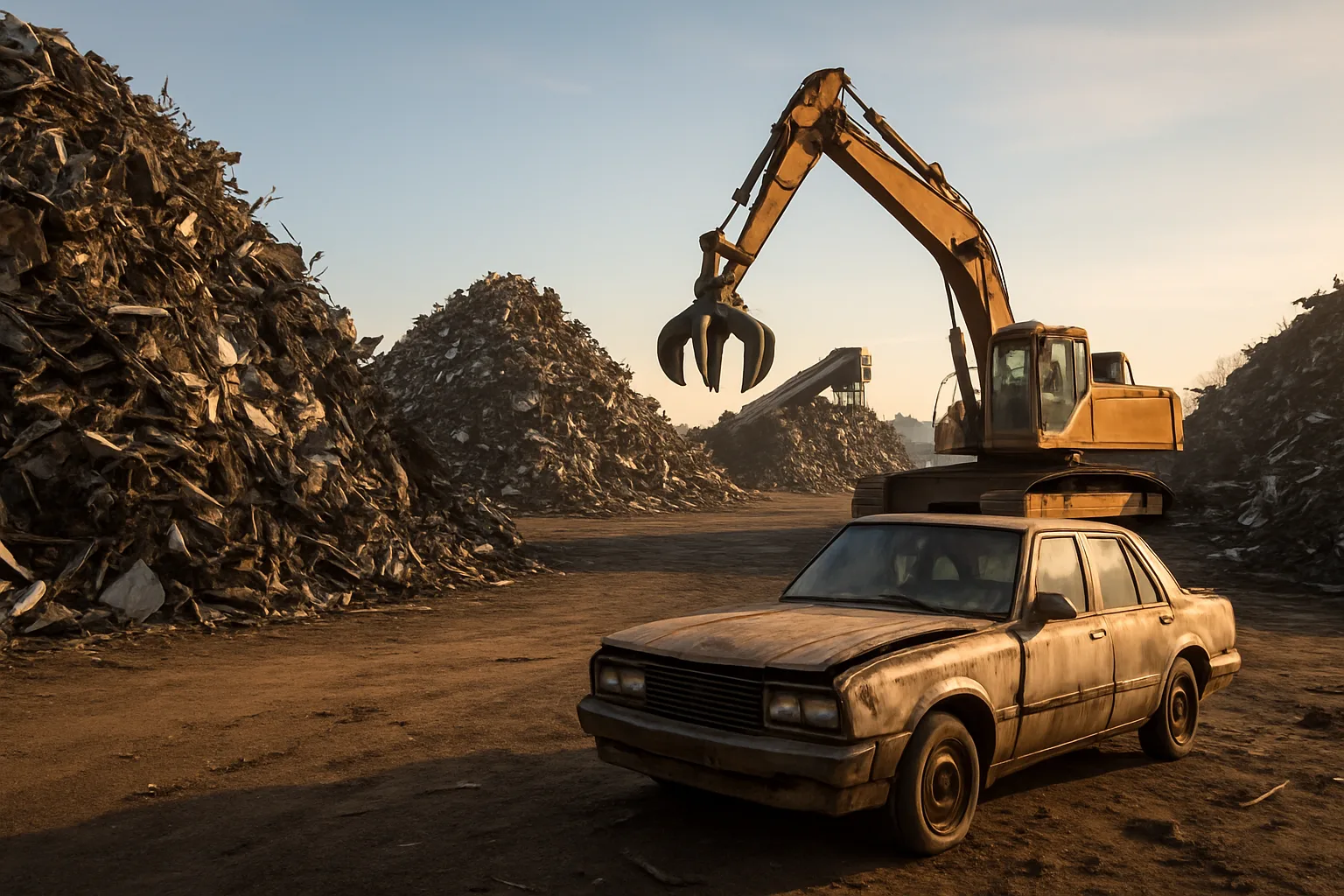
What's a Junk Car Actually Worth in 2026? Here's the Honest Answer
Most vehicle owners expect a junk car to be worth almost nothing. Then they get a quote and realize they've been sitting on several hundred dollars — sometimes more — without knowing it. If you're researching cash for junk cars Nanaimo, this guide gives you a realistic breakdown of what drives your car's value, what kills it, and how to stop leaving money on the table.
The short answer: a scrap car in Canada is typically worth somewhere between $150 and $800+ depending on weight, condition, and what's still on it. That's a wide range. Let's narrow it down for your specific situation.
The 5 Factors That Determine Your Scrap Car's Value
Scrap car pricing isn't random. It follows a real formula. Buyers — whether they're local wreckers, auto recyclers, or online platforms — are evaluating the same core variables every time they quote you a price.
Here's what actually moves the number:
- Vehicle weight (steel and metal content): Scrap metal is priced by the tonne. A heavier vehicle means more raw steel, which means more money. A full-size pickup or SUV outweighs a compact sedan by 400–600 kg easily. That gap shows up in your quote.
- Catalytic converter presence: This is the big one many sellers miss. Catalytic converters contain platinum, palladium, and rhodium — all high-value precious metals. A vehicle with its original, intact catalytic converter can be worth significantly more than one that's been stripped. If you're wondering whether to sell catalytic converters online separately, read the section below — the answer isn't always what you'd expect.
- Drivability and condition: A car that runs fetches more than one that doesn't. Even if it's not road-legal, a vehicle that starts and moves under its own power saves the buyer on processing costs. That saving gets passed back to you.
- Parts that still have resale value: Working alternators, transmissions, doors, rims, and electronics all carry salvage value above raw scrap weight. Auto recyclers factor this in when quoting you — even if they don't itemize it.
- Current scrap metal prices: This is the variable nobody controls. Steel and non-ferrous metal prices fluctuate with global demand, manufacturing output, and supply chain conditions. Your car might be worth more in March than in November — or vice versa. Always get a current quote rather than relying on what a neighbour got six months ago.
Disclaimer: Scrap metal prices fluctuate regularly. The ranges mentioned in this article are general estimates for 2026 and should not be taken as guaranteed pricing. Always request a current quote for your specific vehicle.
Scrap Car Value by Vehicle Type — Realistic Ranges
Not all vehicles are created equal when it comes to scrap value. Here's a general breakdown to help you calibrate expectations before you request a quote. These are ballpark figures based on typical scrap weights and current market conditions in British Columbia — not promises.
- Compact cars (Honda Civic, Toyota Corolla, etc.): Lighter vehicles with less steel. Expect the lower end of the range unless parts are intact and the catalytic converter is present.
- Mid-size sedans and hatchbacks: A step up in weight. If the car is complete and not too rusty, recyclers have more to work with.
- Full-size trucks and SUVs: The most valuable scrap vehicles by weight alone. A Ford F-150 or Chevy Suburban carries significantly more steel than a compact car. Add a working engine and intact cats and the quote climbs further.
- Minivans: Often underestimated. Decent steel weight and common enough that parts have salvage market demand.
- Luxury vehicles: More complex to value. Higher-grade metals, more electronics, and often more valuable catalytic converters — but condition and documentation matter more with these.
If you're in Nanaimo and wondering where your specific vehicle sits in this range, the fastest move is to sell your scrap car in Canada through a service that gives you a real quote upfront — no haggling, no surprises at pickup.
Should You Strip the Catalytic Converter Before Selling?
This question comes up constantly, especially as cat theft has stayed in the headlines across British Columbia and the rest of Canada. The logic seems sound: sell the cat separately for top dollar, then sell the car body for scrap. But it's more complicated than that.
Here's the reality:
- A missing catalytic converter immediately reduces your car's scrap quote. Recyclers and auto buyers factor cat value into their offers. Remove it and they adjust their number down.
- Selling a catalytic converter separately requires documentation in most Canadian provinces. Without proof of ownership, many reputable buyers won't touch it — and you're potentially putting yourself in a legally grey area.
- If you're trying to sell catalytic converters online, platforms and buyers will ask for vehicle documentation, VIN confirmation, and in some cases a bill of sale. Legitimate buyers do this to comply with provincial regulations around secondary metal sales.
- The math doesn't always work in your favour. Between the reduction in the car's scrap quote, the time spent finding a legitimate cat buyer, and the paperwork involved, many sellers net the same — or less — than they would selling the complete vehicle.
The cleaner move for most vehicle owners: sell the whole car, intact. Let the recycler or platform handle the disassembly. You get a fair quote, free towing, and no hassle. Platforms like SMASH are built around transparent pricing and documented inventory — which means the value in your vehicle, including its catalytic converter, gets properly accounted for in what you're offered.
Why Nanaimo Sellers Often Get Less Than They Should
This is a pattern worth talking about. Vehicle owners in Nanaimo and across Vancouver Island have historically had fewer buyers to choose from than sellers in Metro Vancouver or other major centres. Fewer buyers means less competition. Less competition means lower offers — and sellers often accept because they don't know there's more on the table.
The old way works like this: you call one local wrecker, they give you a number, you either take it or spend days calling around hoping someone else will beat it. Most people just take the first offer. It's not a fair market — it's a guessing game.
The newer approach uses competitive pricing and vetted buyer networks. When multiple buyers are bidding on your vehicle, the price reflects actual market value — not what a single buyer thinks they can get away with. That's exactly where SMASH changes the equation. More buyers means better price discovery, and documented inventory gives buyers more confidence to bid competitively.
If you want to see what real competition looks like for your scrap vehicle, schedule a free scrap car pickup and find out what your car is actually worth in today's market.
Free Towing — What It Actually Means for Your Net Value
When a buyer offers you $400 for your car but charges a $75 tow fee, your real take-home is $325. When another buyer offers $350 with free towing, you're ahead. This math trips up sellers constantly.
Always compare quotes on a net basis. Ask directly: is towing included? Are there any fees deducted at pickup? A legitimate scrap car service in Nanaimo will give you a firm number that's what you actually receive — full stop.
Free towing is standard with reputable services. If a buyer tries to add fees after the initial quote, that's a red flag. Walk away and try getmyscrapcar.ca for a clean, no-fee process.
For a deeper look at how the process works from quote to pickup, read Canadian scrap car guides covering documentation, towing logistics, and what to expect on pickup day.
How to Get the Best Price for Your Junk Car — A Practical Checklist
You don't need to become an expert in scrap metal markets to get a fair deal. You just need to avoid the mistakes that cost sellers money.
- Get at least two quotes. One quote is a take-it-or-leave-it situation. Two quotes give you a baseline. Three or more give you negotiating context.
- Have your paperwork ready. Title, registration, and ID. Buyers who can verify ownership move faster and often offer better prices because their risk is lower.
- Know what's on your car. Does it have a working catalytic converter? All four tires? A functional battery? These details affect your quote — mention them upfront.
- Don't strip the car yourself unless you know exactly what you're doing and have buyers lined up for the parts. The math rarely works out in the seller's favour.
- Ask about free towing explicitly. Confirm the quote is all-in before you agree to anything.
- Use a platform that brings buyers to you. SMASH connects sellers with vetted buyers across North America, which means you get competition without doing the legwork. That competition can help reveal the real market value of your vehicle.
Whether you're in Nanaimo or anywhere else in Canada, the process is the same. Find a service that handles towing, provides transparent pricing, and pays you what the market actually says your car is worth. If you're also exploring local options, check out Nanaimo scrap metal services for more on what's available in your area.
Frequently Asked Questions
Q: How much can I get for cash for junk cars in Nanaimo right now?
Scrap car values in Nanaimo depend on vehicle weight, condition, and current metal prices. Most vehicles range from a few hundred dollars to over a thousand for heavier trucks and SUVs with intact parts. Get a current quote — prices shift with the market and no two vehicles are the same.
Q: Does my car need to run to get cash for it in Nanaimo?
No. Most scrap car buyers will take non-running vehicles and provide free towing. A car that starts may fetch a slightly better offer, but a non-runner still has scrap metal value and potentially valuable parts. Don't let a dead battery or failed engine stop you from getting a quote.
Q: What documents do I need to sell my car for cash in Nanaimo?
You'll typically need your vehicle title, valid government-issued ID, and current registration. Having clean documentation speeds up the process and often improves your offer because it reduces buyer risk. If you've lost your title, contact ICBC to understand your options before reaching out to buyers.
Q: Is free towing standard for scrap car pickup in British Columbia?
Yes, most legitimate scrap car services in British Columbia include free towing in their quote. Always confirm this before accepting an offer — the number you agree to should be exactly what you receive at pickup, with no deductions for transport.
Q: Should I sell my catalytic converter separately before scrapping the car?
In most cases, no. Removing the catalytic converter reduces your scrap car quote, and selling it separately requires documentation and a legitimate buyer to stay compliant with provincial regulations. Selling the complete vehicle is usually the simpler and often better-value option for most sellers.
If you're ready to stop guessing and find out what your vehicle is actually worth, sell your scrap car in Canada and get a free, no-obligation quote at sell-myscrapcar.ca. No pressure, no hidden fees — just a straight answer on what your car is worth today.
Stay sharp on scrap metal pricing and market shifts — follow SMASH on LinkedIn for regular industry updates and insights from across the North American recycling market.