Most people arrange junk car removal Ottawa and never think twice about what happens next. The tow truck pulls away, you pocket your cash, and that's the end of the story — for you. But for that vehicle, the story is just getting started.
Understanding what happens at an auto recycler after pickup isn't just interesting. It can actually help you make smarter decisions before you sell — like knowing which parts still hold real value, why documentation matters, and how platforms like SMASH are changing the way scrap vehicles get priced and sold across Canada.
Whether your car is a 2009 Civic with a blown head gasket or a rusted-out half-ton that hasn't moved in three years, here's exactly what happens once it leaves your driveway.
Step 1: The Vehicle Gets Assessed and Catalogued
The first thing that happens when your car arrives at an auto recycler in Ottawa or anywhere across Ontario is a full physical assessment. A yard tech walks the vehicle and documents its condition — what's salvageable, what's scrap-grade metal, what's hazardous, and what's genuinely worthless.
This isn't a casual glance. Modern recyclers use VIN lookup tools and inventory management systems to cross-reference the vehicle's make, model, trim, and year against current demand for used parts. A 2015 F-150 with intact doors and a working transmission is catalogued very differently than a 2004 Corolla with collision damage and a seized engine.
Key things assessed during intake:
- Body panels — doors, fenders, hoods (condition and colour match to demand)
- Drivetrain components — engine, transmission, axles, differentials
- Electronics — ECU modules, infotainment units, sensors
- Interior parts — seats, dashboards, trim pieces
- The catalytic converter — assessed separately, always
- Overall metal weight — what's left after parts pull goes to the scale
Photo documentation and serial tracking at this stage matter more than most sellers realize. When buyers have clear records and photos, they bid with more confidence. That confidence translates to better price discovery — which is exactly the principle behind how SMASH structures its auction process for scrap loads and vehicles.
Step 2: Fluids Are Drained and Hazardous Materials Are Removed
Before any dismantling begins, all vehicles go through a depollution stage. This is a legal requirement under provincial environmental regulations in Ontario and most provinces across Canada — not optional, not skippable.
A trained technician removes and properly disposes of every fluid and hazardous material in the vehicle. This process is methodical and takes anywhere from 30 to 90 minutes depending on the vehicle's condition and age.
What gets removed during depollution:
- Engine oil and transmission fluid
- Coolant / antifreeze
- Brake fluid and power steering fluid
- Fuel (gasoline or diesel remaining in the tank)
- Refrigerant from the A/C system (requires a certified technician)
- Mercury switches (found in older vehicles, pre-2003 especially)
- Airbag inflators (classified as hazardous under transportation regulations)
This step protects the environment and also protects the recycler legally. Skipping it isn't a grey area — it's a regulatory violation. Reputable yards in Ottawa and across Ontario don't cut corners here.
The Catalytic Converter Gets Pulled — And It's Worth More Than You Think
Here's where things get interesting. The catalytic converter is consistently one of the highest-value components on an end-of-life vehicle. It contains platinum group metals — platinum, palladium, and rhodium — that are refined and resold on global commodity markets.
Prices for catalytic converters vary significantly based on the vehicle. Hybrid vehicles and trucks with larger engines typically carry converters with higher loadings of precious metals. A converter off a Toyota Prius, for example, will fetch considerably more than one off a base model compact from the early 2000s.
This is one reason why scrap car value today isn't a flat number. The metal commodity market moves constantly. Palladium prices have historically been volatile — and the value of your converter moves with them.
If you're curious about your specific vehicle before you sell, you can often sell catalytic converters online separately if you remove them yourself — though most sellers prefer the simplicity of letting the recycler handle the whole vehicle. That said, knowing your converter has value gives you leverage. If a buyer quotes you a low flat rate without acknowledging the cat, that's a signal to shop around.
Platforms that bring multiple vetted buyers into the conversation — like SMASH — exist precisely because of situations like this. More buyers means better price discovery. Competition is how you find out what your car is actually worth, not just what one buyer is willing to offer on a single phone call.
If you want to understand how Ottawa-area scrap pricing works before you commit, read Canadian scrap car guides for up-to-date breakdowns on what drives value.
Dismantling: Parts Pull vs. Direct to Shred
Not every vehicle gets the same treatment at the dismantling stage. Recyclers make a commercial decision: does this vehicle justify a full parts pull, or does it go straight to the crusher?
A parts pull vehicle gets dismantled piece by piece. Usable components are cleaned, tagged with the vehicle's VIN, and added to the yard's used parts inventory. These parts are sold to repair shops, independent mechanics, and the general public — often at 40–70% less than new OEM pricing. It's a real market, and demand for used parts has grown significantly as new vehicle prices have climbed in recent years.
A direct-to-shred vehicle is one where parts value doesn't justify the labour. Heavily rusted vehicles, flood-damaged cars, high-mileage vehicles with no demand for their specific parts — these go to the crusher faster. The metal is still worth something. Steel scrap prices fluctuate, but bulk ferrous metal from crushed vehicles flows into steel mills as feedstock.
What determines which path your car takes?
- Make and model demand — popular vehicles have active parts buyers
- Condition of key components — a seized engine has no parts value
- Age and rarity — some older vehicles have strong collector or restoration demand
- Current scrap metal prices — when steel prices are high, the shredder is sometimes more profitable than the parts shelf
This is worth understanding if you're trying to use a scrap car value calculator Ontario tool before you sell. Those tools estimate based on vehicle weight and general metal prices — they don't always account for parts premiums. A hands-on assessment often tells a different story.
What Happens to the Metal After Crushing
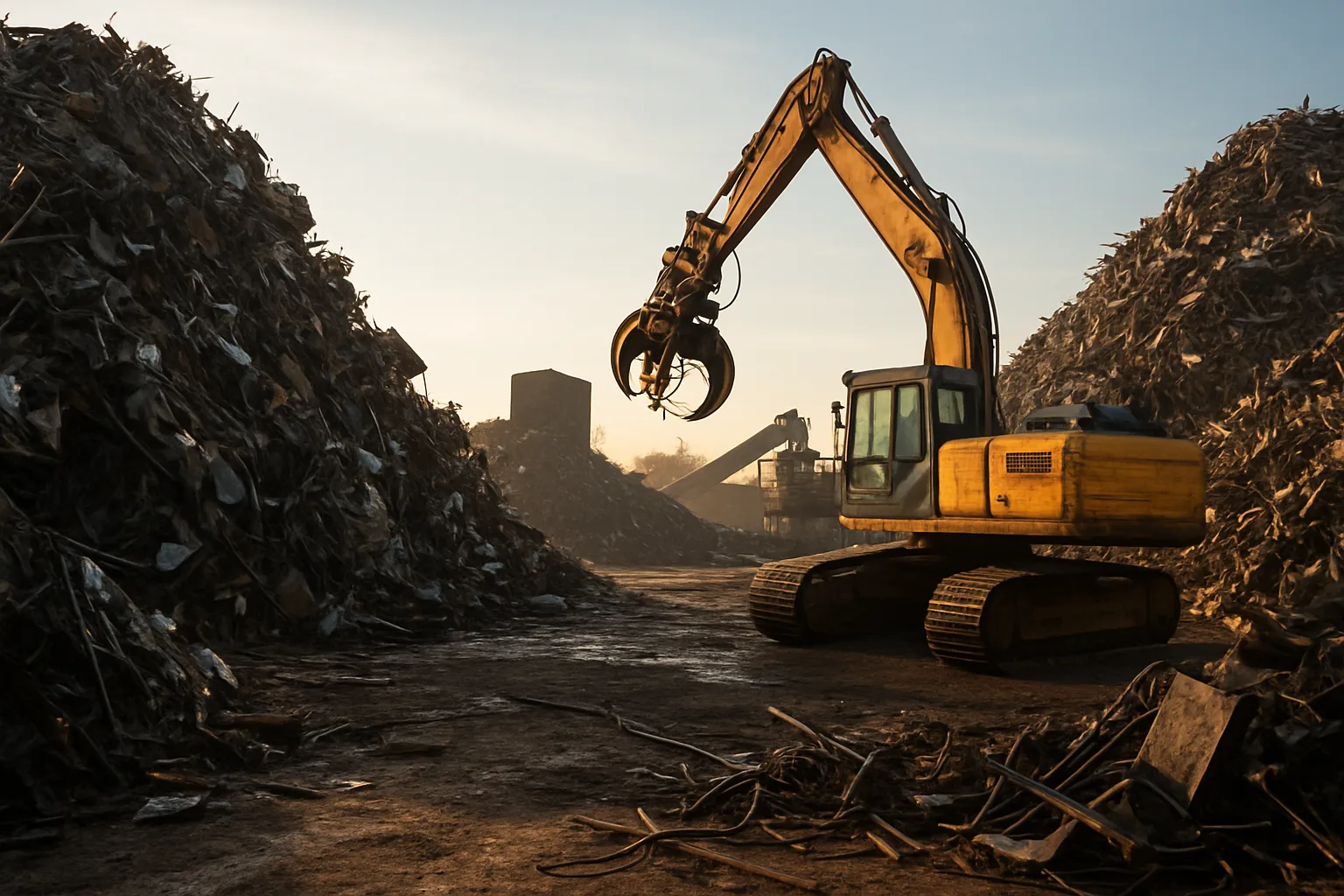
Once a vehicle has been stripped of parts and fluids, what's left is bulk ferrous and non-ferrous metal. The car body goes into a shredder — an industrial machine that tears the vehicle into fist-sized pieces in seconds. After shredding, the material is sorted by type.
Ferrous (iron-based) metal goes to steel mills. Non-ferrous metals — aluminum, copper wiring, small amounts of stainless — are separated and sold to non-ferrous processors or through wholesale channels. This is where loads of shredded auto material start looking similar to the industrial scrap loads that trade hands on platforms like SMASH every day.
In Ontario specifically, the shredded steel from auto recycling feeds back into the domestic steel supply chain — a legitimate circular economy loop. Your rusty old car doesn't disappear. It becomes rebar, structural steel, or new sheet metal within months.
For sellers thinking about cash for cars Ontario, this downstream market is part of why prices shift. When steel mill demand is high, recyclers can offer more. When it softens, margins tighten and quotes drop. Timing matters — and checking current rates before you sell is always worth the effort.
How to Get the Best Value Before You Hand Over the Keys
Knowing what happens to your car after pickup gives you a real advantage before the sale. Here's how to use that knowledge.
Document what you're selling. Photos of the exterior, engine bay, interior, and any notable features or damage help buyers quote accurately. Vague descriptions get low offers as a hedge. Clear documentation invites competitive quotes.
Know what's still attached. If your vehicle still has its catalytic converter, that adds value. If the tires are recent, mention it. If the transmission is intact, that matters. These details shift your quote.
Don't accept the first number. One buyer, one call, one quote is the old way. It doesn't reflect what your car is actually worth on a competitive market. Services that bring multiple buyers together — like SMASH — exist because competition is how price discovery actually works.
Ready to skip the guesswork? sell your scrap car in Canada through a service that actually puts your vehicle in front of real buyers — not just whoever picked up the phone first.
If you're in the capital region, Ottawa scrap metal services are available with free towing and no-hassle pickup. And if you're anywhere else in the country, free junk car removal across Canada is closer than you think.
When you're ready to schedule a free scrap car pickup, the process is straightforward — and now you know exactly what happens next.
Disclaimer: Scrap car and metal prices fluctuate based on commodity markets, vehicle condition, and regional demand. Always check current rates before committing to a sale.
Frequently Asked Questions
Q: How long does junk car removal in Ottawa typically take from quote to pickup?
In most cases, you can get a quote and have your vehicle picked up within 24 to 48 hours in Ottawa and the surrounding Ontario region. Same-day pickup is sometimes available depending on the service provider and your location. Free towing is standard — you shouldn't pay anything out of pocket for removal.
Q: Do I need a title to sell my junk car in Ottawa, Ontario?
In Ontario, having your vehicle permit (ownership document) makes the process smoother and typically results in higher offers. Some buyers will still purchase without a title, but documentation protects you legally and tends to improve your quote. If you've lost your ownership, Service Ontario can issue a replacement.
Q: What is my scrap car worth today in Ottawa?
Scrap car value depends on the vehicle's weight, condition, make and model, and current commodity prices — especially steel and platinum group metals. A full-size truck will generally return more than a compact car. For an accurate number, get multiple quotes rather than relying on a single estimate. Prices fluctuate, so check current rates before you sell.
Q: Does the catalytic converter affect how much cash I get for my car?
Yes — significantly. The catalytic converter contains precious metals that are independently valuable. Vehicles with intact converters command better quotes than those with missing or damaged units. If your converter has already been removed, make sure to disclose that upfront so quotes are accurate.
Q: Can I sell a car for scrap if it doesn't run or has major damage?
Absolutely. Non-running vehicles, collision-damaged cars, and flood-damaged vehicles are all accepted by auto recyclers. The car doesn't need to drive — it just needs to exist. Free towing means the condition of the vehicle doesn't affect your ability to sell it. The quote, however, will reflect what's salvageable.
Follow SMASH on LinkedIn for scrap metal market updates, industry insights, and news about how the recycling landscape is shifting across North America.