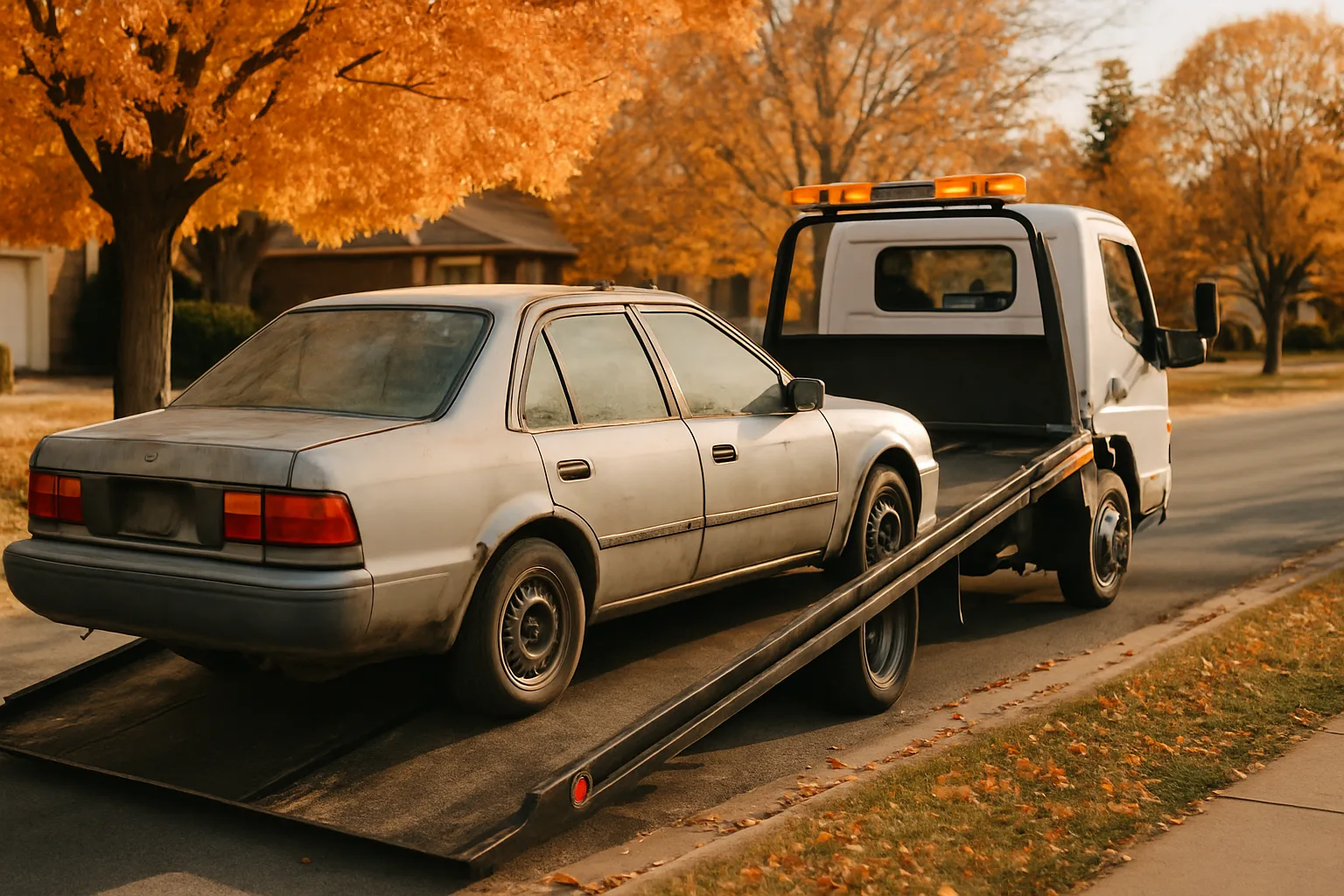
What Actually Happens to Your Junk Car After It Gets Towed Away?
Most people hand over their keys, watch the tow truck pull away, and never think about it again. But if you've been sitting on a dead vehicle — a rusted-out Civic in the driveway, a transmission-blown pickup that hasn't moved in two winters — you might be wondering: where does it actually go? The answer matters more than you'd think, especially if you care about how your old vehicle affects the environment.
This week's roundup covers something we don't talk about enough in the scrap car world: eco-friendly car disposal, what the recycling process really looks like, and why selling responsibly is better for your wallet and for the planet. If you're trying to sell my junk car Hamilton residents keep searching for — or just figure out your options — this is worth reading before you make a call.
The Real Environmental Cost of Letting a Junk Car Sit
A vehicle sitting idle isn't just an eyesore. It's a slow-leaking environmental problem. Old cars contain engine oil, transmission fluid, coolant, brake fluid, and battery acid. When a vehicle deteriorates — especially outdoors — those fluids don't stay put. They leach into soil and, eventually, groundwater.
A standard passenger vehicle holds anywhere from 5 to 20 litres of various fluids depending on the make, model, and condition. Even a small leak from a cracked coolant reservoir or a failing gasket adds up over months. In densely populated areas like Hamilton, Ontario, where residential driveways sit close to storm drains and green space, that contamination risk is real.
The better option — for you and your neighbourhood — is getting that vehicle into a licensed auto recycler's hands as fast as possible. That's where responsible disposal begins.
How Eco-Friendly Car Recycling Actually Works — Step by Step
The recycling process for an end-of-life vehicle is more structured than most people realize. Licensed auto recyclers follow a specific depollution sequence before any metal gets crushed or shredded. Here's how it typically breaks down:
- Fluid Extraction: All hazardous fluids are drained and collected first — engine oil, coolant, brake fluid, power steering fluid, A/C refrigerant. These are either reclaimed for reuse or disposed of through certified waste channels.
- Battery Removal: Lead-acid batteries are pulled and sent to specialized battery recyclers. Most of the lead and sulfuric acid is recovered and reused in new batteries.
- Catalytic Converter Removal: This is a big one. Catalytic converters contain platinum group metals — platinum, palladium, and rhodium. These are recovered and re-enter the supply chain. We'll come back to this.
- Tire and Fluid Reservoir Pull: Tires get redirected to rubber recycling programs. Fuel tanks are drained and inspected.
- Usable Parts Salvage: Alternators, starters, mirrors, doors, glass — anything with resale value gets pulled and inventoried for resale before the shell gets crushed.
- Metal Shredding and Separation: What's left is shredded. Ferrous metals (steel, iron) are separated magnetically. Non-ferrous metals (aluminum, copper, zinc) are separated through eddy current and density sorting.
- Shredder Residue Processing: The remaining fluff — foam, rubber, glass fragments — goes through further separation to recover any residual value before final disposal.
When this process is done properly, upward of 80% of a vehicle's total weight can be recovered and recycled. That's not a minor footnote — it's why the auto recycling industry is one of the largest sources of recycled steel in North America.
Catalytic Converter Auctions: Why Your Converter Is Worth More Than You Think
If you've got a junk car, the catalytic converter deserves its own conversation. Cats have gotten a lot of attention over the past few years — partly because of theft rates, but also because the metals inside them are genuinely valuable. Platinum, palladium, and rhodium don't come cheap, and responsible recyclers know it.
The challenge with selling a junk car is that most one-buyer, one-phone-call transactions don't give you any transparency into how your catalytic converter is being valued. You don't know what the buyer is paying for that cat, what the market price is, or whether you're leaving money behind.
That's where platforms like SMASH change the game. A catalytic converter auction format puts your converter in front of multiple vetted buyers simultaneously. Competition drives price discovery. More buyers seeing the same lot means you're more likely to get a price that reflects what the market actually says — not what a single buyer decides to offer on a Tuesday morning.
SMASH uses photo documentation, serial tracking, and a transparent auction process so buyers are bidding on documented inventory, not guessing. That documented approach gives buyers more confidence — and confident buyers bid harder. If you want to sell your scrap car in Canada and actually understand what your converter is worth, that kind of transparency matters.
Selling Your Junk Car in Hamilton: What You Should Expect From the Process
If you're in Hamilton looking to get rid of a junk vehicle, the process should be straightforward. Here's what a legitimate scrap car sale looks like when it's done right:
- Free towing to your door. You shouldn't be paying for pickup. If a buyer is asking you to cover towing on a scrap vehicle, walk away.
- A quote based on the actual vehicle. Year, make, model, condition, and weight all factor in. Vague "up to" promises aren't quotes — they're bait.
- No title? Not the end of the world. Many legitimate buyers in Ontario handle free junk car removal no title situations regularly. Requirements vary, but don't assume you're stuck just because you can't find the ownership papers.
- Same-day or next-day pickup in most cases. If you need to sell my junk car today, local operators in Hamilton and surrounding areas typically have the capacity to move quickly.
- Payment at time of pickup. Cash or e-transfer at the time of tow is standard. You shouldn't be waiting on a cheque that may or may not arrive.
Hamilton's industrial history means there's no shortage of auto recyclers and scrap dealers familiar with the city's layout and regulations. The local market is active, which works in your favour if you're looking to schedule a free scrap car pickup and get this handled fast.
Local Hamilton scrap metal services like those listed at Hamilton scrap metal services can connect you directly with buyers operating in your area.
What Makes a Car Disposal "Eco-Friendly" — And Why It Matters for Sellers
The term gets used loosely, so it's worth being specific. An eco-friendly car disposal operation does a few things that a cut-rate operator might skip:
- Holds proper licensing from provincial environmental authorities
- Follows depollution protocols before crushing
- Works with certified fluid disposal and battery recycling partners
- Tracks what's recovered and how it's processed
- Can account for where the catalytic converter ends up
Why should you care as a seller? Two reasons. First, if a recycler cuts corners on environmental compliance, they're also probably cutting corners on your payout. Underhanded operations tend to undervalue everything — including your vehicle. Second, in Ontario, you can be held liable if a vehicle you sold ends up abandoned or improperly disposed of. Using a licensed, documented buyer protects you legally, not just environmentally.
Platforms like SMASH connect sellers with vetted, verified buyers. That vetting process isn't just about price — it's about making sure the buyer on the other end of the transaction is operating above board. When you sell scrap car in Ontario through a transparent process, you're not just getting paid — you're closing the loop properly.
Want to dig deeper into how the process works from title to tow? Read Canadian scrap car guides for practical breakdowns of every step in the scrap car selling journey.
You can also explore scrap car removal in Canada at GetMyScrapCar for additional options and regional coverage across the country.
Weekly Market Recap: What's Shaping Scrap Car Values Right Now
For the week of August 23, 2026, the scrap car market across Ontario continues to reflect broader trends in steel and non-ferrous pricing. Ferrous scrap — which makes up the bulk of a standard passenger vehicle — has held relatively steady through the summer months. Aluminum pricing remains active, which benefits vehicles with aluminum-intensive construction. Catalytic converter values, as always, are tied directly to platinum group metal spot prices, which can shift week to week.
What this means practically: if you've been sitting on a vehicle waiting for the "right time," the market isn't giving strong signals to wait. Prices fluctuate, and a vehicle sitting in your driveway isn't gaining value — it's losing it as components degrade and fluids continue to break down. The best time to sell a junk car is usually as soon as you've decided you're done with it.
Disclaimer: Scrap metal prices and scrap car valuations fluctuate based on market conditions, vehicle specifics, and regional demand. Always request a current quote before making any decisions.
If you're ready to move forward, sell your scrap car in Canada and get a free quote at sell-myscrapcar.ca — it takes a few minutes, there's no obligation, and free towing means there's nothing to lose by finding out what your vehicle is worth today.
Frequently Asked Questions
Q: How do I sell my junk car in Hamilton if I don't have the title?
Missing paperwork is more common than you'd think, and many buyers in Hamilton and across Ontario handle these situations regularly. You'll typically need to provide other proof of ownership — like a driver's licence matching the registered owner's name — and the buyer will guide you through the requirements. Don't let a missing title stop you from reaching out.
Q: How fast can I sell my junk car today in Hamilton?
In most cases, same-day or next-day pickup is realistic in Hamilton and the surrounding area. Contact a buyer in the morning with your vehicle details, get a quote, confirm the pickup window, and the tow truck can often be there within hours. The process is faster than most people expect.
Q: Is free junk car removal with no title actually free — or are there hidden fees?
Reputable buyers cover towing at no cost to you. There are no fees, and you receive payment — not the other way around. If a buyer asks you to pay for pickup or deducts towing costs from your payout, that's a red flag worth taking seriously.
Q: What affects the price when I sell my car fast in Hamilton?
Vehicle weight, make, model, year, and current scrap metal market prices all factor in. The condition of key components — especially the catalytic converter — can also significantly impact your total. Getting a quote that accounts for your specific vehicle is always more accurate than an online estimate.
Q: Why does using a vetted buyer matter when I sell scrap car in Ontario?
Licensed, vetted buyers follow proper depollution and disposal protocols required under Ontario environmental regulations. This protects you from any future liability tied to improper disposal, and it typically means you're dealing with a buyer who values their reputation — which translates to fairer pricing and a smoother transaction.
Follow SMASH on LinkedIn for weekly scrap metal market updates, industry insights, and news from across the North American recycling sector.
```