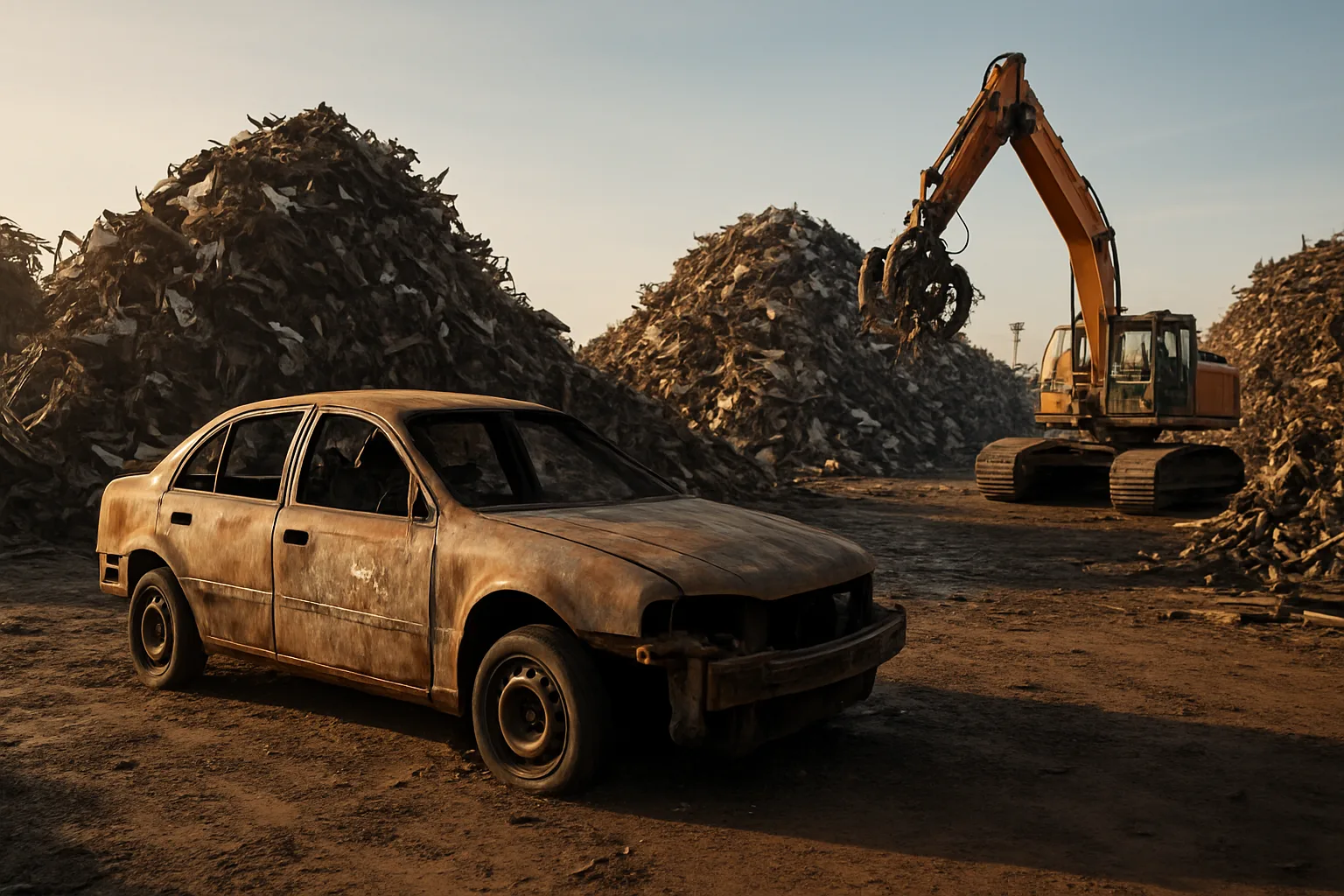
Flood-Damaged or Fire-Damaged Vehicle? Here's What It's Actually Worth as Scrap in 2026
Most vehicle owners don't know this: a flood-damaged or fire-damaged car is often worth more as scrap metal than as a trade-in. Dealers won't touch it. Private buyers will lowball you. But scrap buyers and auto recyclers? They see steel, aluminum, copper wiring, and catalytic converters — not a write-off. If you're trying to sell my junk car Etobicoke after a flood or fire, you have more leverage than you think — as long as you understand how the process works and what your vehicle is actually worth in the current market.
In 2026, extreme weather events across Ontario have pushed flood-vehicle volumes higher. Insurance write-offs are landing in driveways faster than ever. If your car, truck, or van has been declared a total loss, this guide walks you through exactly what to expect when you sell it for scrap — and how to avoid leaving money on the table.
Why Flood and Fire Damage Doesn't Kill a Vehicle's Scrap Value
A burned-out sedan or a flooded pickup truck still weighs roughly the same as an undamaged one. Scrap value is largely determined by weight, metal composition, and recoverable parts — not drivability. A standard passenger vehicle in Canada weighs between 1,400 and 2,000 kilograms. Even at modest scrap steel prices, that's a meaningful payout before you account for non-ferrous metals like copper and aluminum, or high-value components like the catalytic converter.
Here's what survives a flood or fire well enough to hold value:
- Steel and iron in the frame and body — fire discolours it, flood water corrodes it over time, but it's still recoverable steel
- Aluminum components — engine blocks, wheels, and transmission housings often survive fire damage and fetch strong non-ferrous prices
- Catalytic converters (cats) — unless destroyed in an intense engine fire, the catalytic converter is frequently intact and carries real value based on its platinum group metal content
- Copper wiring — a modern vehicle contains 20–50 kilograms of copper wiring; fire can strip insulation while leaving the copper itself intact
- Axles, differentials, and suspension components — often untouched by flood damage unless the vehicle was fully submerged for an extended period
The key difference from a regular scrap car? Documentation matters more. A vehicle with clear title, a salvage or total-loss designation from your insurer, and proper photo documentation commands buyer confidence. That confidence drives competitive offers — which is exactly what platforms like sell your scrap car in Canada are designed to deliver.
How Scrap Car Pricing Works for Total-Loss Vehicles in Ontario
Scrap car pricing in Ontario — and across Canada — is not a fixed number. It fluctuates based on steel index prices, the CAD/USD exchange rate, regional demand, and the specific composition of your vehicle. In 2026, steel and non-ferrous metals have remained active markets, with pricing driven partly by North American manufacturing demand and ongoing infrastructure investment.
For a flood or fire-damaged vehicle, pricing typically breaks into two components:
- Scrap metal value by weight — the base price per kilogram for shredded steel, adjusted for your vehicle's curb weight and estimated metal recovery
- Parts and component value — catalytic converters, aluminum engines, and recoverable non-ferrous materials are often priced separately and can significantly increase your total payout
What most sellers in Etobicoke and the surrounding Ontario market don't realize is that getting a single quote from one buyer is almost never the optimal strategy. One buyer's offer reflects their margins, their current inventory, and their cost to process your vehicle — not the true market value. Competition reveals the real number. That's the core reason a scrap metal auction platform model produces better outcomes for sellers: multiple vetted buyers bid against each other, and the market sets the price.
SMASH operates exactly on this principle. Rather than guessing at value or accepting the first offer, sellers get transparent, competitive bids from qualified buyers — with full documentation and auto-invoicing built in. Prices fluctuate. Always check current rates before accepting any offer.
Selling a Flood or Fire Car Fast in Etobicoke: What the Process Looks Like
Speed matters when you're dealing with a damaged vehicle. A flooded car left sitting in a driveway or storage facility starts to corrode, smell, and attract municipal complaints. A fire-damaged vehicle may have safety concerns depending on how it's stored. Getting it moved quickly is both practical and financially smart — the longer it sits, the more value it can lose.
Here's how a typical fast sale works for Etobicoke sellers in 2026:
- Gather your documents. You need the vehicle title (or salvage certificate from your insurer), a photo ID, and ideally the insurance write-off letter confirming total-loss status. If you've already received your insurance payout, your insurer may hold the title — confirm who owns the vehicle before you proceed.
- Document the vehicle's condition. Take clear photos of all four sides, the interior, the engine bay, and any visible damage. More documentation means more buyer confidence. Buyers bidding remotely need to see exactly what they're getting.
- Get competitive quotes. Don't call one buyer and accept whatever they offer. Use a platform where multiple buyers compete. This is especially true for flood and fire vehicles, where component value varies significantly between buyers with different processing capabilities.
- Schedule free towing. Reputable scrap car buyers in Ontario include free towing in their offer. You should never pay out of pocket to have a total-loss vehicle removed from your property. When you schedule a free scrap car pickup, towing is part of the deal.
- Get paid on pickup. Payment should happen the same day as pickup, typically by certified cheque, e-transfer, or cash. Never release the vehicle without payment in hand.
If you're in Etobicoke, scrap car removal can typically happen within 24–48 hours of accepting an offer. The same applies to nearby areas including scrap car removal Mississauga and scrap car removal Hamilton — most reputable buyers cover the broader Greater Toronto and Golden Horseshoe region with no extra towing fees.
Common Mistakes Sellers Make With Damaged Vehicles
Selling a flood or fire car is different from selling a working vehicle, and there are several mistakes that consistently cost sellers money or create legal headaches. Knowing what to avoid puts you in a much stronger position.
Accepting the first offer. This is the biggest one. A single buyer has no incentive to pay you market rate. Without competition, you're negotiating blind. A sell scrap car in Ontario transaction through a competitive platform almost always outperforms a single cold call to a local yard.
Not confirming title status before selling. If your insurer has taken ownership of the vehicle as part of the total-loss settlement, you may not have the legal right to sell it. Confirm title ownership in writing before proceeding. In Ontario, selling a vehicle you don't own is a legal issue — not just a paperwork problem.
Ignoring catalytic converter value. Many sellers don't realize their cat survived the fire or flood. Buyers who process cats separately and track serial numbers will pay more than buyers who treat the whole vehicle as shred-only. Ask specifically how cats are valued in any offer you receive.
Paying for towing. You should never pay to have a scrap vehicle removed in Canada. Any buyer asking you to front towing costs is either underpriced or adding a hidden fee back in. Free towing is standard. If a buyer quotes you net of towing, get a different quote.
For a deeper look at how the scrap car selling process works across Canada, read Canadian scrap car guides covering everything from pricing mechanics to title transfers.
Why Competitive Bidding Changes the Outcome for Damaged Vehicle Sellers
Here's the honest reality of the scrap car market: buyers have information and sellers don't. A buyer knows steel prices today, knows what your cat is worth, knows what your aluminum engine block will yield at their facility. Most sellers are working from outdated mental benchmarks or a single number they found online six months ago.
The way to close that information gap is competition. When multiple vetted buyers see your vehicle at the same time and bid against each other, the market price surfaces naturally. You don't need to be an expert in scrap metal pricing. You need a process that puts buyers in competition with each other — which is exactly what SMASH is built to do as a scrap metal auction platform for the North American recycling market.
SMASH connects sellers with verified buyers, handles documentation digitally, and creates the kind of price discovery that individual phone calls never produce. Whether you're a private vehicle owner in Etobicoke or a yard with a fleet of flood write-offs to move, the model is the same: more buyers, real competition, transparent outcomes.
You can also explore Canadian scrap car removal from GetMyScrapCar for fast, local service across Ontario and beyond.
Closing: Your Flood or Fire Car Has Value — Don't Walk Away From It
A total-loss vehicle is not a dead asset. It's steel, aluminum, copper, and recoverable components — and in 2026's active recycling market, those materials have real buyers willing to compete for them. If you're in Etobicoke or anywhere across Ontario and you're sitting on a flood-damaged or fire-damaged car, the worst move you can make is accepting the first number you're given without getting competing offers.
Get your documents in order, photograph the damage honestly, and use a platform that puts real buyers in competition. Towing should be free. Payment should be same-day. And the price you walk away with should reflect the actual market — not one buyer's margin. Sell your scrap car in Canada the right way — get a free quote at sell-myscrapcar.ca and find out what your vehicle is actually worth today.
Frequently Asked Questions
Q: Can I sell my junk car in Etobicoke if it's been declared a total loss by my insurance company?
Yes — but confirm who holds the title first. If your insurer paid out a total-loss claim and took ownership of the vehicle, they hold the title and you cannot legally sell it. If you retained ownership after the settlement, you can sell it for scrap with the title and any salvage documentation your insurer provided.
Q: How much is a flood-damaged or fire-damaged car worth for scrap in Ontario?
Value depends on the vehicle's weight, the extent of damage to high-value components like the catalytic converter and aluminum engine block, and current steel and non-ferrous metal prices. There's no single fixed number — getting multiple competitive quotes is the only reliable way to find out what your specific vehicle is worth. Prices fluctuate; always verify current rates before selling.
Q: Is towing included when I sell my junk car in Etobicoke?
It should be. Reputable scrap car buyers in Ontario include free towing as part of their offer — you shouldn't pay anything out of pocket for pickup. If a buyer deducts a towing fee from your payout or asks you to arrange transport separately, get a different quote.
Q: How fast can I sell my car fast in Etobicoke after a flood or fire?
Most sellers can complete the process within 24–48 hours of accepting an offer. That includes scheduling pickup, completing the paperwork transfer, and receiving payment. Having your title and photos ready before you start speeds the process up considerably.
Q: Does the catalytic converter on a flood or fire car still have value?
Often yes. Catalytic converters contain platinum group metals that retain value regardless of vehicle condition, and they frequently survive both flooding and non-catastrophic engine fires. Make sure any buyer you work with assesses your cat separately — not just as part of a flat-rate scrap-by-weight offer.
Stay current on scrap metal market trends and industry insights — follow SMASH on LinkedIn for regular updates from the North American recycling market.