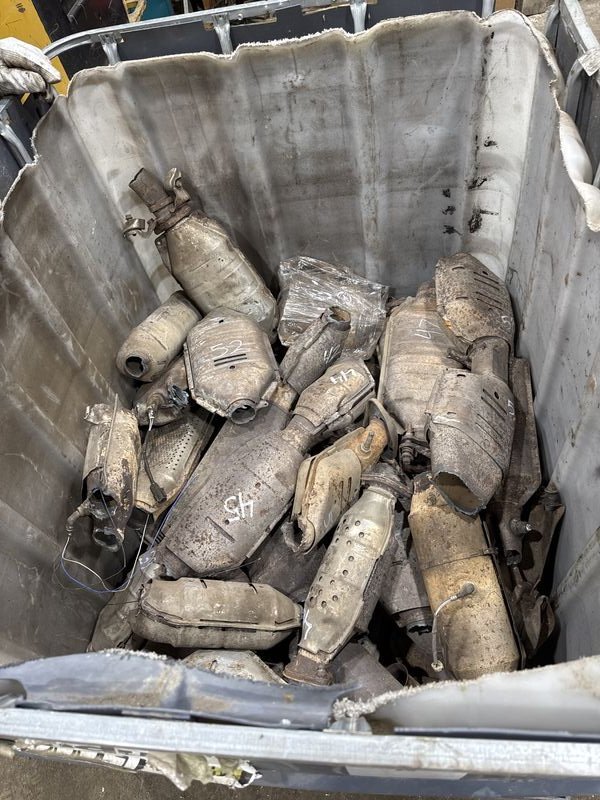
Catalytic Converter Theft Is Reshaping Scrap Car Values in 2026 — Here's What You Need to Know
Catalytic converter theft has exploded across North America over the past several years, and in 2026, it's still one of the most talked-about issues in the auto recycling world. If you own an end-of-life vehicle in Abbotsford or anywhere across British Columbia, this trend directly affects how much your scrap car is worth — and how buyers price it. Understanding the connection between catalytic converter theft, precious metal markets, and scrap car value today puts money back in your pocket.
This isn't abstract industry noise. This is the difference between getting a fair offer and leaving hundreds of dollars on the table because you didn't know your car's converter had already been stripped — or because you didn't know what it was worth in the first place.
Why Catalytic Converters Drive Scrap Car Value Today
Catalytic converters contain platinum group metals (PGMs) — platinum, palladium, and rhodium. These aren't cheap. Even in a volatile market, the PGMs inside a single converter can represent a significant portion of a scrap vehicle's total value. That means the presence, absence, or condition of your catalytic converter has a direct impact on what scrap car buyers will offer you.
When thieves steal converters — often in under two minutes with a reciprocating saw — they're targeting exactly what makes your vehicle valuable to a recycler. A scrap car missing its catalytic converter can be worth noticeably less than one with the converter intact. Buyers factor this in immediately. And if you don't know your converter is gone, you might not understand why the offer feels lower than you expected.
- Platinum, palladium, and rhodium are the three key metals inside a converter.
- Larger vehicles — trucks, SUVs, and hybrids — often have converters with higher PGM content.
- Hybrid vehicles like the Toyota Prius have historically been among the most targeted due to higher precious metal concentrations.
- Even a damaged or partially degraded converter still has residual scrap value.
The math is simple: a vehicle with an intact converter is worth more. Knowing this before you call a buyer gives you leverage.
The Theft Epidemic and Its Ongoing Impact on the Scrap Market
Catalytic converter theft accelerated sharply after 2020 and hasn't let up. By 2026, law enforcement agencies across British Columbia — including the Abbotsford Police Department — have introduced enhanced tracking programs, VIN-etching initiatives, and dedicated task forces targeting organized theft rings. Despite these efforts, theft continues at significant rates, particularly in suburban and semi-rural areas where vehicles sit overnight in driveways, parking lots, and commercial yards.
This has created a ripple effect across the entire scrap and auto recycling ecosystem. Scrap yards now document converters more carefully. Buyers ask pointed questions about whether a vehicle's converter is present before making an offer. Platforms like SMASH have built photo documentation and serial tracking directly into their inventory tools, partly because converter provenance has become a real compliance issue for legitimate recyclers.
For you as a vehicle owner, this matters because:
- If your converter was stolen before you decided to scrap your car, disclose it upfront. Honest disclosure builds trust and avoids offer revisions at pickup.
- If your converter is still intact, that's an asset. Make sure buyers know it — and make sure the offer reflects it.
- Documented, transparent transactions protect both you and the buyer from legal grey areas around converter sales.
How Regulation Changes in 2026 Affect Sell Scrap Car Abbotsford Transactions
Across Canada, provinces have been tightening regulations around catalytic converter resale and documentation. In British Columbia, recyclers and scrap dealers are increasingly required to document the source of converters — including vehicle identification, seller information, and proof of ownership. This isn't bureaucratic overhead. It's a direct response to organized theft rings that use scrap channels to move stolen PGMs.
If you're looking to sell your scrap car in Canada, this regulatory environment actually works in your favour when you use reputable services. Legitimate buyers operating in Abbotsford and across B.C. follow these documentation requirements. They'll ask for your ID, your vehicle registration or title (where available), and they'll record the converter details. This paper trail protects you from having your vehicle flagged later and ensures the transaction holds up.
The regulation shift has also pushed shadier buyers out of the market — or at least made their operations harder. When everyone has to document what they're buying, it's harder to move stolen goods. That's good for honest sellers. It also means the market is more transparent than it was even two years ago.
For city-level context: Abbotsford sits in the Fraser Valley, a high-traffic corridor with significant commercial vehicle movement. Auto theft — including converter theft — has historically been elevated in this region. Local buyers are well aware of the regulatory landscape and expect documented transactions. Services built around schedule a free scrap car pickup make that process frictionless for you.
What a Missing Catalytic Converter Does to Your Offer — And How to Navigate It
Here's the reality: if your converter has been stolen, your scrap car offer will likely be lower. But "lower" doesn't mean "walk away." The rest of the vehicle still has value — steel, aluminum, copper wiring, core components. A full-size truck or SUV still represents hundreds of pounds of recyclable metal even without a converter. The key is finding buyers who give you a fair, itemized assessment rather than a lowball number that doesn't reflect the vehicle's actual remaining value.
This is where transparency in the buying process becomes critical. Platforms like SMASH, a B2B scrap metal marketplace that connects scrap yards and buyers through competitive auction formats, have raised the bar for how scrap vehicles get valued. When multiple buyers compete for a load, the price discovery process is more honest. Nobody gets away with padding margins at your expense when there's real competition on the other side.
If you're navigating a private sale or looking for junk car buyers near me, keep these points in mind:
- Always disclose whether your converter is present or missing — upfront, before the quote.
- Ask buyers to itemize what they're paying for: converter value, steel weight, non-ferrous components.
- Get multiple quotes if possible. One offer is a guess. Two or three offers reveal the actual market.
- Use services with clear fee structures — free towing should mean free towing, with no deductions at pickup.
For more practical guidance on how scrap car transactions actually work in Canada, read Canadian scrap car guides that walk through pricing, documentation, and what to expect at pickup.
Using a Transparent Marketplace to Get Fair Value — Even in a Volatile Market
The scrap metal market fluctuates. PGM prices move with global demand — automotive production cycles, fuel cell technology investment, mining output. What a converter was worth eighteen months ago isn't necessarily what it's worth today. That volatility makes it even more important to use platforms and services that give you real-time, competitive pricing rather than a static number pulled from an outdated price sheet.
SMASH, operating as a competitive SMASH scrap metal auction platform, brings real buyer competition to scrap transactions. Instead of one buyer making one offer with no accountability, multiple vetted buyers bid. That competition is what produces an honest market price. Sellers get better price discovery. Buyers compete on merit. It's a fundamentally different model than the old single-call, take-it-or-leave-it approach most people still use.
If you're in Abbotsford and trying to figure out what your car is actually worth right now — converter or no converter — competitive bidding and transparent platforms are the answer. You can also connect with services like Canadian scrap car removal from GetMyScrapCar to compare your options and make sure you're getting a fair deal before you commit.
Note: Scrap metal and PGM prices fluctuate with global market conditions. Always check current rates with your buyer or a reputable price reference before accepting an offer.
Frequently Asked Questions
Q: Does a missing catalytic converter significantly lower my scrap car's value?
Yes, it can. Catalytic converters contain valuable platinum group metals that contribute meaningfully to a vehicle's scrap value. A missing converter will typically result in a lower offer. That said, the rest of the vehicle — steel frame, aluminum components, copper wiring — still has real value. Always disclose the missing converter upfront so the offer reflects an honest assessment of what's there.
Q: Is scrap car value today higher or lower than last year in Abbotsford?
Scrap car values fluctuate based on steel prices, non-ferrous metal markets, and PGM commodity prices — all of which shift regularly. We don't publish fixed prices because doing so would mislead you. The best approach is to get live quotes from two or three buyers in or near Abbotsford and compare. Transparent platforms with competitive bidding give you the most accurate picture of what the market is actually paying right now.
Q: Do I need a title or registration to sell my scrap car in British Columbia?
Requirements vary by buyer and by province. In British Columbia, most legitimate scrap buyers will ask for photo ID and proof that you own the vehicle — registration is the most common document. Some buyers can work with vehicles that have no title in certain circumstances, but you should ask upfront. Operating without documentation creates legal risk for both the seller and the buyer, especially given current regulations around converter provenance.
Q: How do I know if my catalytic converter was stolen before I sell my car?
The most obvious sign is a dramatically louder exhaust — your car will sound like it has no muffler when you start it. You may also see a gap or cut in the exhaust pipe underneath the vehicle. If you're unsure, a quick look under the car (or a few photos sent to your buyer) will confirm it. Be upfront. Buyers check during pickup, and a surprise missing converter will change the offer on the spot.
Q: Is free towing actually free, or are there hidden fees at pickup?
With reputable services, free towing means free — no deductions from your offer at pickup. Always confirm before you book: ask specifically whether the quoted price is what you'll receive in hand, or whether towing fees will be subtracted. A buyer worth working with will give you a clear answer. If they're vague about it, that's a signal to keep shopping.
If you're ready to move your end-of-life vehicle and want a straightforward process — no runaround, no surprise deductions — sell your scrap car in Canada with a service that offers free towing and upfront pricing. Get your free quote at sell-myscrapcar.ca and find out what your vehicle is worth today.
Stay sharp on scrap metal markets and industry shifts — follow SMASH on LinkedIn for ongoing updates on pricing trends, regulation changes, and what's moving the scrap metal market across North America.