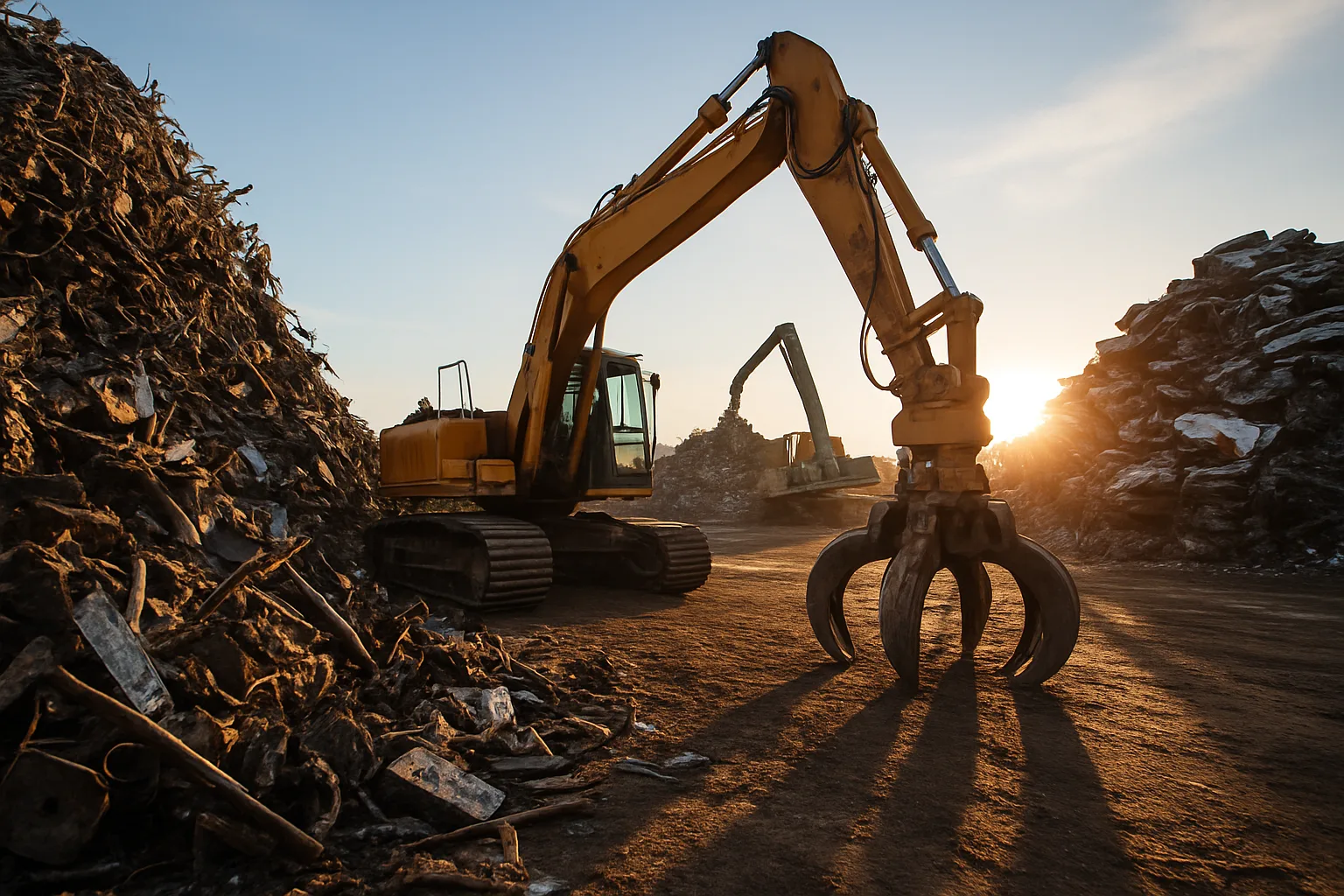
From Assembly Line to Scrap Yard: The Full Lifecycle of a Car
Most drivers never think about where their car came from — or where it's going. But every vehicle follows a predictable path: built, driven, repaired, neglected, and eventually retired. Understanding that lifecycle helps you make smarter decisions at every stage, especially at the end. If you're sitting on a dead or dying vehicle in Medicine Hat, knowing what your car is actually worth — and how to exit cleanly — can put real money in your pocket instead of a rusted eyesore in your driveway.
This guide breaks down each stage of a car's life, what happens to the value along the way, and what you should do when that vehicle hits its final chapter. Scrap car removal in Medicine Hat is more straightforward than most people think — once you understand the process.
---Stage 1: Manufacturing — Where the Value Begins
Every car starts as raw material. Steel, aluminum, copper wiring, rubber, glass, and plastics are sourced globally, shaped, stamped, welded, and assembled into a vehicle worth tens of thousands of dollars. At this stage, the car is at peak value — it's never been used, depreciated, or exposed to road salt.
What's interesting from a scrap perspective is that the materials baked into a car at the factory are the same materials that retain value decades later. A modern mid-size sedan contains roughly 900–1,000 kg of steel, 100+ kg of aluminum, and several kilograms of copper in its wiring and components. Those commodities don't disappear — they just change hands. Understanding this helps explain why even a completely dead car still has measurable scrap value.
Stage 2: New Ownership and Peak Use — The Prime Years
Once a car rolls off the lot, depreciation hits immediately. The average new vehicle loses a significant chunk of its retail value in the first year alone. But functionally, this is the vehicle's best period. Warranties are active, mechanical systems are fresh, and the car is doing exactly what it was designed to do.
During this phase, the car's value is tied almost entirely to its condition, mileage, and market demand — not its metal content. A well-maintained 2024 model still on the road in 2026 is a retail asset. Nobody's calling junk car buyers near me in Medicine Hat for a vehicle like that. The scrap conversation comes later.
Stage 3: Mid-Life Wear — Repairs, Trade-Ins, and Resale
Between years three and ten, the average car changes hands at least once, often more. Repairs become a regular reality — brakes, tires, batteries, belts, sensors. This is also when vehicles often enter the secondary and tertiary resale markets. A car that started life at $40,000 might trade hands at $18,000, then $8,000, then $3,500 over a decade.
For vehicles in this range, value is still driven by mechanical condition and body integrity. But the gap between retail value and scrap value is narrowing. A 10-year-old car with high mileage and body damage is already approaching end-of-life economics. Alberta winters accelerate this — road salt, freeze-thaw cycles, and temperature extremes wear out components faster than in milder climates. That's not a generalization; it's a practical reality that Alberta drivers know well.
- Rust and corrosion from road treatments accelerate structural wear
- Cold starts strain engines, batteries, and seals over time
- Pothole damage affects suspension, alignment, and undercarriage
- UV and temperature swings degrade interiors, rubber seals, and paint
By the time a vehicle hits the 150,000–200,000 km mark, the math on major repairs often stops making sense. That's when owners start searching for a scrap car value calculator or looking up what junk car buyers near me in Medicine Hat are actually paying.
Stage 4: End-of-Life — When the Numbers Stop Making Sense
There's a specific moment in a vehicle's life when repair costs exceed the car's total value. Mechanics call it the "total loss threshold." Most owners feel it before they can quantify it — the radiator blew, the transmission is slipping, and the estimate came back at $3,200 for a car worth maybe $1,800 on a good day.
This is the stage where a car transitions from a transportation asset to a liability. It's sitting in your driveway taking up space, potentially leaking fluids, and adding nothing to your life. At this point, your best move isn't another repair — it's a clean exit.
End-of-life vehicles fall into a few categories:
- Mechanically dead — engine or transmission failure, not worth repairing
- Collision write-offs — insurance declared total loss, structural damage
- Abandoned or neglected — sat too long, now seized up or stripped
- Failed safety inspection — not roadworthy, repair cost too high
- Flood or fire damage — functional components compromised
In every one of these cases, the vehicle still has value — just not the kind you get from a used car lot. This is where the scrap and recycling industry picks up the story. If you're in Medicine Hat and ready to move on, you can sell your scrap car in Canada without hauling it anywhere yourself. Free towing is standard — you shouldn't be paying to get rid of a car that still has commodity value.
Stage 5: The Scrap Yard — What Actually Happens to Your Car
Most people picture a car crusher and call it a day. The reality is more layered — and more valuable — than that.
When a vehicle arrives at an auto recycler or scrap yard, it goes through a depollution process first. Fluids are drained and disposed of properly: engine oil, coolant, brake fluid, transmission fluid, refrigerants. This step is legally required and environmentally critical.
After depollution, the real value extraction begins:
- Catalytic converters — stripped first. They contain platinum, palladium, and rhodium. A single cat from a common truck or SUV can be worth more than people expect.
- Copper wiring and harnesses — pulled before shredding. Copper is consistently one of the highest-value non-ferrous metals in a vehicle.
- Aluminum components — wheels, engine blocks, transmission housings, and brackets are separated from steel.
- Usable parts — engines, transmissions, doors, hoods, and electronics are pulled for resale if they're still functional.
- Steel body and frame — what's left goes to the shredder, compressed into dense ferrous scrap bales, and sold into the steel recycling supply chain.
This is where platforms like SMASH — a B2B scrap metal marketplace — come into the picture. Once a yard has processed and catalogued scrap loads, SMASH connects them with vetted buyers competing for those materials. More competition in the buying market means better price discovery for everyone upstream, including the yard. That's how a functional marketplace should work. To understand how scrap commodity pricing affects your payout, read Canadian scrap car guides for practical breakdowns.
The full circle is remarkable: raw steel mined from the earth becomes a car, serves a useful life on Canadian roads, and eventually returns to the steel supply chain as recycled content for future manufacturing. Over 80% of a vehicle's materials are recyclable. Your rusted-out pickup truck becomes rebar, beams, or maybe part of the next generation of vehicles.
What This Means for You as a Vehicle Owner in Medicine Hat
Understanding the lifecycle puts you in a better position to make the right call at the right time. Holding onto a dead vehicle too long costs you — storage space, potential liability, and lost commodity value if the vehicle deteriorates further.
Here's what you should know if you're at the end-of-life stage in Medicine Hat or anywhere in Alberta:
- You don't need the title in every case — check with your buyer, but many situations are covered
- Free towing is the standard — if someone is charging you to pick up a car with scrap value, walk away
- The price varies — weight, metal composition, and current commodity prices all factor in. Don't expect a fixed number without an actual assessment.
- Same-day or next-day pickup is often available — you don't have to wait weeks
- Cash payment at pickup is common — get that confirmed upfront
Prices fluctuate with the scrap metal market, so any quote you get reflects current conditions. Always confirm current rates at the time of your transaction — what steel or aluminum trades for today may shift within weeks.
If you're ready to move forward, free junk car removal across Canada is available and getting a quote takes minutes. No pressure, no guessing, no hauling it yourself. Schedule a free scrap car pickup and turn that driveway anchor into a clean payout.
Your car had a full life. The last chapter doesn't have to be complicated.
---Frequently Asked Questions
Q: How do I get scrap car removal in Medicine Hat?
Contact a licensed scrap car buyer that serves the Medicine Hat area. Most will give you a quote over the phone or online, then arrange free towing directly from your location — driveway, street, or storage lot. You don't need to drive the vehicle anywhere.
Q: What affects the scrap value of my car in Medicine Hat?
The main factors are vehicle weight, the current price of steel and non-ferrous metals, the condition of high-value components like the catalytic converter and copper wiring, and whether any usable parts can be resold. Market rates shift regularly, so check current pricing before you commit to a quote.
Q: Do junk car buyers near me in Medicine Hat pay cash?
Many do. Cash at pickup is common in the scrap car industry, but confirm the payment method before scheduling. Some buyers pay by e-transfer or cheque instead. Get the terms in writing before your vehicle is towed.
Q: Does my scrap car need to be in running condition?
No. Scrap car buyers purchase non-running, damaged, flooded, and written-off vehicles. The car's scrap value is tied to its materials, not whether it starts. As long as the vehicle is yours to sell, condition is rarely a barrier.
Q: How quickly can I get a scrap car picked up in Medicine Hat, Alberta?
Turnaround depends on the buyer and your schedule, but same-day or next-day pickup is available in many cases. Once you accept a quote and confirm your details, logistics are typically handled by the buyer — no trips to a yard required on your end.
---Disclaimer: Scrap metal and vehicle prices fluctuate based on commodity markets. Any figures referenced in this article are general estimates only. Always request a current quote before making a decision.
Follow SMASH on LinkedIn for ongoing scrap metal market updates, industry trends, and insights for recyclers and buyers across North America.