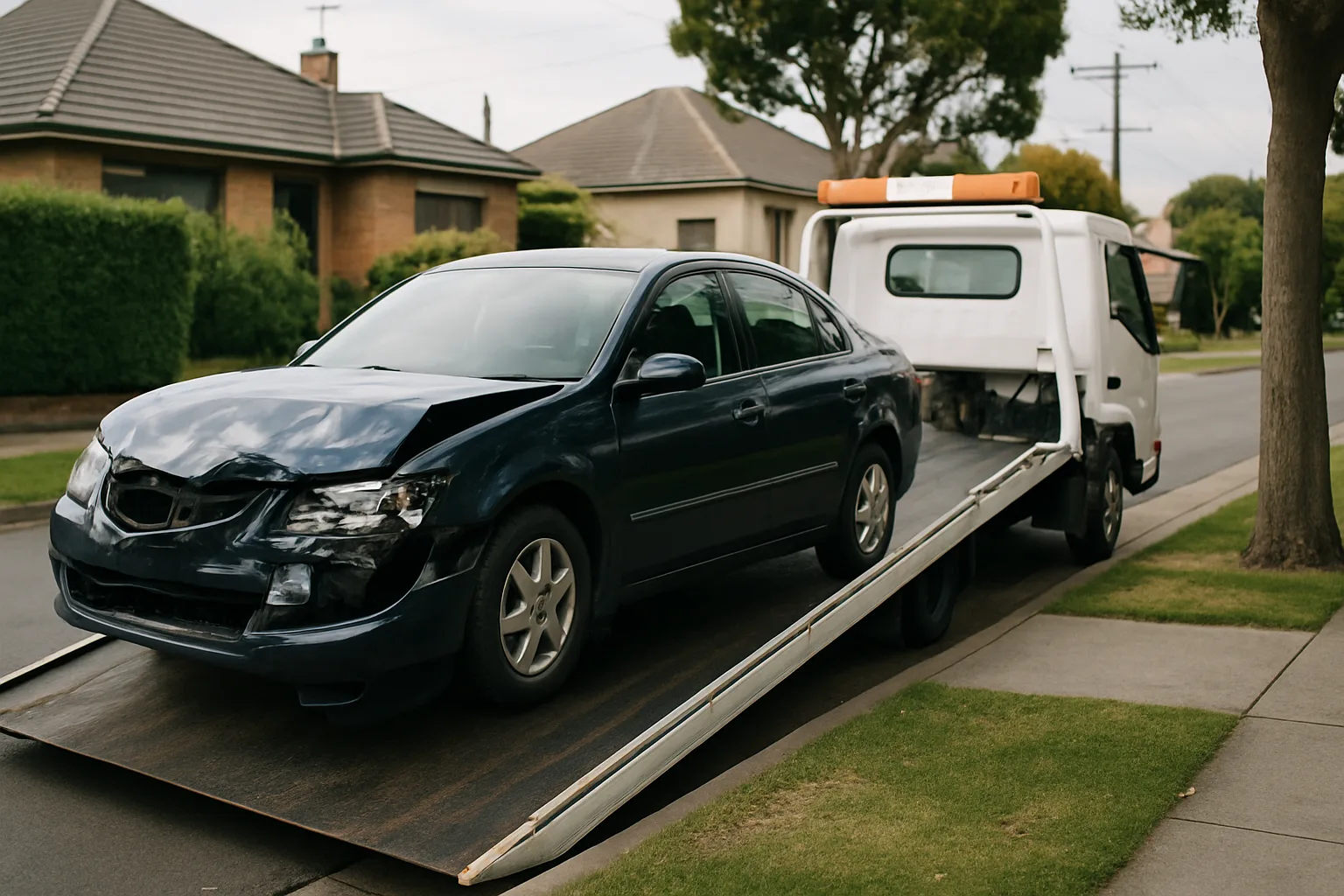
Your car got wrecked. Now it's sitting in your driveway, leaking fluids, and costing you money just by existing. If you're in Victoria wondering what happens next — this guide cuts straight to it.
Accident-damaged vehicles are among the most misunderstood assets in the scrap world. Owners either hold onto them too long hoping for a miracle repair estimate, or they panic-sell to the first buyer who shows up. Both moves usually cost money. What actually works is understanding what your wrecked car is worth, who buys it, and how the process works — especially if you're looking for junk car buyers near me Victoria.
Here's everything you need to know about scrapping an accident-damaged car in 2026.
What Happens to a Car's Value After an Accident?
The moment a vehicle is in a collision serious enough to total it, the insurance math changes fast. If repair costs exceed a certain percentage of the vehicle's actual cash value — typically somewhere between 70% and 80% depending on the insurer — it gets written off. In British Columbia, ICBC handles most of these assessments, and their write-off thresholds are well-established.
A total-loss designation doesn't mean your car is worthless. It means the insurer has decided it's not economical to repair. The car still has scrap metal value, salvageable parts value, and potentially catalytic converter value depending on the make and model. A wrecked 2018 Honda CR-V, for example, still has a catalytic converter with meaningful platinum group metal content. That value doesn't disappear because the front end is smashed.
What does change after an accident:
- The vehicle likely has a branded or salvage title, which limits resale options
- Mechanical damage beyond the visible collision area may reduce parts value
- Fluid contamination or fire damage can affect scrap metal pricing
- Airbag deployment reduces the vehicle's resale viability but doesn't kill scrap value
Bottom line: your wrecked car has value. The question is whether you're finding all of it.
What Junk Car Buyers Near Me Victoria Actually Look At
Not all buyers evaluate accident cars the same way. A lot of local buyers — the ones answering generic "cash for cars Victoria" ads — are moving fast and pricing low. They're not necessarily looking at your specific vehicle's metal weight, converter type, or recoverable parts. They're averaging and discounting.
Here's what a serious buyer actually assesses on an accident-damaged vehicle:
- Curb weight and scrap metal content — Heavier vehicles yield more steel. A full-size pickup that's been T-boned is still a lot of scrap steel.
- Catalytic converter condition — Converters are often intact even after significant body damage. Location on the vehicle matters. If your cat wasn't in the impact zone, it likely still has value.
- Drivability or towability — Can the vehicle be moved without a flatbed? This affects logistics costs and may affect the offer.
- Title and paperwork status — A vehicle with clean paperwork moves faster. If ICBC already paid out a claim, clarify ownership before calling anyone.
- Parts demand for your make and model — High-demand vehicles (certain trucks, SUVs, older Japanese imports) have more salvageable parts that add to the overall value.
Platforms like SMASH — a vetted scrap metal auction platform — bring this kind of structured assessment to sellers who want real price discovery instead of a single lowball offer from the only buyer who returned their call.
How the Scrap Car Process Works After a Collision in British Columbia
The steps aren't complicated, but there's a sequence that saves headaches. If you're in Victoria or anywhere across British Columbia, here's what a smooth process looks like:
Step 1: Confirm ownership and title status. If your insurer totalled the vehicle, they may have taken ownership as part of the claim settlement. Clarify whether the title is still in your name. You need to transfer a clear title to sell legally.
Step 2: Remove personal belongings and plates. Check every compartment. Remove your BCID, registration documents, and return the plates to ICBC if you're cancelling insurance. Don't leave garage openers, phone mounts, or anything personal inside.
Step 3: Document the vehicle honestly. Take photos of the damage — all angles. This isn't just for your records. Buyers who can see real photos before pickup give better quotes. Hiding damage leads to revised offers on arrival, which wastes everyone's time.
Step 4: Get multiple quotes. One quote is not a market. Two quotes are barely better. A real auction or multi-buyer quoting process gives you actual price discovery. This is exactly where sell your scrap car in Canada through a vetted platform makes a real difference — competition reveals what your vehicle is actually worth to the market.
Step 5: Arrange free towing. Most legitimate scrap car buyers include free towing in their offer. If a buyer is quoting you and then adding a tow charge on top — walk away. You can schedule a free scrap car pickup through services that don't tack on hidden fees at the last minute.
Step 6: Sign over the title and get paid. Never hand over keys without payment in hand. Reputable buyers pay at pickup — cash, e-transfer, or certified cheque. Get a receipt confirming the transaction.
Why Accident Cars Often Leave Money on the Table
This is the part most owners don't think about until after they've already sold.
The biggest mistake is treating a wrecked car like a burden instead of an asset. When you're emotionally done with a vehicle — especially one that's been in a serious crash — you just want it gone. That urgency is exactly what low-ball buyers count on.
A few specific ways money gets lost on accident cars:
- Selling before the insurance settlement is complete — If there's an outstanding claim, you may not even own the vehicle yet. Selling early creates legal complications and may leave money behind.
- Not accounting for converter value — Catalytic converters on common vehicles can carry meaningful value. If the buyer isn't asking about your make and model, they may not be pricing it properly — or they're keeping that margin themselves.
- Accepting the first offer out of convenience — Getting one quote feels like doing research. It isn't. The difference between the first offer and a competed offer can be meaningful, especially on heavier vehicles.
- Not documenting the car before pickup — Buyers who see clear photos and organized information give better, more confident quotes. Ambiguity is priced against you.
This is why platforms like SMASH exist. The scrap metal auction model isn't just for large commercial loads — it's built around the idea that more buyers and better documentation leads to better price discovery. Whether you're a recycling yard or a private seller in Victoria with a smashed sedan, competition works in your favour.
For more guidance on navigating these situations, read Canadian scrap car guides that break down pricing, process, and what to watch out for.
What Your Wrecked Car Is Actually Worth in 2026
Scrap metal prices fluctuate with global commodity markets. Steel, copper, aluminum, and platinum group metals (found in catalytic converters) all move with supply and demand. As of mid-2026, market conditions continue to reward sellers who approach the process with documentation and competition rather than urgency and a single phone call.
General value factors for accident cars in the current market:
- Vehicle weight is the baseline — heavier is worth more in straight scrap
- Converter type and condition can add significant value on hybrid and larger-engine vehicles
- Non-ferrous metals (copper wiring harnesses, aluminum wheels) add to total yield
- Partial drivability is a bonus but not required for a competitive offer
Disclaimer: Scrap metal and vehicle prices fluctuate with global commodity markets. Always check current rates before making a decision.
If you're in Victoria and want a benchmark before you call anyone, explore scrap car removal in Canada at GetMyScrapCar to understand what vehicles like yours are generating in today's market.
You can also explore Victoria scrap metal services for locally focused information on pickup timelines, pricing, and what buyers in your area are currently accepting.
The Closing Move: Don't Let a Wrecked Car Cost You Twice
Your accident-damaged vehicle already cost you something — whether that's a deductible, a rental, lost time, or just the stress of the whole situation. Letting it sit and depreciate further, or selling it fast to the wrong buyer, means it costs you again.
The smart move is straightforward: document the vehicle properly, confirm your paperwork is clean, and get the car in front of more than one buyer. That's the entire model behind SMASH — vetted buyers, competitive pricing, and no subscription fees eating into your return. We only win when you do.
If you're ready to be done with it the right way, sell your scrap car in Canada through a service that doesn't charge for towing, doesn't lowball on arrival, and doesn't make you wait three days for a quote. Get a free quote at sell-myscrapcar.ca — and get the car off your property for good.
Frequently Asked Questions
Q: Can I sell a car that's been totalled by insurance in Victoria?
Yes — but confirm who holds the title first. If ICBC paid out a total-loss claim and took ownership as part of the settlement, the title may have transferred to the insurer. If you retained the title as part of a buy-back arrangement, you can sell freely. Always clarify title status before contacting buyers.
Q: Do junk car buyers near me in Victoria offer free towing for accident vehicles?
Reputable buyers do. Free towing should be included in the offer — not added as a separate charge after you've agreed to a price. If a buyer quotes you and then adds a tow fee at pickup, that's a red flag. Legitimate services include towing as part of the deal.
Q: How do I get the best cash for cars in Victoria on a wrecked vehicle?
Get more than one quote. A single offer isn't a market price — it's one buyer's number. Use a multi-buyer platform or request competing quotes before accepting anything. Document your vehicle with clear photos before you contact anyone, and know your make, model, year, and approximate weight. Better information leads to better offers.
Q: Does damage to the catalytic converter affect my scrap value?
Yes, significantly. If the converter was in the impact zone and is physically damaged or missing, that reduces overall vehicle value. If it's intact — which it often is in front-end or side collisions — it carries real value depending on your vehicle's make. Always mention converter condition when getting quotes.
Q: How long does the scrap car process take in Victoria?
Most straightforward transactions — where paperwork is clean and the vehicle is accessible — complete within one to three business days from first quote to pickup. Having your title, registration, and photo documentation ready speeds things up considerably. Don't wait until the buyer arrives to dig for paperwork.
Stay current on scrap metal market conditions and industry news — follow SMASH on LinkedIn for regular updates, pricing insights, and platform news from across the North American scrap market.